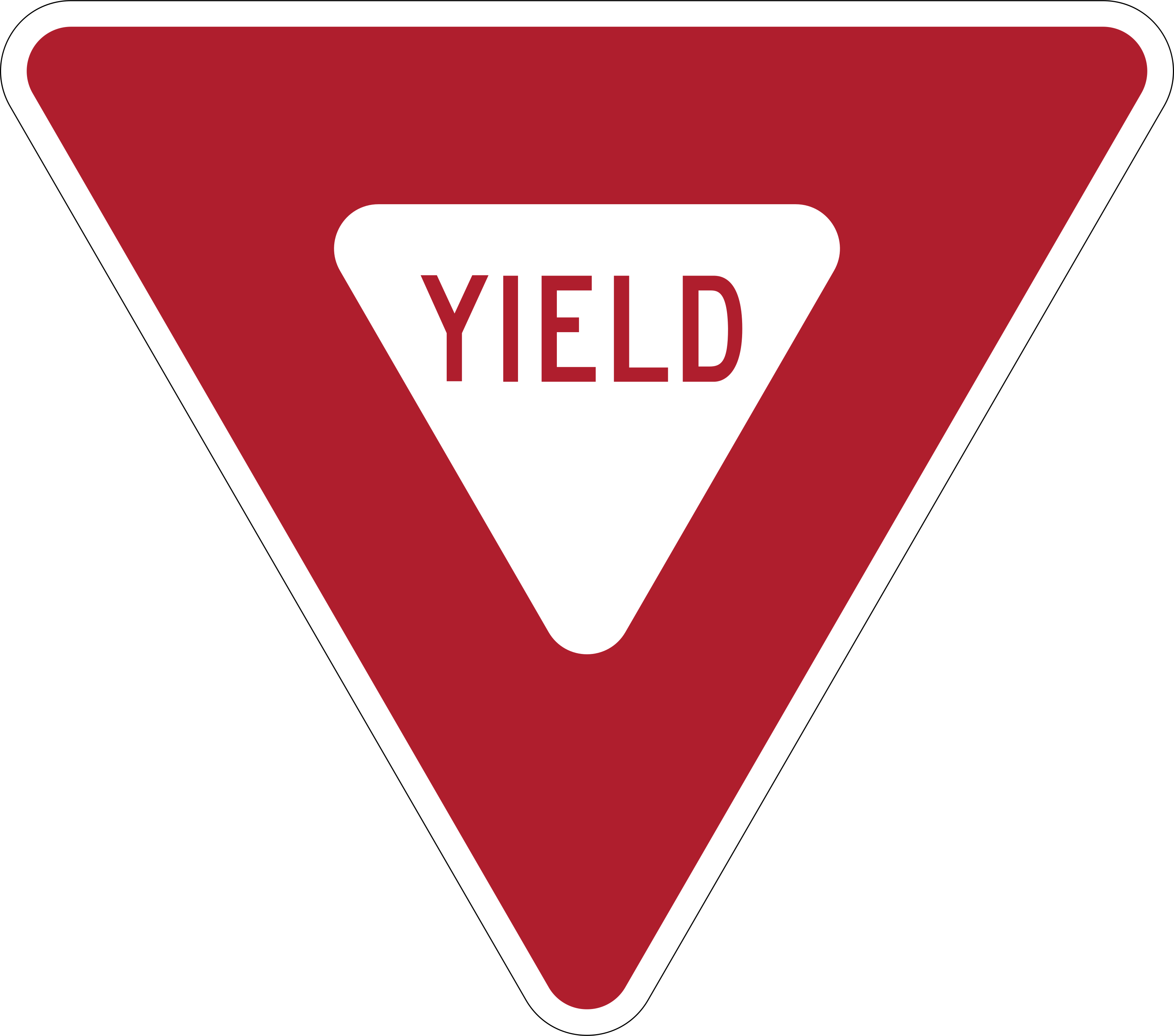
Yield Sign
Last updated:
The yield sign is the diplomat of the road: it never shouts stop, it asks you to read the traffic and surrender the right of way gracefully. Its downward-pointing triangle is the only common sign that points at the ground, almost like an arrow telling you to ease off the gas. Many drivers misread it as optional, which is exactly where merging crashes are born.
What it means
A yield sign tells you to slow down, prepare to stop if necessary, and give the right of way to traffic and pedestrians already in or approaching the intersection or roadway you are entering. You may proceed without stopping only when there is a safe gap and you will not force anyone else to brake or swerve. The duty to yield stays with you until you have safely merged or crossed.
Why this sign exists
The yield sign was created to solve a problem the stop sign over-solved: not every junction needs traffic to halt completely, and unnecessary full stops waste fuel, time, and create rear-end risk. Traffic engineers introduced it so merging and low-conflict intersections could keep flowing while still establishing a clear order of priority. The inverted triangle was chosen because its shape is distinct from every other sign and points downward to suggest yielding and slowing. Red and white were retained to keep it in the regulatory family alongside the stop sign, signaling that obeying it is mandatory, not advisory. The result is a sign that keeps traffic moving smoothly while still legally defining who must give way when paths cross.
Where you see it
Yield signs commonly appear where a ramp or merge lane joins a highway, at roundabout entrances where entering traffic must give way to circulating traffic, and at minor intersections that do not warrant a full stop. You will also see them where two roads merge into one and where a side street feeds a through road at an angle. Roundabouts in particular rely on yield signs at every entry point.
Real driving scenarios
- You are entering a roundabout and a car is already circulating to your left, so you wait at the yield line until there is a clear gap before joining.
- You merge from an on-ramp where freeway traffic has the right of way, so you match the flow speed and slot into a gap rather than forcing your way in.
- You approach a yield where the cross road is completely empty, so you roll through without stopping while staying ready to brake.
What happens if you ignore it
Failing to yield is one of the most common causes of merge and roundabout collisions, often producing sideswipes or angle crashes as one driver assumes a gap that is not there. Because the entering driver is almost always at fault, a failure-to-yield crash usually puts the legal and insurance liability squarely on you. Even without a crash, ignoring a yield sign is a moving violation that can bring a fine and points. The risk compounds at speed: a misjudged highway merge can trigger a chain-reaction crash behind you.
DMV exam trick questions
The phrasings that catch people out on the written test:
Does a yield sign ever require you to come to a complete stop?
Yes, when stopping is the only way to safely give the right of way. Yield means slow and give way, and stopping is part of that duty when traffic leaves no gap.
At a yield, if you cause oncoming traffic to brake hard for you, did you yield properly?
No. Proper yielding means you do not force other drivers to slow or swerve. If they had to react to you, you failed to yield.
Who has the right of way in a roundabout, the entering car or the circulating car?
The circulating car already in the roundabout has the right of way. The entering driver faces the yield sign and must wait for a gap.
How it compares to similar signs
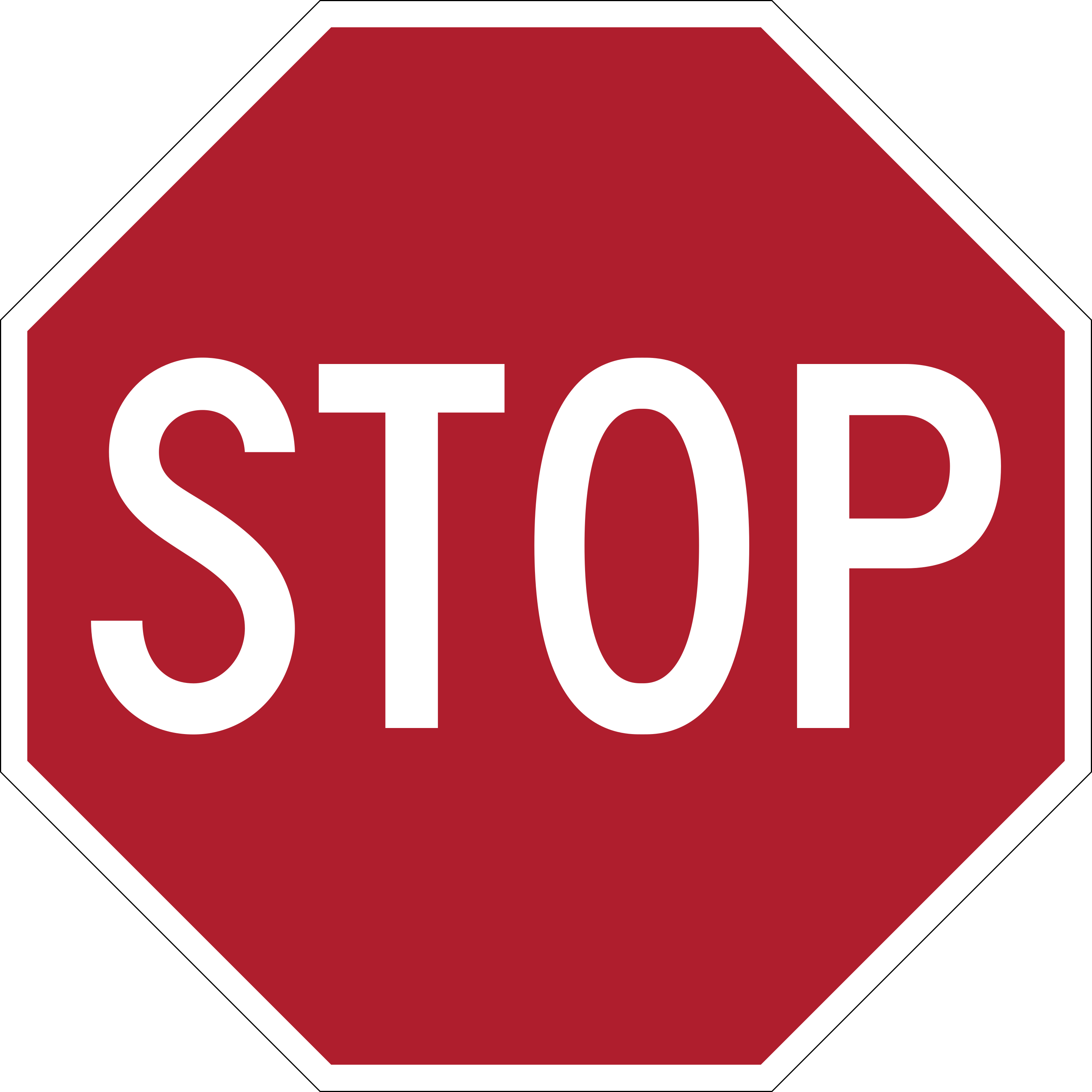
- vs Stop sign: A yield lets you keep moving through a clear intersection, while a stop sign demands a full halt every time. The triangle versus octagon shape is the fastest way to tell which obligation you face.
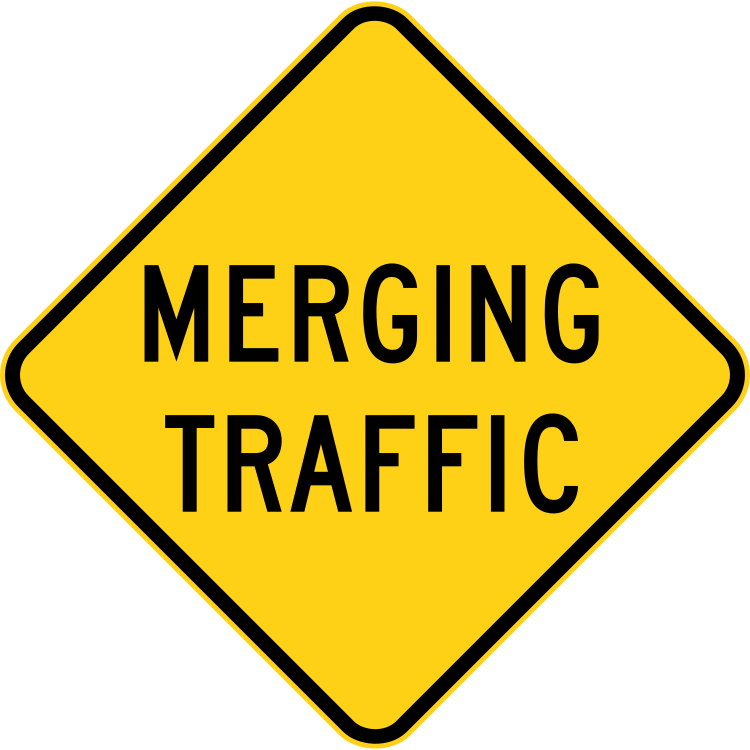
- vs Merge warning sign: A yellow diamond merge sign only warns that lanes are joining ahead and assigns no right of way. The red-and-white yield triangle is regulatory and legally requires you to give way.
Memory aid
The triangle points down at your pedal: let off, look, and let them go.
State-by-state notes
Yield rules are consistent across states, though the exact handling of roundabouts and the wording of failure-to-yield statutes differ. Some states emphasize yielding to pedestrians in crosswalks more strictly than others.
Common mistakes
- Treating yield as a free pass and merging without checking for a real gap.
- Stopping dead at a clear yield when smooth merging was the safer choice.
- Forgetting that circulating traffic in a roundabout has priority over you.
Keep studying this topic
Related signs

Yield Sign FAQ
What is the difference between yield and stop?
A stop sign requires a full halt every time, while a yield sign lets you keep moving if traffic is clear and only requires stopping when you must to give way.
Do I have to yield to pedestrians at a yield sign?
Yes. Pedestrians in or approaching the crosswalk have the right of way, and you must give way to them just as you would to vehicle traffic.
Who yields when merging onto a highway?
The driver entering from the ramp yields to traffic already on the highway, matching speed and merging into an available gap.
Can I be ticketed for failing to yield even if there was no crash?
Yes. Failure to yield is a moving violation on its own and can bring a fine and points whether or not a collision occurs.
Why does the yield sign point downward?
The inverted triangle is a unique shape that suggests slowing and giving way, and points down toward the road to reinforce easing off rather than stopping.