Merge Sign
Last updated:
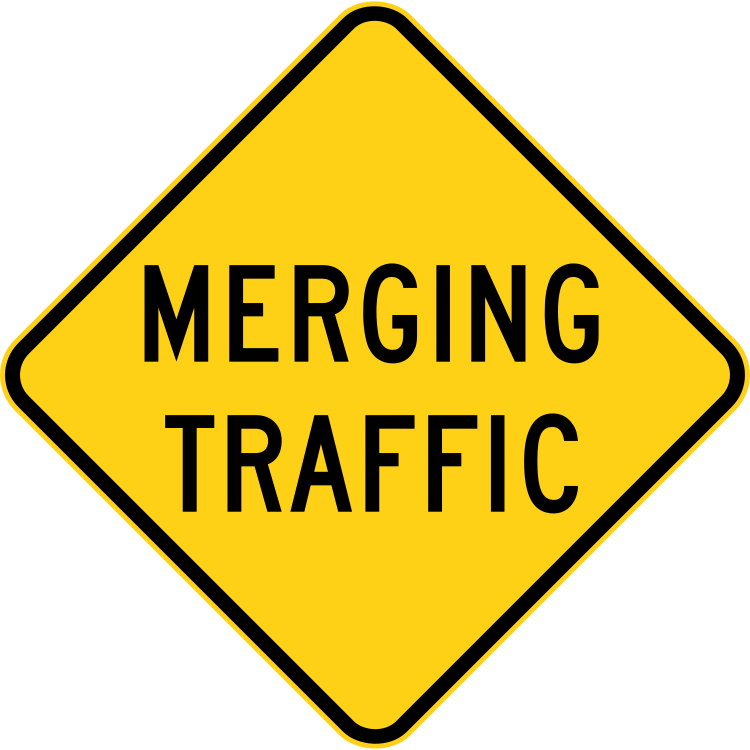
A yellow diamond showing two lines flowing into one is the road's way of saying cooperation is about to be required. The merge sign warns that another stream of traffic is joining yours and that neither side automatically owns the lane. Smooth merging is a small negotiation conducted at speed, and this sign is the opening line.
What it means
The merge sign tells you that a separate lane of traffic ahead will blend into the lane you are traveling in, so two streams must become one. Drivers already on the through road and drivers coming from the entering lane share responsibility to adjust speed and spacing so the join happens without anyone having to slam on the brakes. The sign warns of the merge; it does not assign an absolute right of way the way a yield or stop sign does.
Why this sign exists
Where two roadways come together, the biggest danger is a speed mismatch: traffic entering too slowly forces through drivers to brake hard, and traffic entering too fast cuts off the through lane. The merge sign exists to set expectations early so both groups can match speeds and find gaps before the lanes actually touch. Its diamond shape and yellow color place it firmly in the warning family, telling drivers to expect a changing condition rather than obey a command. The arrow design shows the geometry of the merge at a glance, which side is joining and which is the through path, so a driver understands the layout before reading any words. Setting that mental picture early is what turns a potential conflict point into a routine zipper.
Where you see it
You see merge signs where freeway on-ramps feed the mainline, where a lane ends and forces traffic to combine, and where two roads of similar importance join into a single roadway. They also appear on rural highways where an auxiliary or climbing lane rejoins the main lane. The sign is usually posted in advance of the point where the lanes physically meet.
Real driving scenarios
- You are cruising in the right lane of a highway when a merge sign warns that an on-ramp is about to add cars; you ease slightly left or adjust speed to open a gap.
- Coming up an on-ramp yourself, you use the acceleration lane to reach traffic speed so you can slot into a gap rather than stopping at the end.
- A two-lane rural road narrows where a passing lane ends, and the merge sign tells the slower and faster streams to settle into single file.
What happens if you ignore it
Failing to merge properly causes sideswipes, rear-end collisions, and chain reactions as drivers brake suddenly to avoid a vehicle forcing its way in. A driver who refuses to adjust speed, rides into another car's blind spot, or stops dead in an acceleration lane can trigger a crash that is legally pinned on whoever changed lanes or entered unsafely. Tickets in merge situations are usually written for unsafe lane change, failure to yield, or following too closely rather than for the merge sign itself, and at-fault merging crashes can raise insurance costs. Because fault often falls on the vehicle joining the flow, entering drivers carry extra responsibility to merge only when it is safe.
DMV exam trick questions
The phrasings that catch people out on the written test:
Does the merge sign mean entering traffic always has the right of way? True or false?
False. It warns of a merge and asks both streams to cooperate; it does not grant either side an automatic right of way.
When merging onto a highway from an on-ramp, should you slow down or speed up?
Speed up. You should accelerate to match the flow of traffic so you can blend into a gap rather than forcing the through lane to brake.
Is a merge sign the same as a yield sign?
No. A yield sign requires you to give the right of way, while a merge sign only warns that lanes are about to combine.
How it compares to similar signs
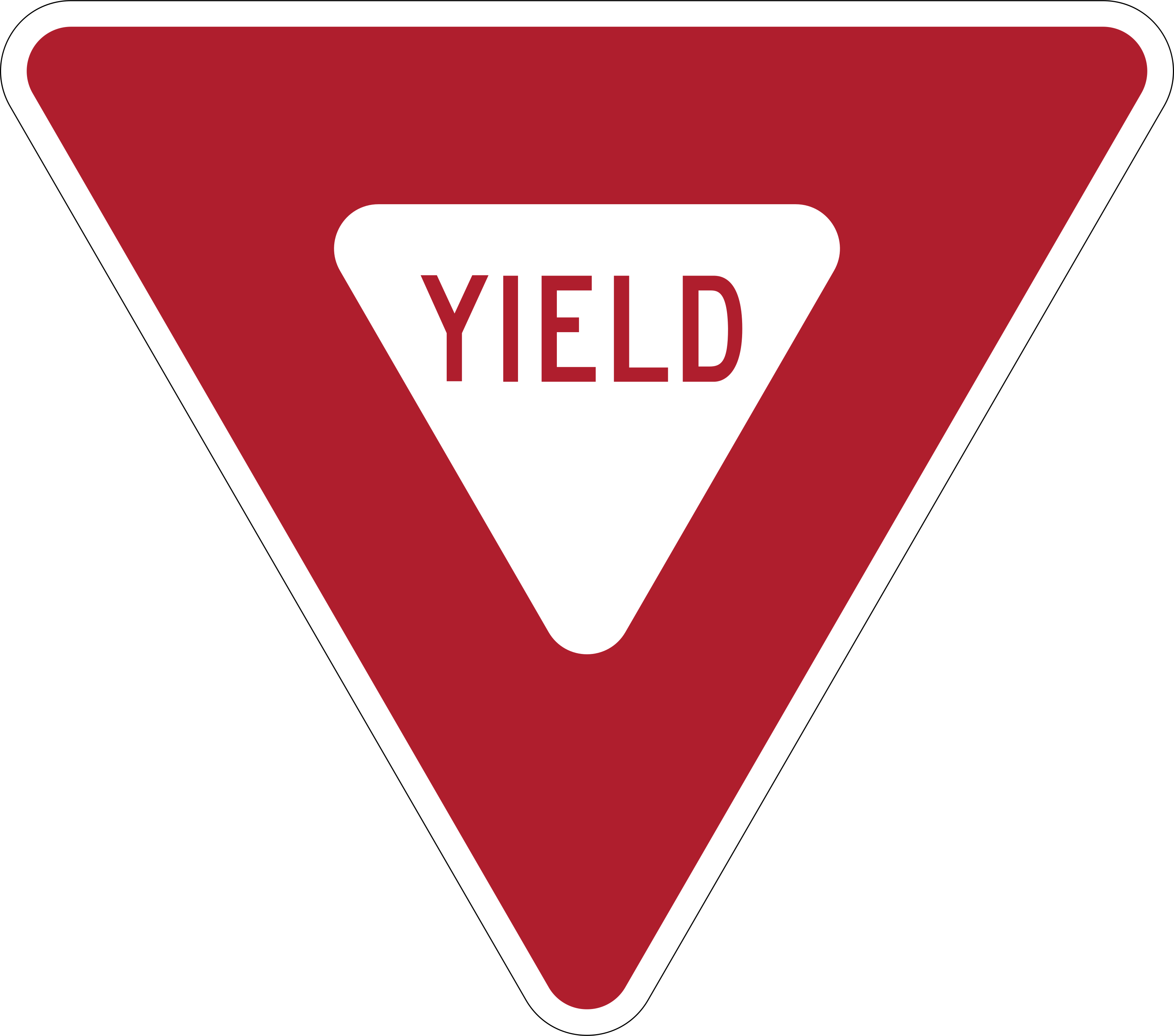
- vs Yield sign: Yield is a red and white triangle that orders you to give way; the merge sign is a yellow diamond that only warns lanes will combine and expects mutual adjustment.
- vs Lane-ends sign: A lane-ends sign shows one lane tapering away to force traffic over, while the merge sign shows two separate streams flowing together as equals.
- vs Added-lane sign: An added-lane sign means a new lane appears with no merge needed, the opposite situation from the merge sign, where two paths must become one.
Memory aid
Picture a zipper: two rows of teeth, one closing seam, taking turns instead of jamming.
State-by-state notes
Many states teach a zipper-merge approach where drivers use both lanes until the merge point and then alternate, but local custom and posted instructions vary, so follow any specific signs or markings present.
Common mistakes
- Stopping at the end of an acceleration lane instead of merging at speed
- Assuming the other stream will yield and refusing to adjust your own speed
- Drifting into the merge without checking the blind spot and mirror first
Keep studying this topic
Related signs
Merge Sign FAQ
Who has the right of way at a merge?
Neither side has an automatic right of way. Both the through traffic and the entering traffic share the duty to adjust and merge safely, though the joining driver usually carries more responsibility.
Should I stop before merging onto a highway?
Only if traffic forces it. The goal is to use the acceleration lane to reach highway speed and merge into a gap without stopping.
What is a zipper merge?
A zipper merge has drivers use both lanes up to the merge point and then take turns blending in one by one, which can ease congestion when traffic is heavy.
Is the merge sign a warning or a regulatory sign?
It is a warning sign, shown as a yellow diamond, so it tells you to expect a merge rather than commanding a specific legal action.
What is the difference between a merge and an added lane?
In a merge two lanes must combine into one, while an added lane means a new lane opens up and you do not have to merge at all.