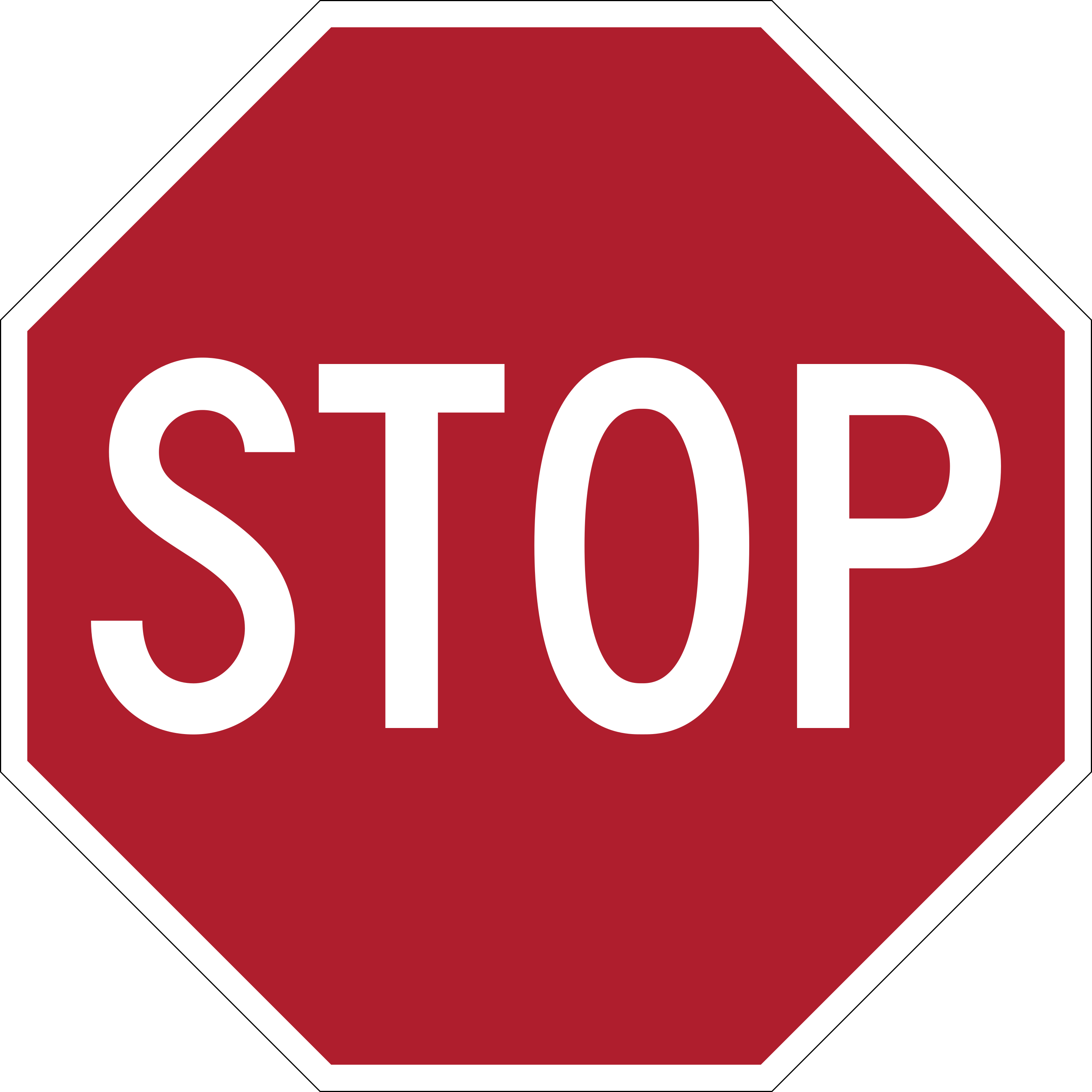
Stop Sign
Last updated:
The red octagon is the only sign on the road shaped so that you can recognize it even when snow, mud, or a low sun hides its face. Eight sides spell one command that has not changed in a century: come to a complete halt. Almost every driver thinks they know it, yet the rolling-stop habit makes it one of the most violated signs in America.
What it means
A stop sign requires every approaching driver to bring the vehicle to a complete stop, with wheels no longer turning, before the marked stop line, crosswalk, or edge of the intersecting road. After stopping you must yield to pedestrians and to cross traffic, then proceed only when it is safe. Slowing down is not stopping, and the law does not care how empty the road looks.
Why this sign exists
Stop signs grew out of the chaos of early intersections where no driver knew who had the right of way, and the first ones in the 1910s were not even red. Engineers eventually standardized the octagon precisely because its unique outline is legible from the back and in poor visibility, so a driver can identify the command without reading a word. Red was chosen as the universal color of danger and prohibition because it carries the strongest stop signal to the human eye. The shape and color together create redundancy: even a faded, dirty, or partly blocked sign still communicates through its silhouette alone. This layered design is a deliberate safety system, not decoration, because intersections are where the most severe right-angle collisions happen.
Where you see it
Stop signs guard intersections without traffic signals, especially residential cross streets, T-intersections, and the minor leg of a junction with a busier road. You will also find them at the end of driveways exiting onto a roadway, at railroad crossings on some low-traffic lines, and inside parking lots. Multi-way installations carry a small plate reading ALL WAY or 4-WAY beneath the octagon.
Real driving scenarios
- You reach a four-way stop a moment after the car on your right has already stopped, so that driver goes first and you wait your turn.
- You stop at a corner where parked cars block your view of cross traffic, so you creep forward past the stop line to a second point where you can actually see, then stop again before entering.
- You arrive at a two-way stop where only your direction must stop, so you must wait for a clear gap because the cross traffic never slows.
What happens if you ignore it
Treating a stop sign as a suggestion is a leading cause of dangerous side-impact crashes, which strike at the doors where occupants have the least protection. Even a slow roll can put your front bumper into a crosswalk where a child or cyclist is crossing out of your sightline. Legally, running a stop sign is a moving violation in every state, generally bringing a fine and points on your license, with steeper penalties if it causes a collision or happens in a school zone. Repeated violations can raise your insurance premiums for years and, in some states, contribute to license suspension.
DMV exam trick questions
The phrasings that catch people out on the written test:
At a stop sign with no painted stop line or crosswalk, where exactly must you stop?
Before entering the intersection, at the point nearest the cross road where you have a clear view. The absence of paint does not remove the duty to stop.
At a four-way stop, two cars facing each other both want to go straight. Who must yield?
Neither has to yield to the other when both go straight, because their paths do not cross. Left-turning drivers yield to oncoming traffic going straight.
Can you make a right turn at a stop sign without fully stopping if no one is coming?
No. A full stop is required first; only after stopping may you turn when clear. A stop sign is not a yield sign.
How it compares to similar signs
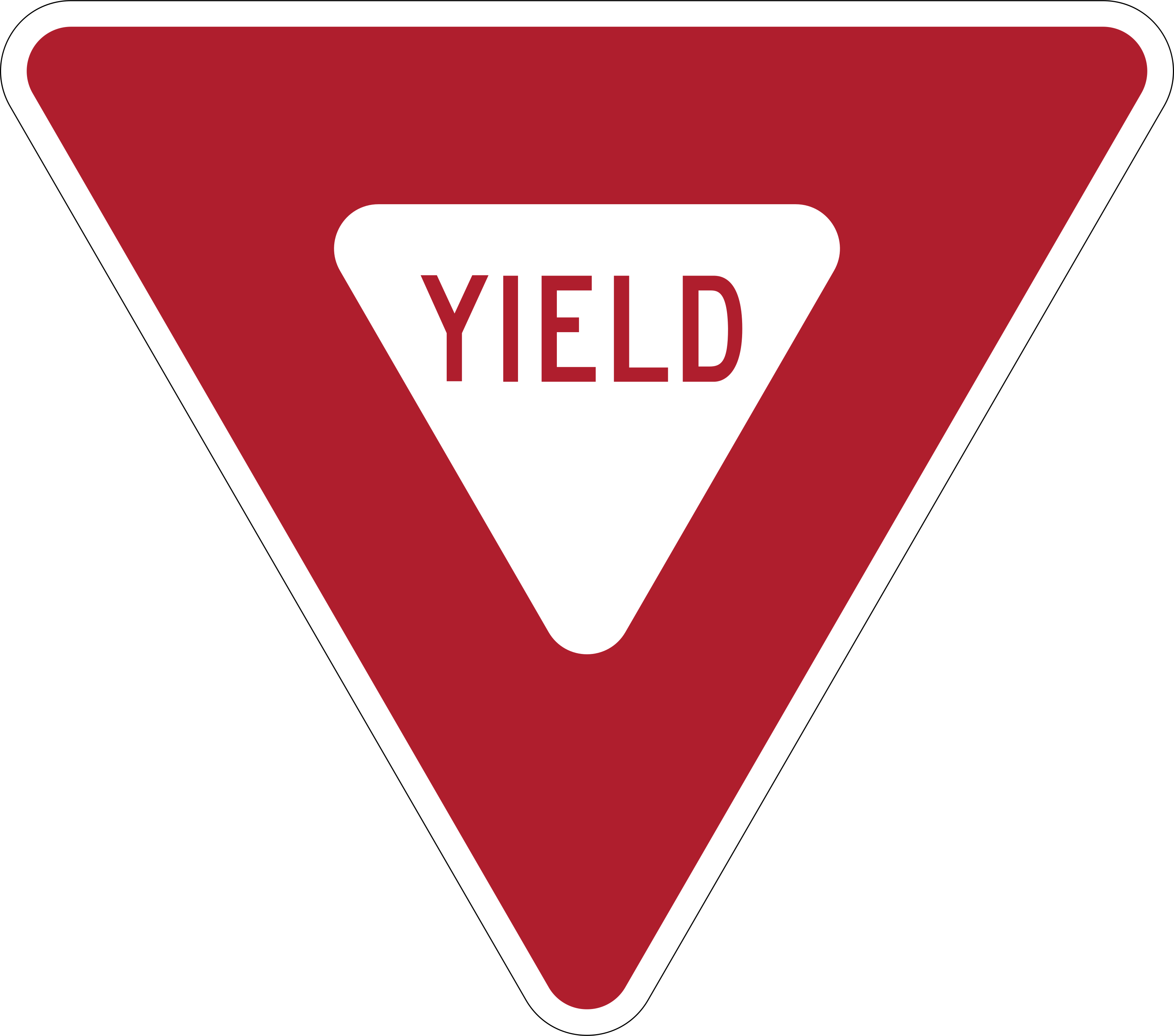
- vs Yield sign: A stop sign always demands a complete halt, while a yield sign lets you keep rolling if the way is clear. Shape tells them apart instantly: octagon means stop, downward triangle means yield.
- vs All-way stop versus two-way stop: An ALL WAY plate means every approach stops and you take turns. Without that plate, only your direction stops and cross traffic has the right of way, so never assume the other driver will stop.
Memory aid
Eight sides, eight wheels frozen still: count the sides and your wheels stop with them.
State-by-state notes
The core rule is identical nationwide, but the exact fine and point value for running a stop sign vary by state, and many states impose higher penalties when the violation occurs in a school or work zone.
Common mistakes
- Rolling slowly through instead of bringing the wheels to a complete stop.
- Stopping past the line or crosswalk so the front of the car blocks pedestrians.
- Assuming cross traffic must stop at a two-way stop when only your direction does.
Keep studying this topic
Related signs
Stop Sign FAQ
How long do I have to stay stopped at a stop sign?
There is no set number of seconds. You must come to a genuine complete stop with the wheels no longer turning, then proceed when it is safe.
Why is the stop sign an octagon and not a circle?
The eight-sided shape is unique on the road, so it is recognizable by outline alone even from behind or when the face is obscured by weather or grime.
Who goes first at a four-way stop?
The driver who arrives and stops first proceeds first. When two arrive at the same time, the one on the right has the right of way.
Is a rolling stop really illegal if the road is empty?
Yes. The law requires a complete stop regardless of whether other traffic is present, and a rolling stop is a citable moving violation.
Do I have to stop again if I creep forward to see around parked cars?
Yes. Stop first at the line, then if your view is blocked you may edge forward to a clear vantage point and stop again before entering the intersection.