Free California DMV Practice Test 2026
Last updated:
If you are getting ready to take your knowledge test in California, you are in good company. Every year hundreds of thousands of new drivers sit down with the California DMV to prove they understand the rules of the road, and the written exam is the first real gate you have to clear. This page is built to help you walk in feeling ready instead of nervous.
California driving is its own beast. You might be merging onto a packed Los Angeles freeway one day and crawling through fog on a coastal highway the next, so the state expects you to actually know how signs, signals, and right-of-way rules work. Our practice questions mirror the style and topics of the real exam so the format feels familiar before you ever set foot in a field office.
Passing score
83% to pass
38
of 46 correct
You can miss up to 8 questions and still pass.
DMV
Agency
46
Questions
38 (83%)
To pass
15½ (with driver education)
Permit age
Note: Applicants 18 and older take a 36-question version and must answer 30 correctly.
Key takeaways
- The California written test has 46 questions and you need 38 correct (83%) to pass.
- Questions are drawn from the official California Department of Motor Vehicles handbook and cover road signs, traffic laws, and safe driving.
- You can apply for a permit at 15½ (with driver education).
- Practice in two modes: learn with instant explanations, then simulate the real exam under a timer.
Sample California permit test questions
Here are a few real questions from our California bank, with the correct answer and a plain-language explanation. The full test has many more.
- Road SignsEasy
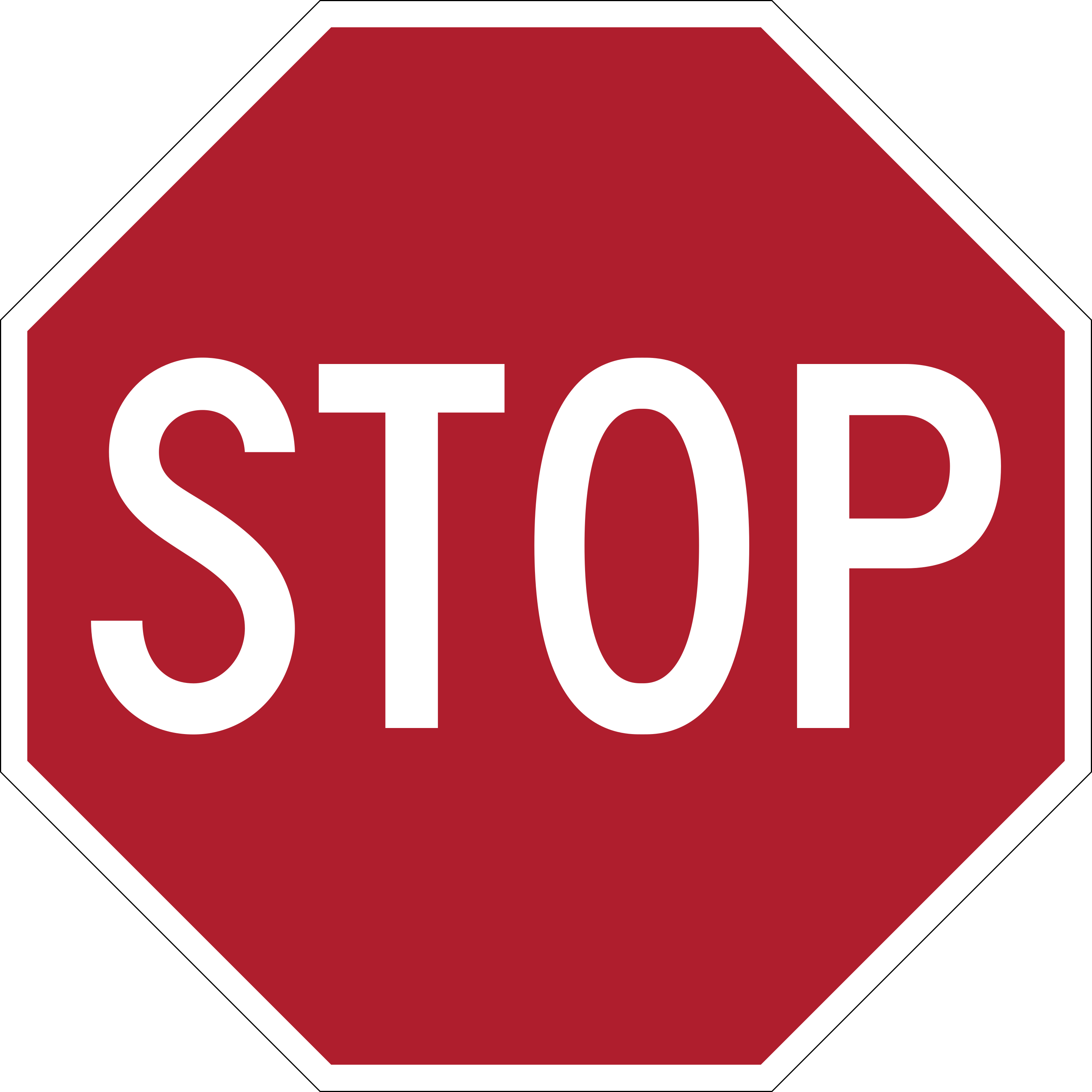
1. An eight-sided (octagon) red sign always means:
- Come to a complete stop
- Yield to oncoming traffic
- Slow down and proceed
- Road work ahead
Why: The octagon shape is reserved only for the STOP sign. Stop completely behind the stop line or crosswalk, then proceed when it is safe.
- Traffic SignalsEasy
2. A steady (solid) red traffic light means:
- Stop and remain stopped until the light turns green
- Slow down and proceed with caution
- Stop, then continue without waiting
- Yield only to pedestrians, then go
Why: A steady red light requires a full stop behind the stop line or crosswalk. You must wait until the light turns green; a right turn on red is allowed after stopping only when the way is clear and no sign prohibits it.
- Traffic LawsEasy
3. When approaching a stop sign, you must stop:
- Anywhere within 50 feet
- Before the stop line, crosswalk, or edge of the intersection
- Only if other cars are present
- After entering the intersection
Why: You must stop behind the stop line; if there is none, stop before the crosswalk; if there is no crosswalk, stop before entering the intersection where you can see cross traffic.
- Right-of-WayMedium
4. At a four-way stop where two vehicles arrive at the same time, the right-of-way goes to:
- The faster vehicle
- The vehicle on the right
- The vehicle on the left
- The larger vehicle
Why: When two vehicles reach an all-way stop at the same time, the driver on the left yields to the driver on the right. If unsure, proceed cautiously and communicate.
More ways to practice California
Want a fresh set of questions or a focused drill? Try one of these California tests:
What’s on the California test
Our California question bank is balanced across the categories the DMV tests. These are the topics to study:
How the written test works in California
The standard California DMV knowledge test gives you 46 multiple-choice questions, and you need to answer at least 38 of them correctly to pass. That works out to roughly 83 percent, so there is not a huge margin for guessing. The questions are drawn from the California Driver Handbook and split between traffic laws and road signs.
If you are 18 or older, the DMV uses a shorter version with 36 questions, and you need 30 right to pass. Younger applicants take the full 46-question version because the state ties the permit process to driver education for teens. Either way, the test is taken on a touchscreen terminal at the office, and you usually find out your result right away.
What to study
The handbook covers a lot, but the questions tend to cluster around a handful of high-value areas. If you understand these cold, you will recognize most of what shows up on the screen.
- Speed limits and the basic speed law, including how the limit changes near schools and in business districts
- Right-of-way at four-way stops, uncontrolled intersections, and roundabouts
- The shape and color meaning of regulatory, warning, and guide signs
- California specifics like the Move Over law and rules for sharing the road with bicycles
- Blood alcohol limits and the consequences of driving under the influence
Practice Mode vs Exam Mode
Practice Mode is for learning. You answer a question, see right away whether you got it, and read a short explanation so the rule actually sticks. It is the best way to find your weak spots early. Exam Mode behaves more like the real thing: a full-length set of questions, no instant feedback, and a score at the end so you can gauge whether you are genuinely ready for the field office.
Driving across California's many environments
One reason California's test leans hard on signs and hazard awareness is the sheer variety of conditions you will face. Mountain passes near Tahoe demand chain knowledge in winter, the Central Valley brings tule fog that can drop visibility to a few car lengths, and dense urban grids like San Francisco mix steep hills with cable cars, cyclists, and pedestrians. Knowing the rules is not just about passing a test here. It is about staying safe in a state where the road can change character within a single drive.
Road signs show up on every test
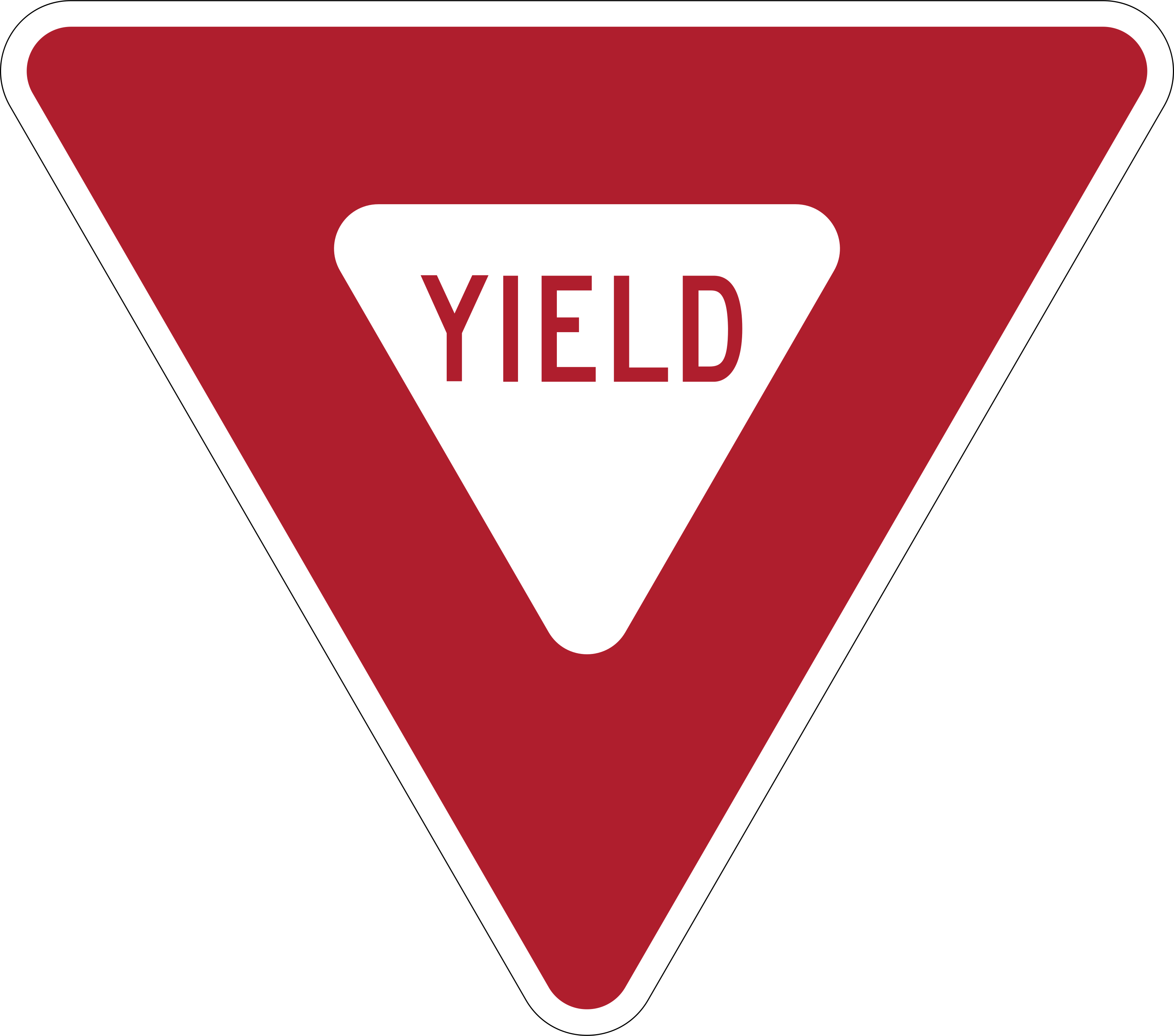
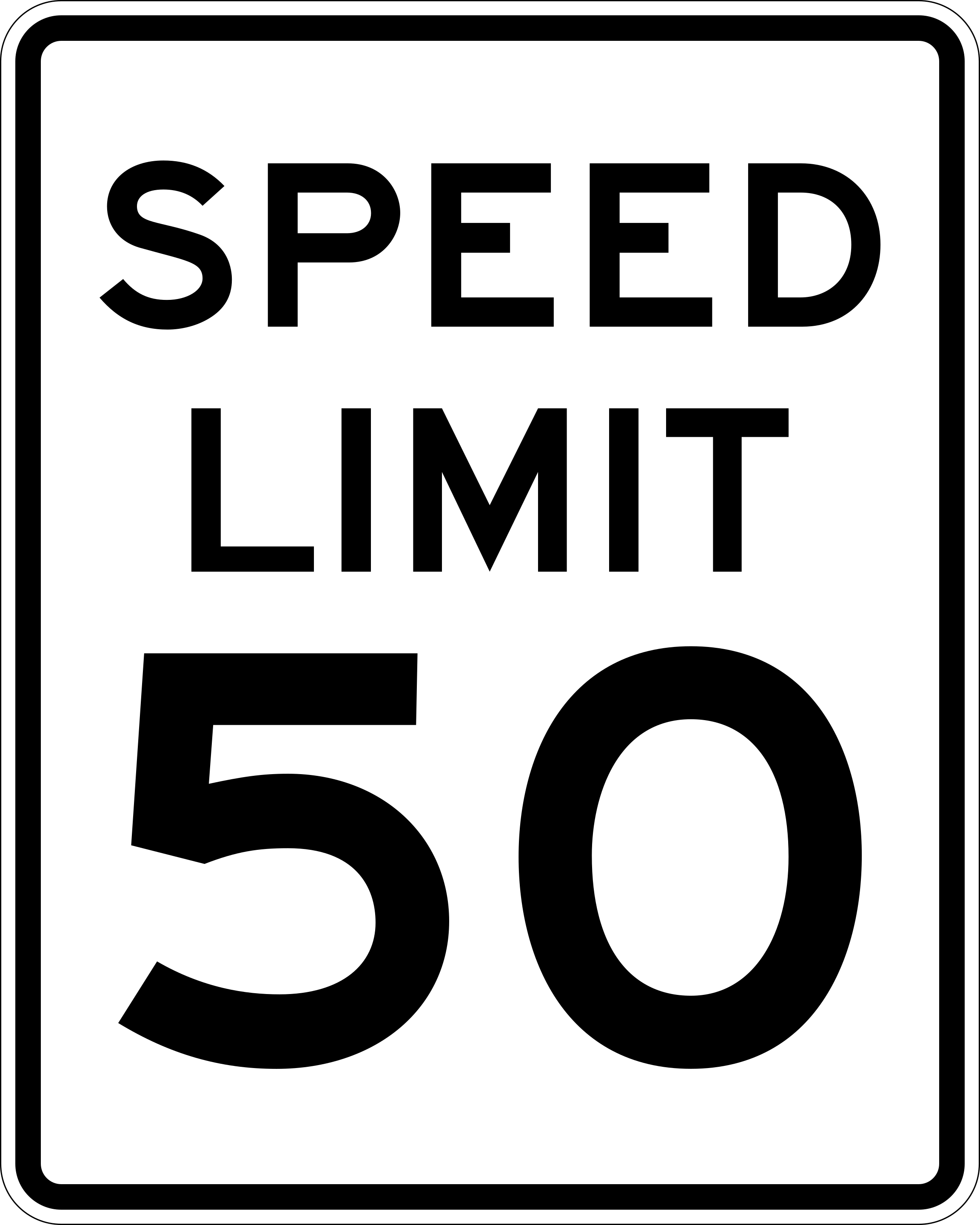
Learn to read signs by shape and color and you bank easy points. Here are a few you should know cold:



What to study for the California written test
- Right-of-way rules at intersections, crosswalks, and merges
- Posted speed limits versus the basic speed law for conditions
- The meaning of sign shapes and colors, even without reading the words
- DUI laws, the zero-tolerance rule for drivers under 21, and license penalties
- Safe following distance and the three-second rule in heavy traffic
California test day checklist
- A completed application and proof of identity and residency
- Your glasses or contacts if you need them to read
- Any required driver education completion certificate if you are under 18
- Payment for the application fee, since you settle that at the office
How California compares
| Requirement | California | Typical US state |
|---|---|---|
| Questions on the test | 46 | 20–50 |
| Correct answers to pass | 38 | Varies |
| Passing score | 83% | 70–85% |
| Earliest permit age | 15½ (with driver education) | 15–16 |
What happens if you do not pass the California test?
You can miss up to 8 of the 46 questions and still pass (38 correct, 83%). Score below that and the DMV will let you retake the exam; waiting periods and retest fees are set by the California Department of Motor Vehicles, so check their current policy. Before you retake it, review the category breakdown on your results page and read our guide on what to do after failing the written test.
Official California DMV resources
Always confirm the current rules with the California Department of Motor Vehicles (DMV). The question counts, passing scores, and permit ages on this page are taken from the official DMV handbook and licensing pages linked below.
Last verified against the official California DMV handbook on June 20, 2026. If you notice anything that no longer matches the current handbook, please email achyuthkumark2001@gmail.com and we will update the page.
What to bring to the DMV in California
Passing the written test is only half the visit. Most applicants also need:
- Proof of identity (passport or birth certificate)
- Proof of California residency
- Social Security number or accepted alternative
- Parent or guardian documents if you are a minor
- Appointment confirmation if applicable
Find a DMV office in California
When you are ready to take the real test, find your nearest DMV location.
Map results come from Google and may include third-party services. Always confirm the office location, hours, and whether an appointment is required on the official DMV website before visiting.
Keep preparing
Verified & Accurate
Our editorial team manually reviews all mock test questions against the latest official California Department of Motor Vehicles handbook to ensure complete accuracy.
Last reviewed: June 5, 2026
California permit test FAQ
How much does the California permit cost?
$46. The $46 Class C original application fee covers the instruction permit, knowledge testing, and the driver's license once you pass the drive test. The application and fee are valid for 12 months. If the provisional instruction permit expires before the driving test, the applicant must reapply at a DMV office. See the full California fee breakdown and official source on our permit cost page.
How many supervised driving hours does California require?
50 hours of supervised practice with a licensed adult 25 or older, including 10 hours at night, plus 6 hours of professional instruction from a licensed driving school. Confirm the current requirement and any logging rules with the California Department of Motor Vehicles.
How many questions are on the California permit test?
Applicants under 18 take a 46-question test and must answer 38 correctly. Applicants 18 and older take a 36-question version and need 30 correct.
What score do I need to pass the California knowledge test?
You need about 83 percent. That is 38 out of 46 on the standard test, or 30 out of 36 on the shorter adult version.
How old do I have to be to get a permit in California?
You can apply for an instruction permit at 15 and a half, but you must be enrolled in or have completed driver education to qualify at that age.
What happens if I fail the California written test?
You are allowed to retake it. The DMV gives you a limited number of attempts within the life of your application, so review your weak areas before going back.
Is this practice test the official California DMV exam?
No. This is a study tool to help you prepare. The official test is taken at a California DMV field office on their own system.
Do I need to make an appointment at the California DMV?
Appointments are strongly recommended because walk-in waits can be long. You can book one online before you go to take your knowledge test.
Are road signs really on the California test?
Yes. A good chunk of the questions ask you to identify signs by shape, color, or meaning, so do not skip that section while studying.
Can I use the practice questions on my phone?
Yes. The practice and exam modes work on phones, tablets, and computers, so you can study during short breaks throughout the day.
Sources
We summarize public information from the California Department of Motor Vehicles in our own words. Confirm details with the official source: