
Roundabout Ahead Sign
Last updated:
A yellow diamond with two or three arrows chasing each other in a circle warns that a roundabout is coming, where traffic flows one continuous way around a central island. The roundabout-ahead sign asks for a particular mindset: slow down, yield to whoever is already circling, and then merge into the flow. In the United States that flow runs counterclockwise, so entering traffic looks left.
What it means
This sign warns that a roundabout lies ahead and that you must slow down, prepare to yield to traffic already in the circle, and enter only when there is a safe gap. Vehicles inside a roundabout travel counterclockwise and have the right of way over those waiting to enter. The circular arrows on the sign mirror that one-way rotational flow.
Why this sign exists
Roundabouts replace the high-speed, right-angle conflicts of a traditional intersection with low-speed, glancing movements, which sharply reduces the most severe crash types, especially the dangerous side-impact and head-on collisions that signals and stop signs allow. The roundabout-ahead sign exists because many drivers still meet them rarely and need a clear prompt to slow and prepare to yield rather than expecting a signal or a stop. Its diamond shape and yellow color mark it as a warning of a changing condition, while the circular arrows preview the geometry so a driver knows to look left and circulate one way. Because a roundabout keeps traffic moving at low speed instead of stopping it, the warning is as much about adjusting expectations as about the physical layout. Setting that expectation early is what keeps the merge smooth and the speeds low.
Where you see it
You see the sign approaching modern roundabouts that replace four-way intersections, at freeway interchange ramps redesigned as roundabouts, and on rural highways where two roads meet at a circle instead of a signal. It is increasingly common in newly built or rebuilt intersections. The sign is posted in advance, often with a yield sign and lane-use markings closer to the entry.
Real driving scenarios
- Approaching a roundabout for the first time in a new development, the sign tells you to slow and look left for circulating cars before nosing in.
- You reach the entry, see a car already going around, and wait for it to pass before merging into the gap behind it.
- On a multi-lane roundabout, the advance sign and lane markings tell you which lane to pick for your exit before you enter.
What happens if you ignore it
Failing to yield on entry is the classic roundabout crash, where an entering driver pulls in front of a circulating vehicle and is struck, and entering too fast or in the wrong lane causes sideswipes and confusion. Drivers who stop inside the circle or back up to a missed exit create rear-end and head-on risks. Legally, failing to yield to circulating traffic, entering against the one-way flow, or making an improper lane change in a roundabout can bring failure-to-yield, wrong-way, or unsafe-lane-change citations, with the entering driver usually at fault in an entry collision. Such tickets carry points and potential insurance consequences in most states.
DMV exam trick questions
The phrasings that catch people out on the written test:
At a roundabout, do you yield to cars entering or to cars already in the circle?
To cars already in the circle. Circulating traffic has the right of way; entering drivers must wait for a safe gap.
Traffic in a US roundabout flows clockwise. True or false?
False. In the United States, traffic moves counterclockwise, so you look to your left for approaching circulating vehicles.
If you miss your exit, should you stop or back up to reach it?
No. Continue around the circle and exit on the next pass; stopping or reversing inside a roundabout is dangerous.
How it compares to similar signs
- vs Railroad advance warning sign: Both involve circular motion, but the railroad sign is an actual round sign for tracks, while the roundabout sign is a yellow diamond showing circular arrows for a traffic circle.
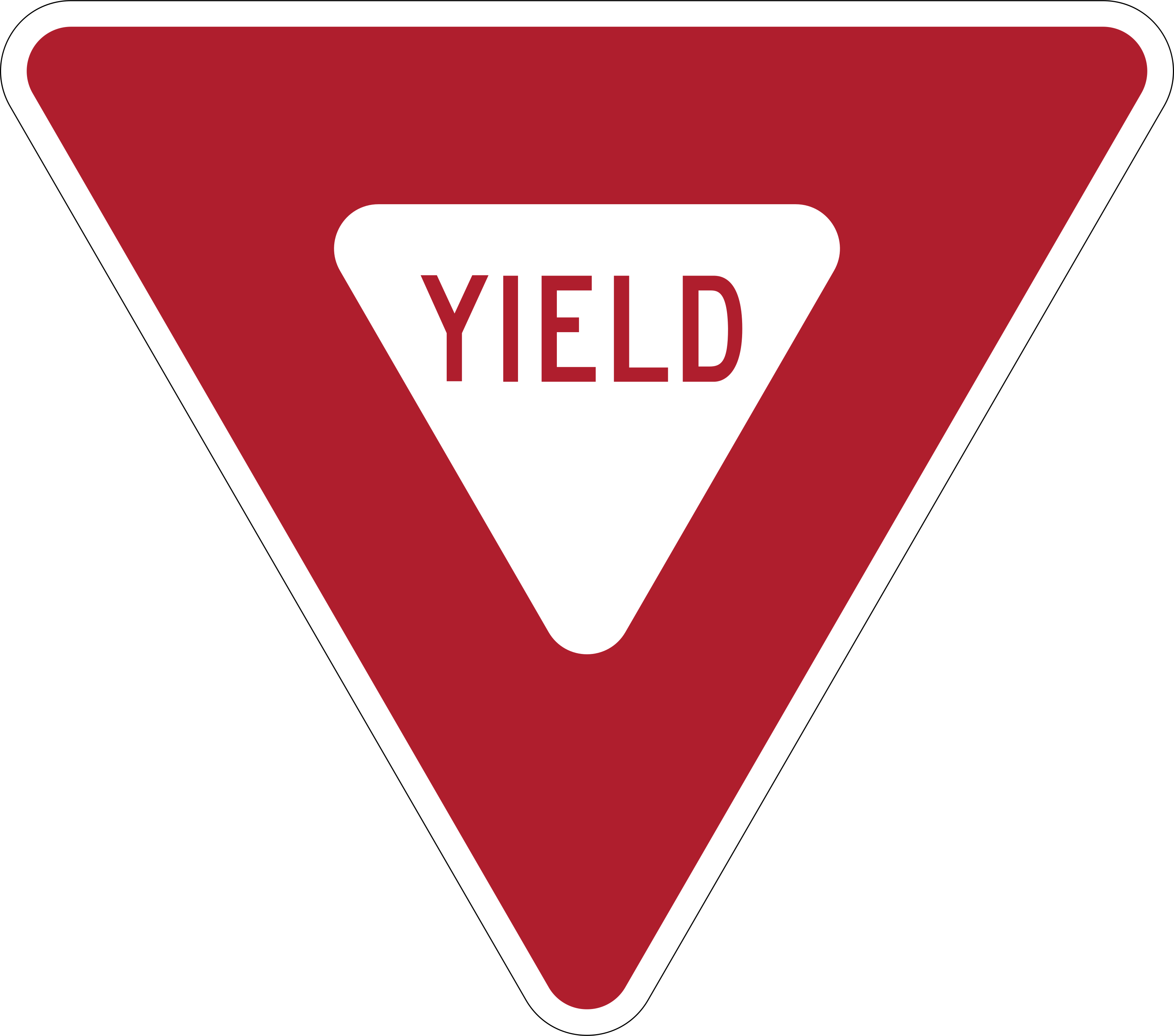
- vs Yield sign: A yield sign appears at the roundabout entry itself ordering you to give way, while the roundabout-ahead diamond warns earlier that the circle is coming.
- vs Curve sign: A curve sign shows a single bending arrow for a road that bends once, whereas the roundabout sign shows arrows looping in a full circle around a center.
Memory aid
Arrows chasing their tails turn left: in the circle, look left and let them roll.
State-by-state notes
Roundabouts are newer in some regions than others, and a few states publish their own driving guidance for multi-lane circles, but the core rules of yielding to circulating traffic and going counterclockwise are consistent.
Common mistakes
- Failing to yield and pulling in front of a vehicle already circulating
- Looking the wrong way instead of checking left for oncoming circulating traffic
- Stopping inside the circle or backing up after missing an exit
Keep studying this topic
Related signs
Roundabout Ahead Sign FAQ
Who has the right of way in a roundabout?
Traffic already circulating in the roundabout has the right of way. Entering drivers must yield and wait for a safe gap.
Which direction does traffic go in a US roundabout?
Counterclockwise. You enter to the right and look left for vehicles already going around the circle.
Do I have to stop at a roundabout?
Only if traffic requires it. You slow and yield, then keep moving into a gap; you stop only when there is no safe opening.
What do I do if I miss my exit?
Stay in the circle and go around again to reach your exit. Never stop suddenly or back up inside a roundabout.
How do roundabouts improve safety?
They keep traffic moving at low speed and replace high-speed crossing conflicts with gentler merging movements, reducing the most severe crashes.