Traffic Signals Practice Test: Lights, Arrows & Special Signals
Last updated:
Traffic signals are one of the most reliable scoring areas on any written DMV or permit test, because every signal has one fixed meaning that never changes. This guide explains each light, arrow, and special signal in plain language, then lets you check yourself with 18 practice questions. The questions are original educational examples based on official handbook topics, not the actual official exam questions.
Every signal you need to know
Solid red light
Come to a complete stop behind the stop line or crosswalk and remain stopped until the light turns green. In most states you may turn right on red after a full stop, unless a sign prohibits it.
Flashing red light
Treat it exactly like a stop sign: stop completely, yield to traffic and pedestrians, then proceed when the way is clear.
Solid yellow light
The signal is about to turn red. Stop if you can do so safely; do not speed up to beat the light.
Flashing yellow light
Slow down and proceed with caution. You do not have to stop, but you must be ready to yield.
Solid green light
You may go, but only after yielding to vehicles and pedestrians still in the intersection. A circular green does not protect left turns.
Green arrow
A protected movement in the direction of the arrow. Oncoming traffic is stopped, but still check for pedestrians before turning.
Red arrow
Stop. You may not make the movement shown by the arrow until the signal changes. Some states never allow turns on a red arrow.
Yellow arrow
The protected turn phase is ending. Prepare to stop or to yield as a circular green or red follows.
Lane control signals
Overhead signals above individual lanes: a green arrow means the lane is open, a red X means the lane is closed to you, and a flashing yellow X usually marks a two-way left-turn lane.
Pedestrian signals
A walking-person symbol means walk; a raised hand means do not start crossing. A flashing hand with a countdown means finish crossing but do not begin.
School zone signals
Flashing beacons on school zone signs mean the reduced school-zone speed limit is in effect. Slow down and watch for children.
Railroad crossing signals
Flashing red lights at a crossing mean a train is approaching: stop and do not proceed until the lights stop and the gates fully rise. Never drive around lowered gates.
Traffic signal practice questions
Work through each question, then read the explanation. The correct answer is highlighted so you can study as you go. For a timed, realistic simulation, take your state’s full practice test.
- Traffic SignalsEasy
1. At a steady red traffic light, what must you do?

- Stop completely and wait until it turns green
- Slow down and roll through if clear
- Stop only when other cars are present
- Treat it as a yield sign
Why: A steady red light requires a complete stop behind the line. Where allowed, you may turn right on red only after that full stop.
- Traffic SignalsEasy
2. A flashing red light at an intersection means:
- Treat it like a stop sign: stop, then go when clear
- The signal is broken; proceed normally
- Stop and wait for it to turn green
- Yield without stopping
Why: Flashing red equals a stop sign. Come to a complete stop and proceed only when the intersection is clear.
- Traffic SignalsEasy
3. What does a flashing yellow light tell drivers?
- Slow down and proceed with caution
- Stop and wait for green
- Speed up to clear the area
- The lane is closed
Why: Flashing yellow means caution: slow down, scan the intersection, and be ready to yield, but a stop is not required.
- Traffic SignalsMedium
4. The light turns solid yellow as you approach an intersection. What should you do?
- Stop if you can do so safely
- Always accelerate through
- Stop in the middle of the intersection
- Change lanes quickly
Why: Solid yellow warns the light is about to turn red. Stop if it is safe; if you are too close to stop safely, continue through with caution.
- Traffic SignalsEasy
5. A green arrow pointing left means:

- Your left turn is protected; oncoming traffic is stopped
- Yield to oncoming traffic, then turn
- Left turns are prohibited
- Pedestrians have the signal
Why: A green arrow is a protected turn: opposing traffic faces a red light. Still check for pedestrians before turning.
- Traffic SignalsMedium
6. What does a steady red arrow mean?
- Do not make the movement shown until the signal changes
- Turn after yielding
- Proceed straight only
- The signal is malfunctioning
Why: A red arrow prohibits the movement it points to. Wait for a green arrow or permitted indication.
- Traffic SignalsMedium
7. A flashing yellow X above your lane usually means:
- The lane is for two-way left turns only
- The lane is closed
- The lane is open to through traffic
- Trucks only
Why: Lane-control signals manage reversible lanes. A flashing yellow X typically marks a shared two-way left-turn lane; a steady red X means the lane is closed to you.
- Traffic SignalsEasy
8. A steady red X displayed over your lane means:
- Do not drive in this lane
- Stop, then proceed
- The lane is for carpools
- Exit ahead
Why: A red X means the lane is closed to traffic in your direction. Move safely into an open lane.
- Traffic SignalsEasy
9. The pedestrian signal shows a flashing raised hand with a countdown. You have not started crossing. What should you do?
- Do not start crossing; wait for the next walk signal
- Run across before the countdown ends
- Cross slowly
- Cross only halfway
Why: A flashing hand means do not begin crossing. Pedestrians already in the street should finish; everyone else waits for the next WALK indication.
- Traffic SignalsEasy
10. Flashing red lights and lowering gates at a railroad crossing mean:
- Stop; a train is approaching
- Proceed quickly before the train
- Drive around the gates if no train is visible
- Honk and continue
Why: Stop when the lights flash and never drive around lowered gates. Proceed only when the gates rise and the lights stop completely.
- Traffic SignalsEasy
11. When a school zone beacon is flashing, you must:
- Obey the reduced school-zone speed limit
- Stop and wait for it to stop flashing
- Change lanes away from the school
- Sound your horn near crosswalks
Why: Flashing school-zone beacons mean the lower posted school speed limit is active. Slow down and watch for children.
- Traffic SignalsMedium
12. A traffic signal is completely dark because of a power outage. How should you treat the intersection?
- As an all-way stop
- As a through street with right-of-way
- As a yield for cross traffic only
- Wait until the power returns
Why: When signals are dark, most states require you to treat the intersection as an all-way stop: stop, yield, and proceed in turn.
- Traffic SignalsEasy
13. You see this sign at a signalized intersection. What does it mean?
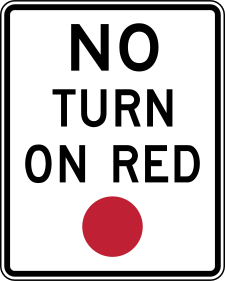
- You may not turn on a red light at this intersection
- Right turns are always allowed on red
- The signal is out of order
- Turn only when the light is red
Why: NO TURN ON RED prohibits the usual right-turn-on-red. Wait for a green indication before turning.
- Traffic SignalsEasy
14. What does this sign tell drivers turning left on a circular green light?
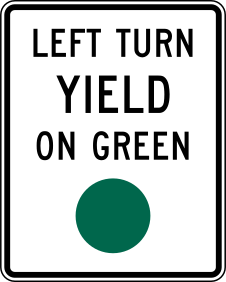
- Yield to oncoming traffic before turning left
- Left turns are protected; go without yielding
- Left turns are prohibited
- Stop and wait for a green arrow
Why: LEFT TURN YIELD ON GREEN means a circular green does not protect your turn. Yield to oncoming traffic and pedestrians first.
- Traffic SignalsEasy
15. Where must you stop when this sign is posted and the light is red?
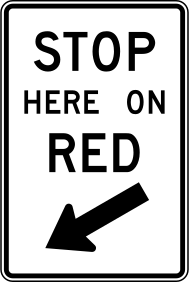
- At the location indicated by the sign and stop line
- Anywhere in the intersection
- Past the crosswalk
- Only behind another vehicle
Why: STOP HERE ON RED marks the legal stopping point, keeping crosswalks and sensors clear. Stop at the line by the sign.
- Traffic SignalsEasy
16. When may you turn left where this sign is posted?
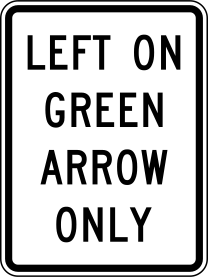
- Only when the green arrow is displayed
- Any time traffic is clear
- On a circular green after yielding
- Never
Why: LEFT ON GREEN ARROW ONLY means left turns are allowed only during the protected green arrow phase.
- Traffic SignalsEasy
17. What is this sign telling pedestrians?
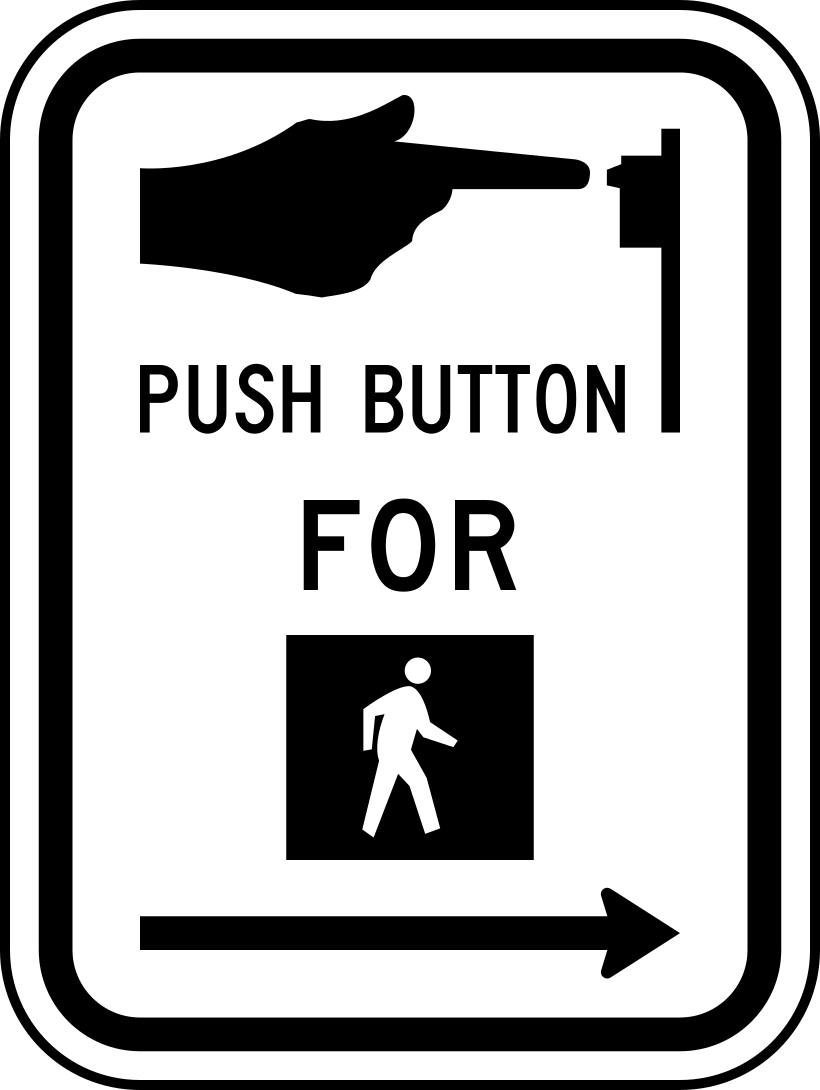
- Push the button to request a walk signal
- Pedestrians are prohibited
- Cross only at night
- Wait for a police officer
Why: Push-button signs tell pedestrians to press the button and wait for the WALK signal before crossing.
- Traffic SignalsEasy
18. What does this sign warn you about?
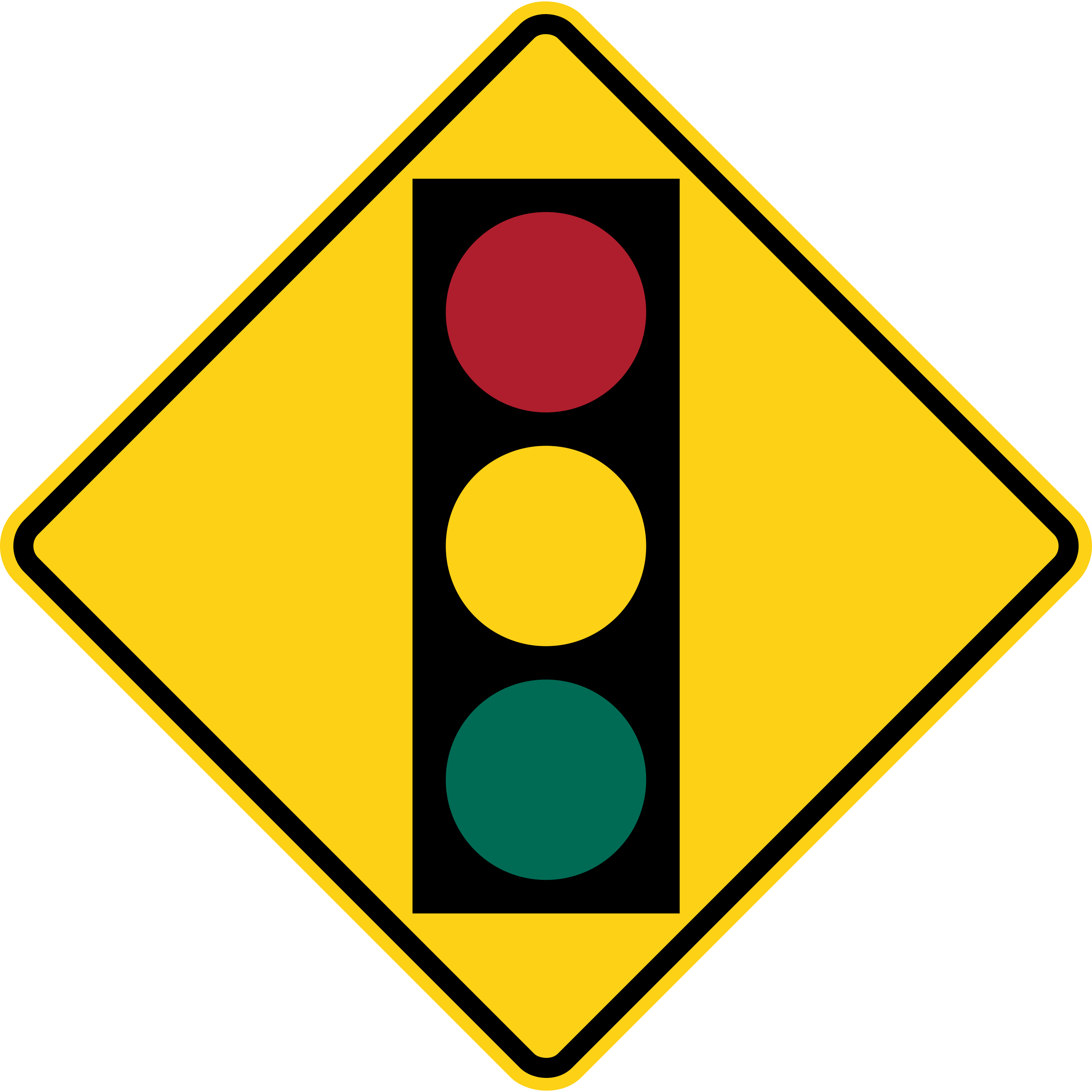
- A traffic signal is ahead; be ready to stop if it is red
- A railroad crossing with flashing lights
- The signal ahead is broken
- A school zone begins
Why: The signal-ahead warning sign is posted where a traffic light may be hidden by a curve, hill, or trees. Start slowing so you can stop safely if the light is red.
Traffic signal FAQ
How many traffic signal questions are on the DMV test?
It varies by state, but signals and signs together usually make up a large share of the written test. Expect several questions about lights, arrows, and what to do at special signals like flashing red or railroad crossings.
Can I turn right on a red light?
In most states, yes, after a complete stop and when the way is clear, unless a NO TURN ON RED sign is posted. A few places, like New York City, prohibit it by default, so always check your state handbook.
What is the difference between a green light and a green arrow?
A circular green means go, but left turns must yield to oncoming traffic. A green arrow is a protected movement: opposing traffic is held by a red light while you turn.
Are these the official DMV test questions?
No. These are original educational practice questions based on official handbook topics. They prepare you for the style and content of the real exam, which uses its own questions.
Signal rules can vary slightly by state (for example, turns on red arrows). Always confirm the current rules in your official state driver handbook via our DMV handbooks page.