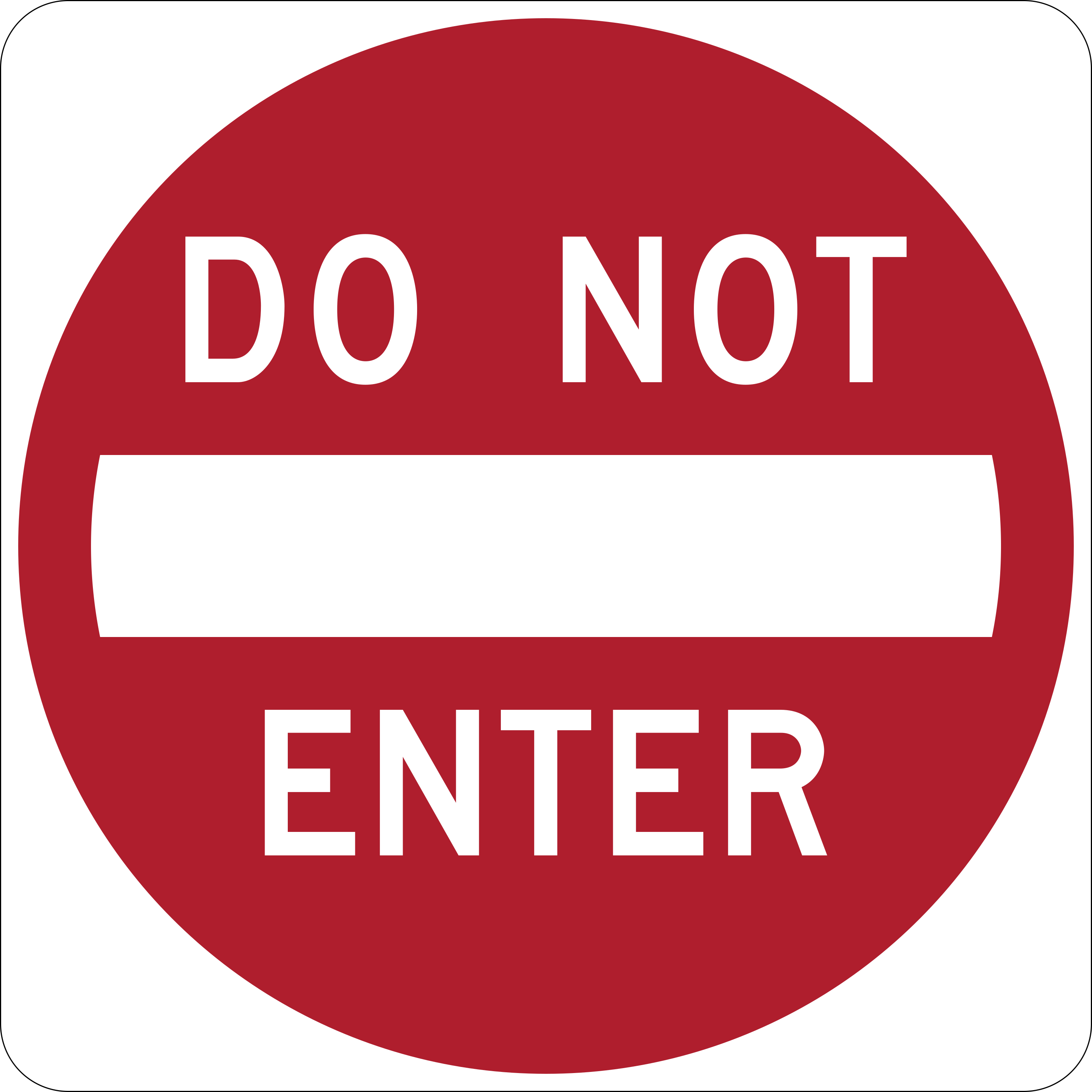
Do Not Enter Sign
Last updated:
A red circle slashed by a thick white bar is the road equivalent of a closed door, and it usually appears right where a tired or unfamiliar driver is most likely to make a deadly mistake. It marks an opening you can physically drive through but legally and safely must not. Confusing it with the wrong-way sign is a classic exam trap.
What it means
The do not enter sign means traffic is prohibited from entering the roadway or ramp ahead from your direction. It is posted at the exit end of one-way streets, at freeway off-ramps, and at other points where entering would put you head-on against legal traffic. If you see it facing you, the path beyond is open only to traffic coming toward you.
Why this sign exists
This sign exists to prevent the catastrophic head-on and wrong-way crashes that occur when drivers enter one-way roads or freeway ramps backwards. Engineers needed an instantly recognizable prohibition that worked even for drivers unfamiliar with the area or impaired by fatigue or alcohol, which is when many wrong-way entries happen. The red circle is the international symbol for prohibition, and the bold horizontal white bar reads as a barrier blocking the way without requiring any text. Mounting it on a square white background makes the round prohibition symbol stand out and visible from a distance at the decision point. The symbolic design also crosses language barriers, which matters at airports, border areas, and tourist-heavy interchanges.
Where you see it
You will encounter do not enter signs at the far end of one-way streets, at the bottom of freeway off-ramps where on-ramp drivers might mistakenly turn in, and at the entrances to divided highways. They also guard service drives, transit-only lanes, and parking lot aisles that flow one direction. Often a pair of them flank both sides of the forbidden opening for emphasis.
Real driving scenarios
- At night you approach a divided highway and the ramp on your left shows a do not enter sign, signaling that it is an off-ramp, so you continue to the correct on-ramp.
- You are looking for a parking spot and a lot aisle shows do not enter, so you take the next aisle that flows in your direction.
- You start to turn onto a street and spot do not enter facing you, telling you it is one-way coming toward you, so you choose another route.
What happens if you ignore it
Driving past a do not enter sign can place you head-on into oncoming traffic on a one-way street or, far worse, against high-speed freeway traffic, which produces some of the most lethal crashes on the road. Wrong-way freeway entries have a high fatality rate because closing speeds can exceed a hundred miles per hour. Legally, entering against this sign is a serious moving violation that can bring fines, points, and in many states aggravated penalties if impairment or a crash is involved. Insurance and licensing consequences escalate quickly for wrong-way driving.
DMV exam trick questions
The phrasings that catch people out on the written test:
What is the difference between a do not enter sign and a wrong way sign?
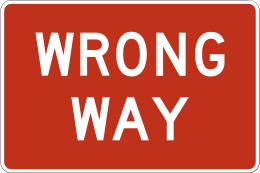
Do not enter is a red circle with a white bar and faces you at the entry point. Wrong way is a red rectangle with text and is placed farther along to alert a driver who already entered.
If you see a do not enter sign, can you turn in if the road looks empty?
No. The road may be empty only because traffic legally flows the other direction. Entering still places you against oncoming traffic and is prohibited.
Does a do not enter sign apply to bicycles too?
Generally yes. Unless a sign specifically exempts them, the prohibition applies to all vehicles entering the restricted roadway.
How it compares to similar signs
- vs Wrong way sign: Do not enter is round on a square and stops you at the mouth of the wrong road. Wrong way is a horizontal rectangle with words and appears after the entrance to catch a driver who already got in.
- vs One way sign: A one way sign is a horizontal arrow showing the only permitted direction of travel. Do not enter simply forbids your entry from where you stand without indicating any direction you may go.
Memory aid
A red door with a white plank nailed across it: the way ahead is barred to you.
State-by-state notes
The sign and its meaning are uniform nationwide. Some states attach enhanced penalties for wrong-way entry onto controlled-access highways, and a few use additional flashing warnings at ramps known for wrong-way problems.
Common mistakes
- Confusing it with the wrong way sign and missing that this one marks the entry point.
- Assuming an empty road means entry is allowed.
- Turning onto a one-way street the wrong direction despite the sign facing you.
Keep studying this topic
Related signs
Do Not Enter Sign FAQ
What does a do not enter sign mean?
It means you are prohibited from entering the road or ramp ahead, because traffic there flows toward you. It commonly marks the exit end of one-way streets and freeway off-ramps.
Where are do not enter signs usually placed?
At the entry points of one-way streets, freeway off-ramps, divided highways, and one-direction parking aisles, often facing drivers who might turn in the wrong way.
Is it dangerous to ignore a do not enter sign?
Very. It can put you head-on into one-way or freeway traffic, which causes some of the deadliest crashes, and carries serious legal penalties.
How is do not enter different from wrong way?
Do not enter is the round symbol at the entrance that stops you before you turn in. Wrong way is the worded rectangle placed beyond the entrance for drivers who already entered.
Why does the sign use a symbol instead of words?
A red circle with a white bar is understood instantly and across languages, which matters because wrong-way entries often involve tired, impaired, or unfamiliar drivers.