Oregon Permit Test Guide: Requirements, Score, and How to Pass

Oregon issues the instruction permit through Driver and Motor Vehicle Services, the DMV division of the Oregon Department of Transportation. To get one you pass a written knowledge test based on the Oregon Driver Manual, covering road signs, traffic laws, and safe driving. Oregon's manual and test put noticeable weight on sharing the road with bicycles and pedestrians, reflecting the state's strong cycling and pedestrian culture.
This guide explains the age rules, the documents you need, how the 35-question exam is scored, what it costs, and how to study so you pass the first time. The figures here reflect current DMV rules, but confirm them on the official Oregon DMV website before your visit, since requirements can change.
What this guide covers
- Age and the path to a license
- Documents and parental consent
- How the knowledge test is scored
- Sharing the road with bikes and pedestrians
- Fees, retakes, and a study plan
- Common reasons applicants fail the Oregon test
- What test day is like at the DMV
- After you pass: Oregon's graduated licensing road ahead
Age and the path to a license
You can apply for an instruction permit in Oregon at age 15. The permit lets you practice with a licensed adult and is the first stage of Oregon's graduated driver licensing system for teens, which leads to a provisional license with night and passenger restrictions.
If you are under 18, you must hold the permit for at least six months and either complete an approved driver education course plus 50 hours of supervised driving, or skip driver education and log 100 hours of supervised driving. That trade-off is worth planning around, since driver education cuts the required practice hours in half.
Documents and parental consent
Oregon verifies your identity, date of birth, Social Security number, and Oregon residency. Bring originals or certified copies, since photocopies of identity documents are generally not accepted.
Applicants under 18 need a parent or legal guardian to sign the application. Reviewing the Oregon DMV's acceptable-documents list before you go, and bringing more than the minimum, is the simplest way to avoid a return trip after you pass the test.
- Proof of identity and date of birth, such as a certified birth certificate or passport
- Proof of your Social Security number
- Proof of Oregon residency
- A parent or legal guardian signature if you are under 18
How the knowledge test is scored
The Oregon knowledge test has 35 questions, and you must answer 28 correctly, which is 80 percent, to pass. The exam combines road signs, traffic laws, and safe-driving topics in one section drawn from the Oregon Driver Manual.
You can miss seven questions and still pass, but the test draws from across the manual, so broad preparation is safest. Skipping a whole topic is the quickest way to lose more than your margin in one area.
Sharing the road with bikes and pedestrians
Oregon places real emphasis on protecting vulnerable road users, and its test reflects that. Cyclists have the same rights and responsibilities as drivers, and you must give them room when passing and watch for them at intersections and in bike lanes. Do not drive in a bike lane except where the law allows a brief merge to turn, and yield to any cyclist already there.
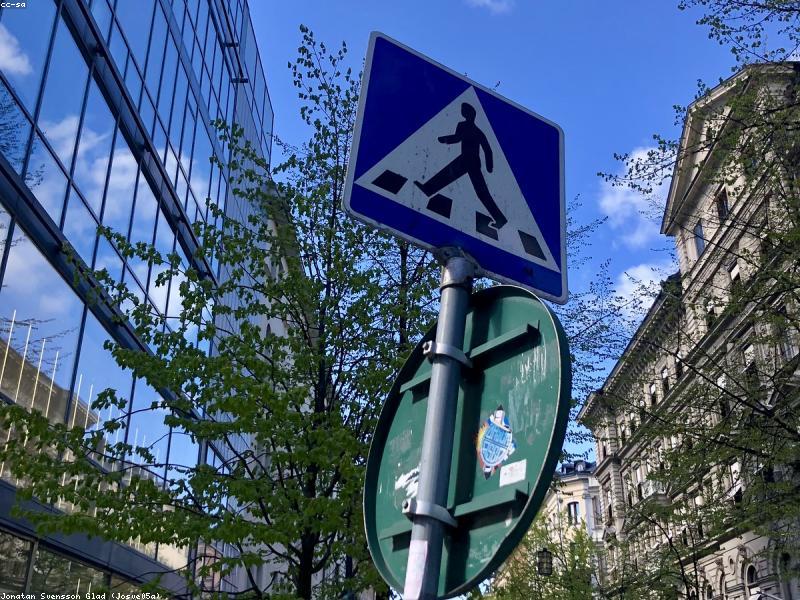
Pedestrian rules are also prominent. Oregon law treats every intersection as a crosswalk, marked or not, and drivers must stop and remain stopped for pedestrians crossing in their lane and the adjacent one. Expect questions on yielding to pedestrians and cyclists, so review those sections of the manual closely.
Fees, retakes, and a study plan
The instruction permit carries a DMV fee paid when it is issued. The current amount is on the Oregon DMV website, so check it before your visit.
If you do not pass, Oregon lets you retake the knowledge test, sometimes after a short wait and a retest fee. To prepare, read the Oregon Driver Manual chapter by chapter, drill road signs separately, and pay extra attention to the bicycle and pedestrian rules. Take full-length 35-question practice tests graded against the 80 percent line, and keep practicing until you are scoring well above 28 correct consistently before the real exam.
Common reasons applicants fail the Oregon test
On a 35-question test with seven misses allowed, the most common failure is a weak topic combined with careless errors. In Oregon, the topic applicants most often underprepare is exactly the one the state emphasizes: sharing the road with bicycles and pedestrians, including the rule that every intersection is a crosswalk. Skip that section and you leave easy points on the table.
Misreading is the next cause. Questions framed with except, always, or never reward deliberate reading and punish skimming. A third pattern is leaning on driver education alone and skipping manual study. The course matters, and it changes how many supervised hours you need, but you still have to study the Oregon Driver Manual and practice test-format questions to pass comfortably.
What test day is like at the DMV
At an Oregon DMV office you will check in, have your documents verified, and complete a vision screening before the knowledge test. The test is typically taken at a computer terminal, and you answer the 35 questions at your own pace, so there is no need to rush.
Arrive early at busy offices, and bring every required document in original form, plus parental consent if you are under 18. A missing item can stop the process even after a passing score. Going in rested and reading each question carefully matters more than speed, and you have prepared for exactly this format.
After you pass: Oregon's graduated licensing road ahead
The instruction permit is the first stage of Oregon's graduated driver licensing system. With it you practice driving only while supervised by a qualified licensed adult, and you log supervised hours, either 50 with an approved driver education course or 100 without one, including night driving.
After meeting the six-month holding period and your practice hours, you can take the road test for a provisional license, which restricts late-night driving and young passengers for a time before easing toward a full license. Because driver education halves the required practice hours, choosing it early can shorten your overall path, and passing the knowledge test promptly starts the clock.
FAQ
How many questions are on the Oregon permit test?
The Oregon knowledge test has 35 questions covering road signs, traffic laws, and safe driving. You must answer 28 correctly, which is 80 percent, to pass.
How old do you have to be to get a permit in Oregon?
You can apply for an instruction permit at age 15. If you are under 18, you must hold it for at least six months and complete either driver education plus 50 supervised hours, or 100 supervised hours without driver education.
Does the Oregon test focus on bicycles and pedestrians?
Yes. Oregon's manual and test emphasize sharing the road with cyclists and pedestrians. Oregon treats every intersection as a crosswalk, and drivers must yield to pedestrians and give cyclists room. Review those rules closely.
What is the passing score for the Oregon knowledge test?
You need 28 correct answers out of 35, which is 80 percent. The exam is a single section covering road signs, traffic laws, and safe driving.
About the author
Achyuth Kumar
Founder & Lead Researcher
Achyuth Kumar Maintainer of dmvmocktest.com in 2025 after watching friends and family struggle to study from dense state driver handbooks. He personally researches each state’s official handbook from the licensing agency, drafts the practice questions in his own words, writes the plain-language explanation that accompanies every answer, and re-checks each bank against the published handbook before it goes live. He has reviewed all 50 US state driver handbooks, the federal CDL manual, and the MUTCD road sign standard, and he updates the content whenever a state revises its rules. He is not a state employee and dmvmocktest.com is independent of every DMV.
Ready to practice?
Take a free DMV mock test for your state with instant answers and explanations, the same exam format the real DMV uses.