Right-of-Way Rules Explained
Right-of-way rules decide who goes first when two or more road users want the same space. They appear constantly on the written test and matter every single time you drive, because most collisions at intersections come down to someone taking a right-of-way they did not have. The key idea is simple but easy to misstate: the law mostly tells you when you must yield, not when you are entitled to charge ahead. No one is ever truly given the right-of-way; drivers are only required to give it up. Treating it that way keeps you safe even when others get it wrong.
This guide walks through the situations the test asks about most and that you will meet on real roads: four-way stops, uncontrolled intersections, T-intersections, roundabouts, left turns across oncoming traffic, pedestrians and crosswalks, emergency vehicles, school buses, and merging. Learn the logic behind each one and the answers stop being memorized rules and start feeling obvious.
What this guide covers
- Four-Way Stops
- Uncontrolled Intersections and T-Intersections
- Roundabouts
- Turning Left Across Traffic
- Pedestrians and Crosswalks
- Emergency Vehicles and School Buses
- Merging and Lane Changes
Four-Way Stops
At a four-way stop, every vehicle must come to a complete stop. The basic rule is first to stop, first to go. Whoever reaches the intersection and stops first has the right to proceed first, then the next driver follows, and so on in order of arrival.
When two vehicles stop at the same time, the driver on the left yields to the driver on the right. If two drivers facing each other arrive together and one is turning left, the left-turning driver yields to the one going straight or turning right. When in doubt, make eye contact and proceed cautiously rather than assuming the other driver knows the rule. A small courtesy here prevents the most common low-speed intersection crashes.
Uncontrolled Intersections and T-Intersections
An uncontrolled intersection has no signs or signals. These demand extra caution because nothing tells anyone to stop. The standard rule is that you yield to any vehicle already in the intersection and to the driver on your right if you arrive at roughly the same time. Slow down, look both ways, and be ready to give way even if you technically arrived first.
A T-intersection is where a road ends at another road. The driver on the road that ends, the one forming the stem of the T, must yield to traffic on the through road, which is the top of the T. Vehicles on the continuous road have the right to proceed, and the driver turning onto it from the ending road waits for a safe gap before entering or turning.
Roundabouts
Roundabouts move traffic in one direction around a central island, and the governing rule is straightforward: yield to traffic already in the circle. As you approach, slow down, watch for pedestrians at the crossings, and look to your left for vehicles already circulating. Enter only when there is a safe gap.
Once you are inside, you generally have priority over vehicles waiting to enter, so keep moving and do not stop in the circle unless traffic ahead forces it. Signal before you exit so drivers behind and those waiting to enter can read your intentions. Larger multi-lane roundabouts add lane discipline, so choose your lane before entering based on whether you intend to turn, go straight, or continue around, and follow any posted lane signs.
Turning Left Across Traffic
Turning left is one of the most dangerous everyday maneuvers because it crosses the path of oncoming traffic. The rule is firm: a driver turning left must yield to oncoming vehicles going straight or turning right. Even with a green light, unless you have a green arrow, you wait for a gap large enough to complete the turn without forcing anyone to brake.
A green arrow is a protected turn, meaning oncoming traffic is stopped and you may proceed. A plain green light is a permitted turn, meaning you may turn only after yielding. Misreading this difference is a frequent cause of serious crashes. Watch for oncoming vehicles hidden behind a closer car, and never assume an approaching driver will slow for you. Patience here is far cheaper than a collision.
Pedestrians and Crosswalks
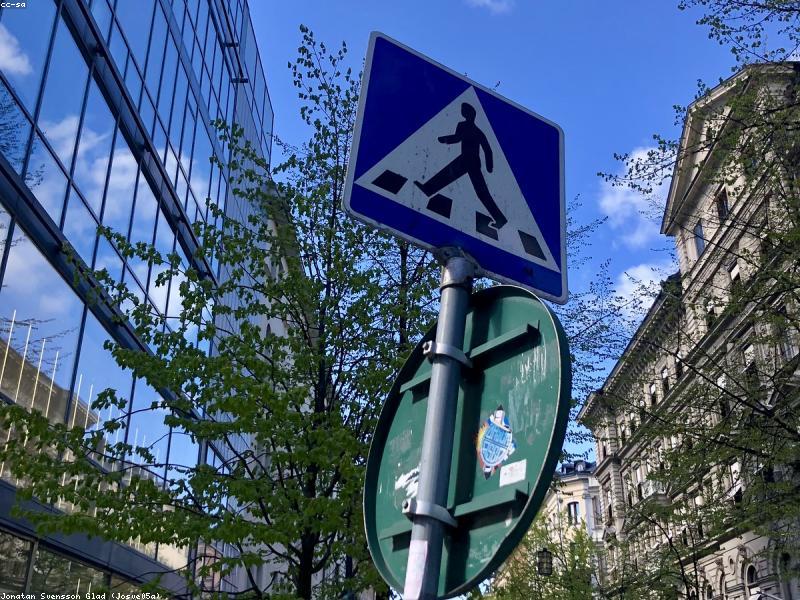
Pedestrians generally have the right-of-way at marked and unmarked crosswalks, and drivers must yield to anyone already crossing or stepping into the road. This applies even where there is no painted crosswalk, because an unmarked crosswalk legally exists at most intersections.
There are specific situations every driver should treat as absolute. Stop for pedestrians using a crosswalk, give extra room and time to anyone who is older, very young, or using a cane or guide dog, and never pass a vehicle stopped at a crosswalk because it may be yielding to someone you cannot see. When turning, check the crosswalk you are turning into, since pedestrians often have a walk signal at the same time you have a green light.
- Yield to pedestrians in marked and unmarked crosswalks
- Do not pass a vehicle stopped at a crosswalk; a pedestrian may be hidden
- Give blind pedestrians with a cane or guide dog the right-of-way
- Check the crosswalk you are turning into before completing the turn
Emergency Vehicles and School Buses
When an emergency vehicle approaches with lights or siren active, you must yield. The standard action is to pull over to the right edge of the road, stop, and wait until it has passed. Do not block intersections, and never try to outrun it or follow closely behind. On divided highways, traffic moving in the opposite direction is often not required to stop, but you should still slow and stay alert.
School buses carry their own strict rule. When a stopped school bus displays flashing red lights and an extended stop arm, traffic must stop in both directions on an undivided road, because children may be crossing. On a divided highway with a physical median, drivers behind the bus must stop while oncoming traffic separated by the median often may proceed, though some states require everyone to stop. Because this rule varies, confirm your state law and, when unsure, stop. The risk of guessing wrong is far too high.
Merging and Lane Changes
When merging onto a highway, the responsibility to yield falls on you, the driver entering. Use the on-ramp to match the speed of highway traffic, watch for a gap, signal, and merge smoothly without forcing other drivers to brake hard. Stopping at the end of an on-ramp is dangerous and should be avoided unless traffic is at a standstill.
When two lanes merge into one, the cooperative approach is to alternate, often called the zipper merge, where drivers take turns blending together. Always signal before changing lanes, check your mirrors, and glance over your shoulder to clear your blind spot, because mirrors alone do not show everything beside you. The driver already established in a lane generally has the right-of-way, so the one moving over is the one who must wait for a safe space.
FAQ
Who has the right-of-way at a four-way stop?
The first vehicle to stop proceeds first. If two arrive at the same time, the driver on the left yields to the driver on the right. A left-turning driver yields to oncoming traffic going straight.
Do I always have to stop for a school bus with flashing red lights?
On undivided roads, traffic must stop in both directions. On divided highways with a median, rules vary by state, and oncoming traffic may proceed in some places. When unsure, stop, since children may be crossing.
What is the difference between a green light and a green arrow for turning left?
A green arrow is a protected turn, meaning oncoming traffic is stopped and you may go. A plain green light is permitted, so you must yield to oncoming traffic and turn only when there is a safe gap.
Who yields when merging onto a highway?
The driver entering the highway must yield to traffic already on it. Match the speed of traffic on the on-ramp, find a gap, signal, and merge smoothly without forcing other drivers to brake.
Does a pedestrian always have the right-of-way?
Pedestrians generally have the right-of-way in marked and unmarked crosswalks, and you must yield to anyone crossing. Pedestrians should still cross safely, but as a driver you are expected to stop and let them pass.
About the author
Achyuth Kumar
Founder & Lead Researcher
Achyuth Kumar Maintainer of dmvmocktest.com in 2025 after watching friends and family struggle to study from dense state driver handbooks. He personally researches each state’s official handbook from the licensing agency, drafts the practice questions in his own words, writes the plain-language explanation that accompanies every answer, and re-checks each bank against the published handbook before it goes live. He has reviewed all 50 US state driver handbooks, the federal CDL manual, and the MUTCD road sign standard, and he updates the content whenever a state revises its rules. He is not a state employee and dmvmocktest.com is independent of every DMV.
Ready to practice?
Take a free DMV mock test for your state with instant answers and explanations, the same exam format the real DMV uses.