Sharing the Road With Bicycles and Pedestrians: A Driver's Guide

Cyclists and pedestrians are the most vulnerable people on the road. They have no metal cage, airbags, or seat belts, so a mistake by a driver can have severe consequences. That is why traffic law puts a strong duty of care on drivers around them, and why the permit test asks about crosswalks, bike lanes, and right of way so often.
This guide explains how to share the road safely with bicycles and pedestrians: the passing distance for cyclists, crosswalk and right-of-way rules, how to handle bike lanes, turns, and school zones, and the mistakes to avoid. These are general best practices; specific distances and rules vary by state, so always follow your state driver handbook and local signs.
What this guide covers
- Treat bicycles as vehicles
- Give cyclists a safe passing distance
- Crosswalks and pedestrian right of way
- Bike lanes, turns, and parked cars
- School zones, children, and special care
- Common mistakes to avoid
- Sharing the road with other vulnerable users
- Weather, night, and reduced visibility
Treat bicycles as vehicles
In most states, a person riding a bicycle on the road has the same rights and responsibilities as the driver of a vehicle. That means cyclists are allowed to use the travel lane, must obey traffic signals and signs, and are entitled to their space on the road. As a driver, you should expect to see bikes and treat them as legitimate traffic rather than obstacles.
Cyclists are harder to see and move at variable speeds, so scan for them especially at intersections, driveways, and when you are about to turn. A quick look does not always catch a bike, so make a habit of looking twice in areas where cyclists are common.
Give cyclists a safe passing distance
When you pass a bicycle, give it plenty of room. Many states require a minimum of three feet of clearance between your vehicle and the cyclist, and some require more, especially at higher speeds. Where the lane is too narrow to pass safely with that space, wait until it is clear to move partly or fully into the next lane to go around.
Pass slowly and predictably, and never squeeze past a cyclist in the same lane when there is not enough room. After passing, do not cut back in front of the bike too soon. A gust from a passing car or a sudden lane intrusion can knock a rider off balance, so leave space until you are well clear.
- Leave at least three feet when passing a cyclist, or more where required
- Change lanes to pass when the lane is too narrow to share
- Do not cut back in front of the bike until you are well clear
- Slow down and pass predictably, never squeeze by
Crosswalks and pedestrian right of way
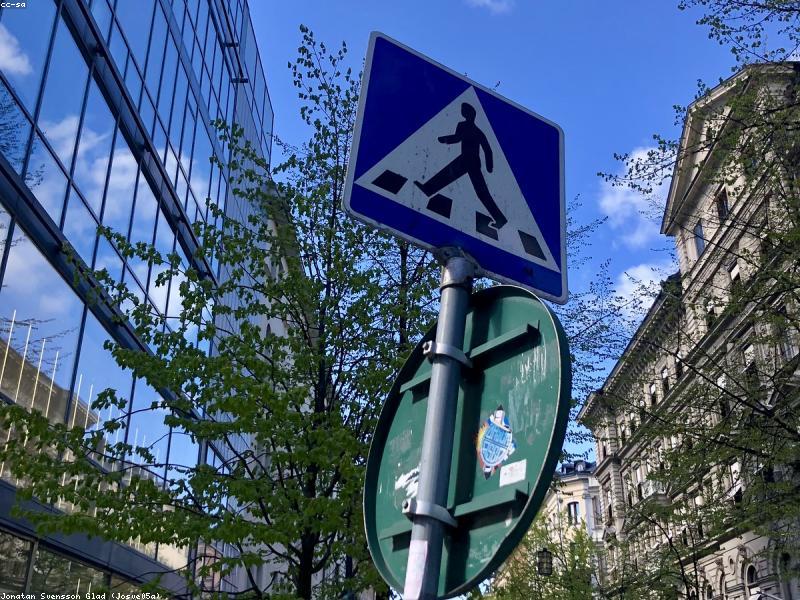
Pedestrians generally have the right of way in marked and many unmarked crosswalks, and drivers must yield to them. When a pedestrian is in a crosswalk or stepping into one, stop and let them cross. Do not stop in the crosswalk itself, since that forces pedestrians, including wheelchair users and parents with strollers, into traffic to get around your car.
Be especially careful at intersections where you are turning, because a turning driver crosses the path of pedestrians in the crosswalk. Watch for people who are about to step off the curb, and never pass a vehicle stopped at a crosswalk, since it may be stopped for someone you cannot see.
Bike lanes, turns, and parked cars
A bike lane is reserved for cyclists, marked by a solid line and bike symbols. Do not drive or park in a bike lane except where the law allows you to merge into it briefly to make a right turn, and only after yielding to any cyclist already in it. When turning right across a bike lane, signal early, check for bikes, and merge carefully.
Near parked cars, watch for opening doors and for cyclists who move left to avoid them. A rider may suddenly swing out to dodge a car door, so give bikes room when you pass a line of parked vehicles. When you park, check your mirror and over your shoulder before opening your own door so you do not door a passing cyclist.
School zones, children, and special care
Children are unpredictable pedestrians. They may dart into the street chasing a ball or step out from between parked cars without looking. In school zones and residential areas, slow down, obey reduced speed limits, and scan the sidewalks and curbs constantly. Stop for school buses with flashing red lights as your state requires, since children cross around them.
Show the same care for other vulnerable pedestrians: older adults who move slowly, people using canes or wheelchairs, and anyone who may not see or hear you. A driver who slows down and stays alert in these areas prevents the kind of low-speed crash that can still cause serious injury.
Common mistakes to avoid
The mistakes that hurt cyclists and pedestrians are usually about attention and space: passing a bike too closely, turning across a bike lane without checking, failing to yield in a crosswalk, stopping on top of the crosswalk, and passing a car stopped for a pedestrian. Distraction makes all of these worse, since a phone glance is enough to miss a person stepping off a curb.
Build the right habits: look twice for bikes at intersections and turns, give a wide berth when passing, yield to pedestrians and stop short of the crosswalk, and slow down in school and residential zones. Treating the most vulnerable road users with extra care is both the law and the mark of a good driver.
Sharing the road with other vulnerable users
Cyclists and pedestrians are not the only vulnerable people you share the road with. Electric scooters, skateboards, wheelchairs and mobility devices, and people walking dogs all move in and near traffic, often at unpredictable speeds and angles. Treat anyone outside a vehicle as someone who could be seriously hurt by a mistake, and give them the same room and patience you would a cyclist.
Be especially alert near transit stops, where people cross to and from buses, and in parking lots, where pedestrians of every age move between cars. Low speeds in these areas are deceptive, because even a slow-speed impact can injure a child or older adult. Slowing down and scanning constantly is the habit that protects everyone who is not surrounded by a car.
Weather, night, and reduced visibility
Cyclists and pedestrians are hardest to see exactly when crashes are most likely: at night, at dawn and dusk, and in rain, fog, or snow. A pedestrian in dark clothing or a cyclist with a weak light can be nearly invisible until you are close, so reduce your speed in poor visibility and look carefully at crosswalks, shoulders, and bike lanes.
Use your headlights when visibility drops, and avoid high beams when you might dazzle someone walking or riding toward you. Wet roads also lengthen your stopping distance, so leave more room when passing a cyclist and approach crosswalks ready to stop. Extra caution in these conditions is the difference between seeing a vulnerable road user in time and not seeing them at all.
FAQ
How much space should I give a cyclist when passing?
Many states require at least three feet of clearance when passing a bicycle, and some require more at higher speeds. If the lane is too narrow to pass safely with that space, change lanes to go around or wait until it is clear.
Do pedestrians always have the right of way?
Pedestrians generally have the right of way in marked and many unmarked crosswalks, and drivers must yield. Pedestrians still must not step suddenly into traffic, but as a driver you should always be prepared to stop for someone crossing.
Can I drive or turn in a bike lane?
Do not drive or park in a bike lane except where the law lets you merge into it briefly to make a right turn, and only after yielding to any cyclist already there. Signal early and check for bikes before crossing a bike lane.
Why should I look twice for bicycles?
Bicycles are small, hard to see, and move at variable speeds, so a single quick glance can miss one, especially at intersections, driveways, and turns. Looking twice in areas where cyclists are common helps prevent the most serious bike crashes.
About the author
Achyuth Kumar
Founder & Lead Researcher
Achyuth Kumar Maintainer of dmvmocktest.com in 2025 after watching friends and family struggle to study from dense state driver handbooks. He personally researches each state’s official handbook from the licensing agency, drafts the practice questions in his own words, writes the plain-language explanation that accompanies every answer, and re-checks each bank against the published handbook before it goes live. He has reviewed all 50 US state driver handbooks, the federal CDL manual, and the MUTCD road sign standard, and he updates the content whenever a state revises its rules. He is not a state employee and dmvmocktest.com is independent of every DMV.
Ready to practice?
Take a free DMV mock test for your state with instant answers and explanations, the same exam format the real DMV uses.