How to Drive a Roundabout Safely

Roundabouts confuse a lot of drivers, yet they are one of the safest intersection designs ever built. By moving traffic in a single direction around a central island, they remove the head-on and high-speed side-impact crashes that happen at traditional intersections, and they keep traffic flowing without a red light. They are spreading quickly across the country, which is why the written test now asks about them and why every new driver should be comfortable using one.
This guide walks through a roundabout step by step: how to read the approach, when and to whom you yield, how to enter and travel through, and how to signal and exit cleanly. It also covers multi-lane roundabouts, sharing the space with pedestrians and cyclists, and the handful of mistakes that cause almost all roundabout trouble. The core rule is short and worth memorizing now: slow down, yield to traffic already in the circle, and keep moving once you are in.
What this guide covers
- What a Roundabout Is and Why It Works
- Approaching the Roundabout
- Yielding and Entering
- Driving Through and Exiting
- Multi-Lane Roundabouts
- Pedestrians, Cyclists, and Emergency Vehicles
- Common Roundabout Mistakes to Avoid
What a Roundabout Is and Why It Works
A roundabout is a circular intersection where traffic flows counterclockwise around a raised center island. Vehicles entering must yield to those already circulating, and because everyone is moving the same direction at low speed, the dangerous conflict points of a standard intersection mostly disappear. There is no signal to beat, so drivers slow rather than speed up to make a light.
The safety record is the reason they keep appearing. Lower speeds and the absence of crossing or oncoming paths mean that the crashes that do occur tend to be minor. Roundabouts also keep traffic moving steadily, reducing the long idling lines that build at signals. Understanding that the whole design rests on yield-and-flow makes every specific rule below feel natural rather than arbitrary.
Approaching the Roundabout
Your work starts well before the circle. As you approach, slow down and read the signs, because many roundabouts post the exits and lane assignments in advance. A yellow warning sign with a circular arrow tells you a roundabout is ahead, and a regulatory sign at the entry shows you must yield. Begin braking early so you arrive at a low, controlled speed rather than stopping abruptly at the line.
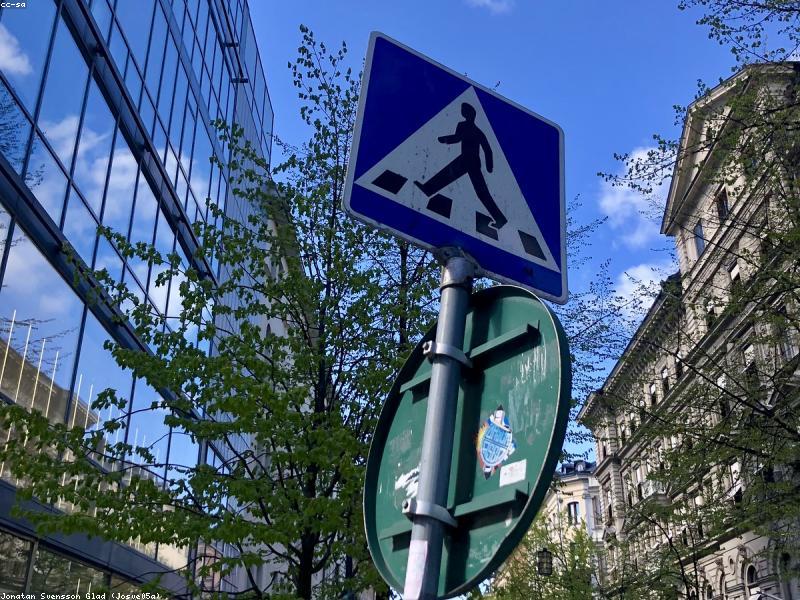
Decide your exit before you reach the circle. Knowing whether you want the first, second, or third exit lets you choose the correct lane on a multi-lane roundabout and signal at the right time. Watch for pedestrians at the crosswalks placed a short distance back from the entry, since you may need to stop for them before you even reach the yield line.
Yielding and Entering
At the entrance you will find a yield line, not a stop sign. You do not have to stop if the way is clear, but you must yield to any traffic already in the circle, which always has the right of way. Look to your left, because circulating traffic comes from that direction, and wait for a gap large enough to enter without forcing anyone to brake.
Enter only when you can merge smoothly into the flow. Do not creep into the circle and stop, and do not try to squeeze into a gap that is too small. Once a safe gap appears, accelerate gently to match the speed of circulating traffic and join it. A common error is treating the yield as a full stop every time, which frustrates drivers behind you; stop only when traffic in the circle requires it.
- Yield, do not stop, unless traffic in the circle requires it
- Look left for circulating traffic, which has the right of way
- Enter only on a gap big enough to merge without anyone braking
- Never enter beside a large truck, which may need both lanes to turn
Driving Through and Exiting
Once you are in the circle, you have priority over vehicles waiting to enter, so keep moving and do not stop unless traffic ahead forces it. Stay in your lane, hold a steady speed, and do not pass or change lanes inside a single-lane roundabout. Keep an eye on entries you pass, since an occasional driver may fail to yield, and be ready to ease off if one does.
Signaling for your exit is the step most drivers forget. As you pass the exit just before the one you want, turn on your right signal to tell others you are leaving. Exit into the correct lane, watch again for pedestrians in the crosswalk at the exit, and accelerate smoothly back to road speed. If you miss your exit, do not stop or reverse; simply continue around the circle and come back to it.
- In the circle you have priority over waiting vehicles; keep moving
- Signal right as you pass the exit before the one you want
- Watch for pedestrians in the crosswalk at your exit
- Missed your exit? Go around again rather than stopping
Multi-Lane Roundabouts
Larger roundabouts add a second or third lane, and these demand lane choice before you enter. Posted signs and pavement arrows show which lane serves which exit. As a general guide, use the right lane to turn right or go straight, and the left lane to go straight, turn left, or make a U-turn, but always follow the specific markings, which can vary by intersection.
Choose your lane before the yield line and stay in it through the circle, because changing lanes inside a busy multi-lane roundabout is where most conflicts happen. Be especially careful about large vehicles, which may straddle both lanes to get around, and never pull up alongside a truck or bus in a roundabout. If you end up in the wrong lane, take the exit that lane allows and reroute rather than cutting across someone.
Pedestrians, Cyclists, and Emergency Vehicles
Crosswalks at roundabouts are set back from the circle, on the approaches and exits, and pedestrians have the right of way there. Stop for anyone in or entering the crosswalk, and remember that a driver waiting to enter the circle should also be watching for people on foot behind them. The setback is deliberate, giving you a clear spot to stop without blocking circulating traffic.
Cyclists may either ride through the roundabout like a vehicle, taking the lane, or use a separate path and crosswalk; give them room either way and do not crowd a cyclist who is holding the lane. If an emergency vehicle approaches while you are in the circle, do not stop in the roundabout. Continue to your exit first, then pull over once you are clear, so you do not block the circle for everyone behind you.
Common Roundabout Mistakes to Avoid
Most roundabout trouble comes from a short list of habits. Stopping in the circle when nothing requires it backs up traffic and surprises the driver behind you. Failing to yield on entry, or entering on a gap that is too small, forces circulating drivers to brake and is a frequent cause of minor crashes. Both come from treating the roundabout like a familiar stop-sign intersection instead of a yield-and-flow design.
Other common errors are forgetting to signal the exit, changing lanes inside the circle, and choosing the wrong entry lane on a multi-lane roundabout. Each is easy to fix with the steps above: pick your lane and exit early, yield on the left, keep moving once inside, signal before you leave, and watch for people on foot at every crosswalk. Do those and a roundabout becomes one of the easiest and safest intersections you will drive.
FAQ
Who has the right of way in a roundabout?
Traffic already circulating in the roundabout has the right of way. Drivers approaching must yield at the entry and enter only when there is a safe gap, without forcing circulating traffic to brake.
Do I have to stop before entering a roundabout?
No. A roundabout entry has a yield line, not a stop sign, so you only stop if traffic in the circle or a pedestrian in the crosswalk requires it. If the way is clear, slow down and merge without stopping.
Should I use my turn signal in a roundabout?
Yes. Signal right as you pass the exit just before the one you intend to take, so other drivers know you are leaving the circle. On multi-lane roundabouts, also choose the correct lane before you enter based on your exit.
What do I do if I miss my exit?
Stay calm and keep driving around the circle until you reach your exit again. Never stop, reverse, or cut across lanes to reach an exit you passed, since that creates a serious crash risk.
Which lane do I use in a multi-lane roundabout?
Follow the posted signs and pavement arrows. In general, the right lane is for turning right or going straight, and the left lane is for going straight, turning left, or making a U-turn, but always defer to the specific markings.
About the author
Achyuth Kumar
Founder & Lead Researcher
Achyuth Kumar Maintainer of dmvmocktest.com in 2025 after watching friends and family struggle to study from dense state driver handbooks. He personally researches each state’s official handbook from the licensing agency, drafts the practice questions in his own words, writes the plain-language explanation that accompanies every answer, and re-checks each bank against the published handbook before it goes live. He has reviewed all 50 US state driver handbooks, the federal CDL manual, and the MUTCD road sign standard, and he updates the content whenever a state revises its rules. He is not a state employee and dmvmocktest.com is independent of every DMV.
Ready to practice?
Take a free DMV mock test for your state with instant answers and explanations, the same exam format the real DMV uses.