Traffic Lights and Signals Explained

Traffic signals do one job: they tell road users when to go, when to slow, and when to stop so everyone can share an intersection safely. Most drivers think they already know the colors, yet the written test still trips people up with flashing lights, arrows, and the rare dark signal. The colors are only half the story. What matters is the exact action each one asks of you.
This guide breaks signals into plain parts you will actually meet on the road. Once you can picture the correct move for each light, the test questions answer themselves and your everyday driving gets calmer and more predictable.
What this guide covers
- The Three Steady Colors
- Flashing Red and Flashing Yellow
- Green, Yellow, and Red Arrows
- Pedestrian and Walk Signals
- When a Signal Is Dark or Broken
- Lane Control and Special Signals
- How to Approach Any Signal Smoothly
The Three Steady Colors
A steady green means you may go if the way is clear, but it is permission, not a command. You still yield to pedestrians already crossing and to vehicles still finishing their move through the intersection. Green never means close your eyes and accelerate.
A steady yellow is a warning that red is coming, so you should stop if you can do so safely. It does not mean speed up to beat the light. A steady red means a full stop behind the line. In most states you may turn right on red after stopping and yielding, unless a sign forbids it, and a few places allow a left on red when turning from a one-way onto a one-way.
Flashing Red and Flashing Yellow
A flashing red light works exactly like a stop sign. Come to a complete stop, yield to any traffic and pedestrians, and proceed only when it is safe. You will often see these at quiet intersections late at night or when a signal is in a reduced mode.
A flashing yellow light means caution. You do not have to stop, but you should slow down, look carefully, and be ready to yield. Think of flashing red as stop and flashing yellow as proceed with care. Mixing these two up is one of the most common signal mistakes on the exam.
Green, Yellow, and Red Arrows
Arrows control a specific movement, usually a turn. A green arrow is a protected turn, which means traffic that would cross your path is being held by a red light, so you may turn without yielding to oncoming cars. You still watch for pedestrians.
A yellow arrow means the protected turn is ending and you should prepare to stop or yield. A red arrow means no turn in that direction right now, even if you would normally be allowed to turn on red. Wait for the arrow to change before moving.
Pedestrian and Walk Signals
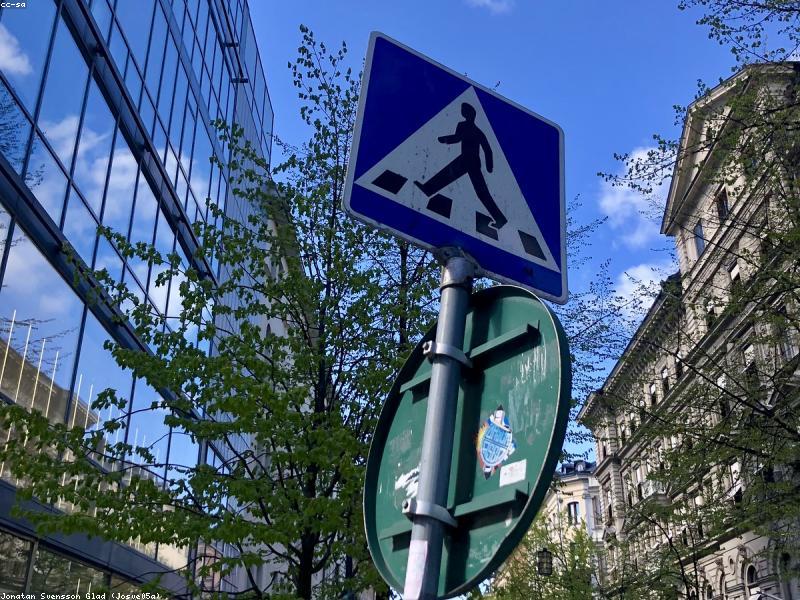
Pedestrian signals run alongside the main lights and protect people on foot. A steady walking person or the word WALK means a pedestrian may start to cross. A flashing hand or a countdown means do not start crossing, though anyone already in the crosswalk should keep going and finish.
As a driver, a green light for you can happen at the same moment pedestrians have a walk signal. Always scan the crosswalk you are turning into before you complete a turn, because someone may legally be stepping off the curb right where you are headed.
When a Signal Is Dark or Broken
If a traffic light is completely dark because of a power outage, treat the intersection as a four-way stop. Every driver stops, then proceeds in turn, using the same first to stop, first to go logic and yielding to the right when two arrive together.
If a signal is stuck on red or behaving strangely, do not gamble. Stop, wait for a clear and safe gap, and move through cautiously. Reporting a malfunctioning signal to local authorities is a good habit, but your first duty is to pass through without forcing anyone to brake.
Lane Control and Special Signals
Some roads use overhead lane signals. A green downward arrow means the lane below is open for you to use. A red X means the lane is closed and you must move out of it. A flashing yellow X often means the lane is changing direction or is for turning only, so prepare to merge.
Other special signals include the alternating red lights at a railroad crossing, which mean stop and wait for the train, and ramp meters that release one car at a time onto a busy highway. Each one has a single clear action, and learning that action is what keeps you safe and ready for test day.
- Green downward arrow: the lane is open
- Red X: the lane is closed, move over
- Flashing yellow X: lane is turning only or changing, prepare to merge
- Railroad lights flashing: stop and wait for the train to pass
How to Approach Any Signal Smoothly
Knowing the colors is one thing; arriving at the light calmly is another. As you near an intersection, lift off the gas a little and scan the whole scene: the light itself, the cross traffic, the crosswalks, and any turning vehicles. Reading early gives you time to react instead of slamming the brakes at the last second.
Watch out for a stale green, a light that has been green for a while and is likely to change soon. If you cannot tell how long it has been green, be ready for yellow. Covering the brake, which means hovering your foot over the pedal without pressing, shaves precious time off your stop. Approaching this way keeps your stops gentle, your passengers comfortable, and your following drivers unsurprised.
FAQ
Can I turn right on a red light?
In most states yes, after a complete stop and yielding to pedestrians and traffic, unless a posted sign says no turn on red. A red arrow, however, means you must wait and may not turn until it changes.
What is the difference between a flashing red and a flashing yellow light?
A flashing red light means stop, yield, and then go when safe, exactly like a stop sign. A flashing yellow light means slow down and proceed with caution. You do not have to stop for a flashing yellow.
What should I do if the traffic light is out completely?
Treat a dark intersection as a four-way stop. Every driver stops, yields to the right when arriving at the same time, and proceeds in the order they stopped.
What does a green arrow mean?
A green arrow is a protected turn. Cross traffic is stopped, so you may complete the turn without yielding to oncoming vehicles. You still watch for pedestrians in the crosswalk.
About the author
Achyuth Kumar
Founder & Lead Researcher
Achyuth Kumar Maintainer of dmvmocktest.com in 2025 after watching friends and family struggle to study from dense state driver handbooks. He personally researches each state’s official handbook from the licensing agency, drafts the practice questions in his own words, writes the plain-language explanation that accompanies every answer, and re-checks each bank against the published handbook before it goes live. He has reviewed all 50 US state driver handbooks, the federal CDL manual, and the MUTCD road sign standard, and he updates the content whenever a state revises its rules. He is not a state employee and dmvmocktest.com is independent of every DMV.
Ready to practice?
Take a free DMV mock test for your state with instant answers and explanations, the same exam format the real DMV uses.