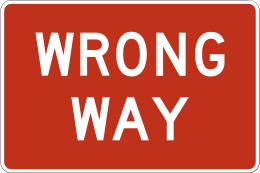
Wrong Way Sign
Last updated:
If the do not enter sign is the locked door, the wrong way sign is the alarm that goes off once you have already stepped through it. This stark red rectangle exists for one terrifying moment: you are now driving against traffic and need to stop, reconsider, and turn around immediately. Few signs carry such pure urgency in two short words.
What it means
The wrong way sign tells a driver who has entered a roadway against the legal flow that they are now traveling in the wrong direction and facing oncoming traffic. It is a second line of defense, placed beyond the do not enter sign, to catch a driver who missed or ignored the first warning. The required response is to slow, pull over safely, and reverse course at the earliest safe opportunity.
Why this sign exists
The wrong way sign was developed because a single prohibition at the ramp entrance is not always enough to stop confused, impaired, or distracted drivers, and wrong-way freeway crashes are so deadly that engineers built in redundancy. It is positioned farther down the ramp or roadway, at headlight height in many installations, so that even at night the driver's own beams catch it when they are already committed. The horizontal red rectangle and large white letters were chosen for maximum legibility and to convey danger and prohibition through red, the universal warning color. Spelling out the words rather than using a symbol forces a literal, unmistakable message at the instant a driver most needs a wake-up call. This layered system, do not enter first and wrong way second, is a deliberate engineering response to one of the highest-fatality crash types.
Where you see it
Wrong way signs are mounted along freeway off-ramps facing any driver who has turned onto the ramp backwards, often paired with or following a do not enter sign. They also appear on divided highways and one-way streets at points past the entrance where a wrong-way driver might still be traveling. Many are placed lower than usual so headlights illuminate them at night.
Real driving scenarios
- You took a freeway ramp at night and partway up your headlights hit a wrong way sign, so you stop, check for traffic, and back out or turn around safely.
- On an unfamiliar one-way street a wrong way sign appears ahead, confirming you turned in against the flow, so you pull to the curb and reverse direction.
- You realize you are facing a wrong way sign on a divided highway, so rather than panicking you signal, move to the shoulder, and find the next safe point to correct course.
What happens if you ignore it
Ignoring a wrong way sign means you are actively driving into oncoming traffic, the setup for head-on crashes that are among the most fatal because the impact speeds of both vehicles combine. On a freeway this can be unsurvivable, and it endangers every driver coming toward you. Legally, wrong-way driving is treated as a severe violation, often with elevated fines, points, and potential reckless-driving or impaired-driving charges. A crash resulting from wrong-way driving frequently leads to major civil liability and criminal exposure.
DMV exam trick questions
The phrasings that catch people out on the written test:
You see a wrong way sign. Should you make a quick U-turn immediately wherever you are?
Not blindly. Slow, get out of traffic safely, and turn around at the first safe opportunity. A panicked U-turn in front of oncoming traffic can cause the crash you are trying to avoid.
Is the wrong way sign the same as do not enter?
No. Do not enter stops you at the entrance, while wrong way warns you after you have already entered and are facing traffic. They work as a two-stage system.
Why are some wrong way signs mounted low to the ground?
So a vehicle's headlights illuminate them at night, when many wrong-way entries occur. Low mounting catches the impaired or drowsy driver's attention.
How it compares to similar signs
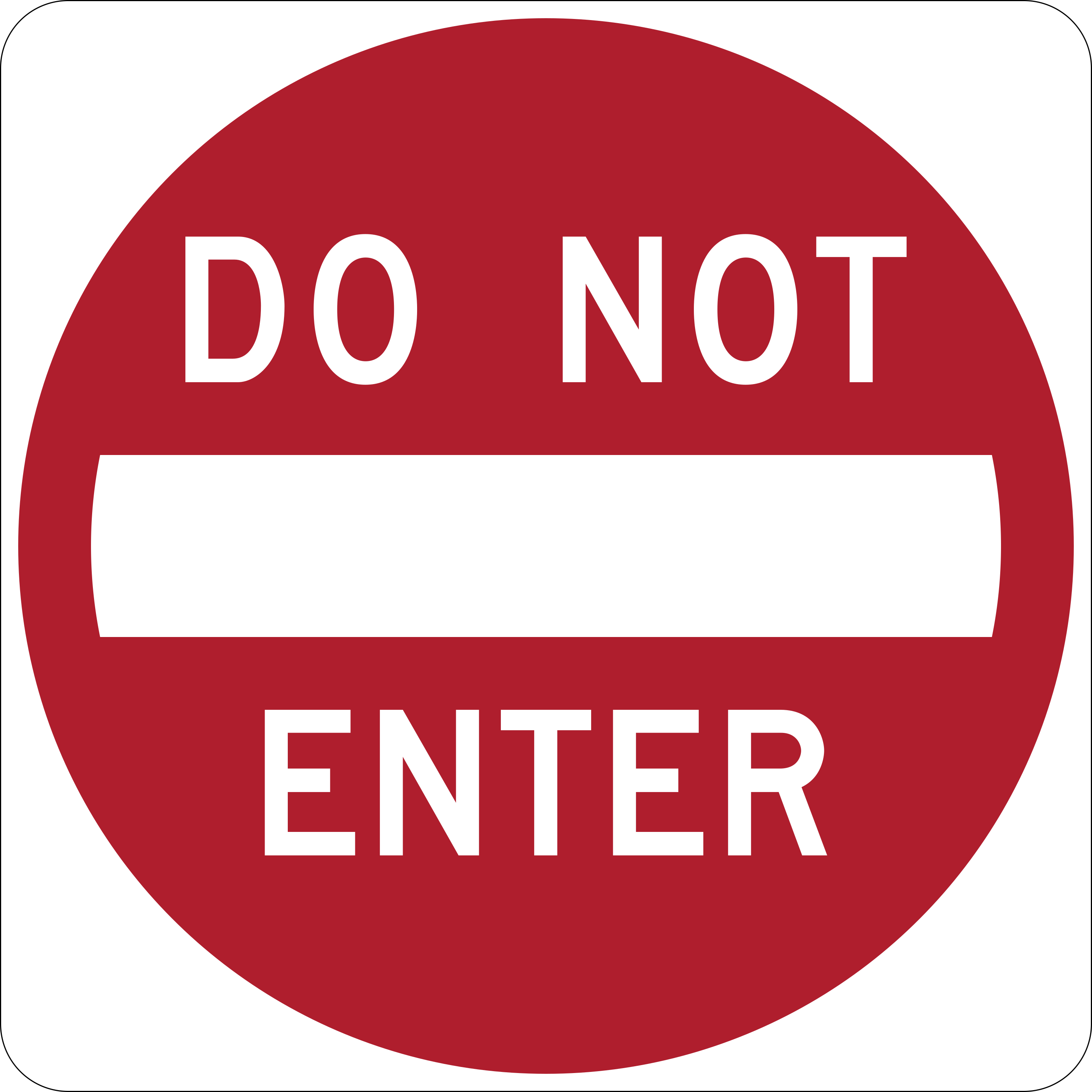
- vs Do not enter sign: Do not enter is the round symbol at the mouth of the wrong road, stopping you before you commit. Wrong way is the worded rectangle deeper in, warning you that you already entered and must reverse course.
- vs One way sign: A one way sign points to the single legal direction of travel and is informational. Wrong way is a red prohibition telling you that you are currently going against that legal direction.
Memory aid
Two red words, two seconds to live: WRONG WAY means stop the gamble and turn around.
State-by-state notes
The sign is standardized nationwide, but many states have invested in extra wrong-way countermeasures at high-risk ramps, such as flashing lights or lowered sign placement, and some impose enhanced penalties for wrong-way driving on controlled-access highways.
Common mistakes
- Freezing or making a reckless U-turn instead of safely pulling over to correct course.
- Mistaking it for a do not enter sign and missing that you have already entered.
- Assuming a clear road ahead means it is safe to continue rather than turning around.
Keep studying this topic
Related signs
Wrong Way Sign FAQ
What should I do if I see a wrong way sign?
Slow down, move out of the lane of traffic safely, and turn around or back out at the first safe opportunity. Do not continue forward against the flow.
How is the wrong way sign different from do not enter?
Do not enter is the round symbol at the entrance that stops you before turning in. Wrong way is the worded warning placed beyond the entrance for a driver who already entered.
Why are wrong way signs sometimes lower than other signs?
They are mounted low so headlights catch them at night, when many wrong-way entries happen due to fatigue, unfamiliarity, or impairment.
Why are wrong way crashes so deadly?
Because they are head-on collisions where the speeds of both vehicles combine, especially on freeways, producing extremely high-energy impacts.
Is wrong-way driving a serious offense?
Yes. It is treated as a severe moving violation in most states and can bring elevated penalties, particularly when impairment or a crash is involved.