Pavement Markings and Road Line Colors Explained

Pavement markings are the painted language of the road. Long before you reach a sign or a signal, the lines under your tires are already telling you where your lane is, whether you may pass, where to stop, and who shares the space beside you. They appear on nearly every written test because they govern lane discipline and passing, two of the most common sources of crashes. The good news is that the entire system runs on a few simple rules about color and pattern, and once those click, every marking you meet becomes easy to read at a glance.
This guide breaks pavement markings into plain parts: what yellow lines mean, what white lines mean, the difference between solid and broken lines, and the special markings such as crosswalks, stop lines, turn arrows, and colored curbs. Learn the logic behind each one and you will stop memorizing rules and start simply reading the road the way an experienced driver does.
What this guide covers
- Why Pavement Markings Matter
- Yellow Lines Separate Opposing Traffic
- White Lines Separate Same-Direction Traffic
- Solid Versus Broken: The Passing Logic
- Crosswalks, Stop Lines, and Turn Arrows
- Edge Lines, Curb Colors, and Special Lanes
- Reading Markings in Poor Conditions
Why Pavement Markings Matter
Markings do two jobs at once. They organize traffic by separating lanes and directions, and they communicate rules in places where a sign would be easy to miss. A driver who reads the lines correctly knows whether the oncoming lane is fair game for passing, where a bike lane begins, and exactly where the car must stop at an intersection, all without taking their eyes off the road for long.
Because markings carry legal weight, crossing them improperly is a violation in itself. Drifting across a solid line, passing where the line forbids it, or stopping past a stop line can each draw a ticket and, more importantly, set up a collision. Treat the painted lines with the same respect you give a posted sign, because in the eyes of the law they carry the same authority.
Yellow Lines Separate Opposing Traffic
The first rule to lock in is the meaning of color. Yellow lines separate traffic moving in opposite directions. Whenever you see yellow to your left, it is reminding you that traffic on the other side is coming toward you, so the space beyond that line belongs to oncoming vehicles. This single fact explains almost every yellow-line rule you will be tested on.
The pattern of the yellow line then tells you whether passing is allowed. A broken yellow line means passing is permitted when it is safe and the way ahead is clear. A solid yellow line on your side means you may not cross to pass. Where you see two solid yellow lines, neither direction may pass, and you must not cross them except to turn into or out of a driveway or road where it is legal to do so.
- Broken yellow line: you may pass when the road ahead is clear and safe
- Solid yellow on your side: no passing in your direction
- Double solid yellow: no passing either direction; cross only to turn where permitted
- Solid and broken together: passing allowed only from the broken side
White Lines Separate Same-Direction Traffic
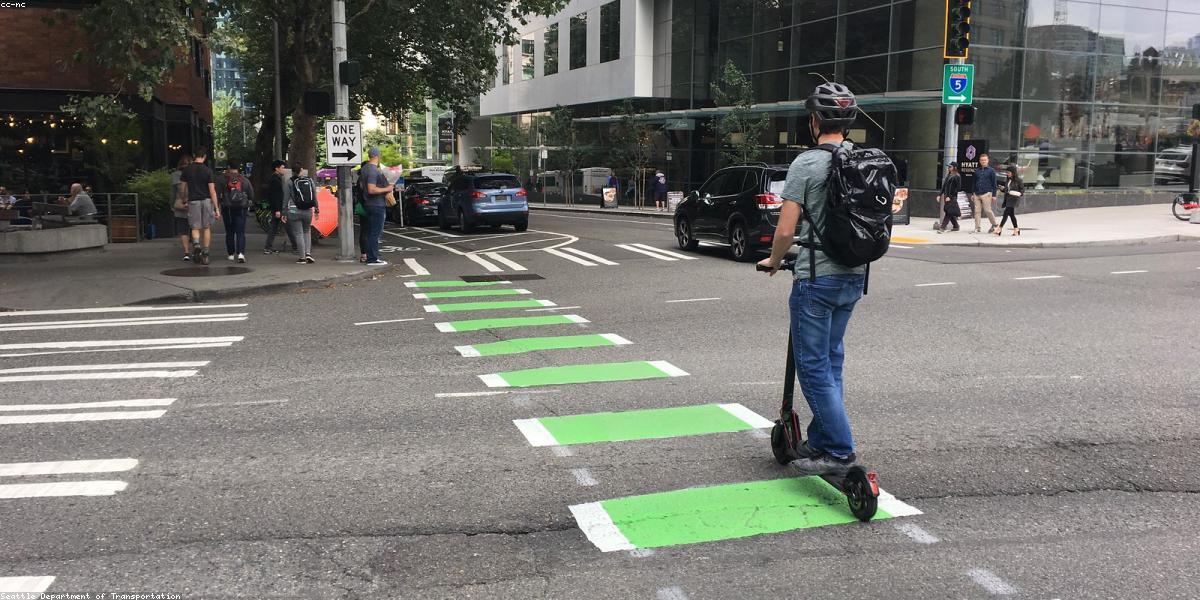
White lines separate lanes of traffic moving in the same direction. When the lines beside you are white, every vehicle around you is heading the same way you are, which is why lane changes across white lines are routine rather than dangerous crossings into oncoming traffic.
As with yellow, the pattern sets the rule. A broken white line divides lanes going the same direction and may be crossed to change lanes when it is safe. A solid white line marks a lane you should stay within; it discourages or, in many places, prohibits crossing, and it commonly outlines turn lanes, bike lanes, and the right edge of the road. Double solid white lines mean you must not change lanes across them at all, a marking you will often see separating a carpool lane from regular traffic.
- Broken white line: change lanes when safe; same direction of travel
- Solid white line: stay in your lane; marks edges, turn lanes, and bike lanes
- Double solid white: do not change lanes across them
Solid Versus Broken: The Passing Logic
If you remember only one principle, make it this: a broken line is a permission and a solid line is a restriction. A broken line, whether yellow or white, is like an open door that you may move through when conditions allow. A solid line is a barrier that asks you to hold your position, and a double solid line is a firm barrier you should not cross at all.
Combination lines bring the two ideas together. Where a solid line and a broken line run side by side, the rule follows the line nearer to you. If the broken line is on your side, you may pass when it is safe. If the solid line is on your side, you may not. This is common on two-lane roads where passing is safe in one direction, such as a long straight stretch, but unsafe in the other, such as approaching a curve or hill.
Crosswalks, Stop Lines, and Turn Arrows
Beyond lane lines, white markings on the road surface direct your stopping and turning. A stop line is the thick white bar painted across your lane at an intersection, and it marks exactly where your front bumper must stop for a sign or red light. Stopping past it intrudes into the crosswalk and the path of cross traffic.
Crosswalks are marked with white lines, often as two parallel bars or a series of broad stripes, and they show where pedestrians cross and where you must yield to them. Turn arrows painted in a lane tell you the only directions that lane allows, so a left arrow means that lane must turn left. White words such as ONLY, STOP AHEAD, or a painted bike symbol reinforce these instructions. Always position your vehicle to match the arrow in your lane well before the intersection, because drifting into the wrong lane late forces an unsafe last-second move.
- Stop line: a white bar marking where to stop for a sign or signal
- Crosswalk: white striping where pedestrians cross and you must yield
- Turn arrows: a lane marked with an arrow must go only that direction
- Painted words and symbols: follow them as you would a posted sign
Edge Lines, Curb Colors, and Special Lanes
The outer edges of the road carry their own markings. A solid white line on the far right marks the edge of the travel lane and the start of the shoulder. A solid yellow line on the far left of a divided highway marks the left edge of your roadway. These edge lines are especially useful at night and in rain, when they help you stay centered as visibility drops.
Curb colors add another layer of rules in many areas. While exact meanings vary by state, red commonly means no stopping or parking, yellow means a short loading stop only, white means a brief stop to pick up or drop off, blue marks accessible parking for permit holders, and green allows limited-time parking. Special lanes are marked too: a bike lane is set off by a solid white line and bike symbols, and a carpool or HOV lane is marked with diamonds and bordered by double white or yellow lines that you may cross only where they break.
Reading Markings in Poor Conditions
Markings are easiest to read in dry daylight and hardest exactly when you need them most. Rain, snow, glare, and worn paint can all hide the lines, so build the habit of noting the markings early while they are still clear, rather than searching for them at the last moment. On unfamiliar roads, slow down so you have time to interpret what the paint is telling you.
When markings are missing or covered, fall back on the default rules: keep right, treat the situation as no-passing if you cannot confirm a broken line, and give yourself extra room. If construction has placed temporary markings over old ones, the temporary lines, often orange or marked with cones, take priority. When two sets of lines seem to conflict, follow the newer or temporary ones and proceed with extra caution until the lane assignment is obvious again.
FAQ
What is the difference between yellow and white lines?
Yellow lines separate traffic moving in opposite directions, so yellow on your left means oncoming traffic is beyond it. White lines separate lanes of traffic moving in the same direction, which is why crossing them to change lanes is routine.
When can I pass on a road with a yellow center line?
You may pass only when the line on your side is broken and the road ahead is clear and safe. A solid yellow line on your side, or a double solid yellow line, means no passing in your direction.
What does a solid white line mean?
A solid white line separates same-direction lanes and asks you to stay in your lane. It commonly outlines turn lanes, bike lanes, and the right edge of the road. Double solid white lines mean you must not change lanes across them.
Where exactly should I stop at an intersection?
Stop with your front bumper before the white stop line painted across your lane. If there is no stop line, stop before the crosswalk, and if there is no crosswalk, stop before entering the intersection where you can see cross traffic.
What do colored curbs mean?
Curb colors vary by state, but red usually means no stopping or parking, yellow a brief loading stop, white a quick pick-up or drop-off, blue accessible parking for permit holders, and green limited-time parking. Always check posted signs as well.
About the author
Achyuth Kumar
Founder & Lead Researcher
Achyuth Kumar Maintainer of dmvmocktest.com in 2025 after watching friends and family struggle to study from dense state driver handbooks. He personally researches each state’s official handbook from the licensing agency, drafts the practice questions in his own words, writes the plain-language explanation that accompanies every answer, and re-checks each bank against the published handbook before it goes live. He has reviewed all 50 US state driver handbooks, the federal CDL manual, and the MUTCD road sign standard, and he updates the content whenever a state revises its rules. He is not a state employee and dmvmocktest.com is independent of every DMV.
Ready to practice?
Take a free DMV mock test for your state with instant answers and explanations, the same exam format the real DMV uses.