Free North Carolina DMV Practice Test 2026
Last updated:
In North Carolina, licensing runs through the NC Division of Motor Vehicles, or NCDMV, and the knowledge test is your first step toward driving independently. From the busy corridors around Charlotte and the Research Triangle to the mountain roads near Asheville and the coastal routes toward the Outer Banks, the state covers a wide range of driving in its rules.
North Carolina's test has two parts, and many first-timers do not realize the second one exists until they are already there. Our practice questions follow the style of the real exam so that both portions feel familiar before you arrive at a license office.
Passing score
80% to pass
20
of 25 correct
You can miss up to 5 questions and still pass.
NCDMV
Agency
25
Questions
20 (80%)
To pass
15
Permit age
Note: A separate road signs identification test is also required (no more than 2 missed).
Key takeaways
- The North Carolina written test has 25 questions and you need 20 correct (80%) to pass.
- Questions are drawn from the official North Carolina Division of Motor Vehicles handbook and cover road signs, traffic laws, and safe driving.
- You can apply for a permit at 15.
- Practice in two modes: learn with instant explanations, then simulate the real exam under a timer.
Sample North Carolina permit test questions
Here are a few real questions from our North Carolina bank, with the correct answer and a plain-language explanation. The full test has many more.
- Road SignsEasy
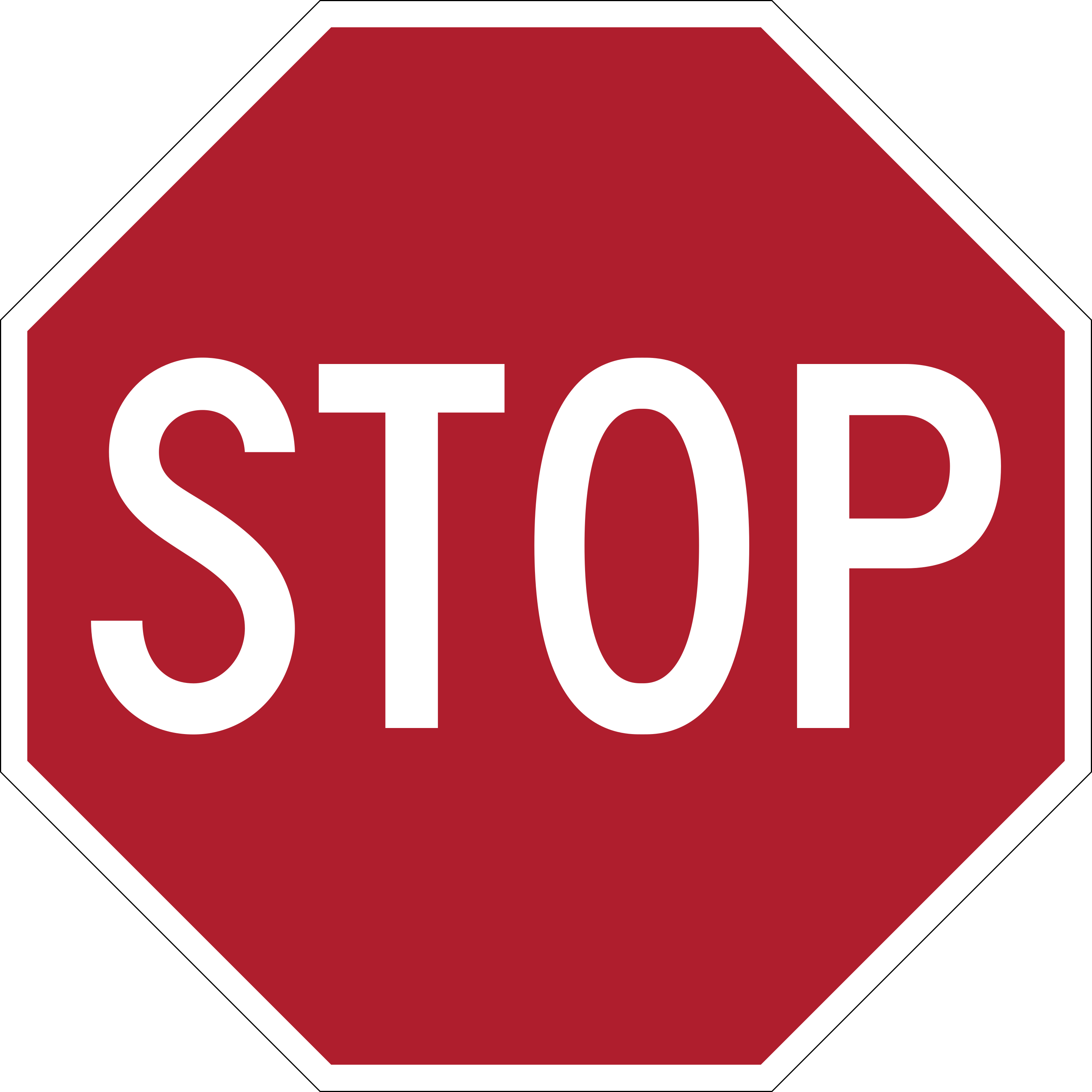
1. A red eight-sided sign at an intersection means:
- Yield to traffic
- Slow and roll through
- Stop completely before the stop line or crosswalk
- Merge ahead
Why: The octagon shape is used only for stop signs. Come to a full stop and proceed only when it is safe.
- Traffic SignalsEasy
2. A steady red light requires drivers to:
- Stop and stay stopped until it turns green
- Slow and continue
- Stop briefly then go
- Yield to pedestrians only
Why: Stop at a steady red and remain stopped until green, except for a legal right turn on red after a complete stop.
- Traffic LawsMedium
3. When a school bus stops with red lights flashing on an undivided two-lane road, drivers must:
- Pass slowly
- Stop in both directions until the lights stop and the bus moves
- Stop only behind the bus
- Honk and continue
Why: On undivided roads, traffic in both directions must stop for a school bus loading or unloading children until it resumes movement.
- Right-of-WayMedium
4. At a four-way stop where two cars arrive together, the right-of-way belongs to:
- The faster car
- The larger car
- The car turning left
- The car on the right
Why: When two vehicles reach an all-way stop at the same time, the driver on the left yields to the driver on the right.
More ways to practice North Carolina
Want a fresh set of questions or a focused drill? Try one of these North Carolina tests:
What’s on the North Carolina test
Our North Carolina question bank is balanced across the categories the NCDMV tests. These are the topics to study:
How the written test works in North Carolina
The North Carolina knowledge test has 25 questions, and you need to answer 20 of them correctly to pass, which is 80 percent. The questions come from the North Carolina Driver's Handbook and cover traffic laws and safe driving practices.
On top of that, there is a separate road-sign identification test. For the sign portion you can miss no more than 2, so you need a high level of accuracy on signs specifically. Passing both the written questions and the sign test is required to move forward, which makes the signs worth real study time.
What to study
Because the sign test is graded on its own and allows very few misses, signs deserve special focus. Then round out your knowledge with the core driving rules.
- Road signs by shape, color, and meaning, since the sign test allows only two misses
- Right-of-way rules at intersections and four-way stops
- North Carolina speed limits and the rules in school and work zones
- Seat belt, child restraint, and distracted driving laws
- Mountain and rural driving, including curves and reduced visibility
Practice Mode vs Exam Mode
Practice Mode shows you the correct answer and a short explanation after each question, which is especially helpful for drilling the road signs you must nearly perfect. Exam Mode recreates the real test format without giving feedback during the run, then scores you so you know whether you are ready to test with NCDMV.
Mountains, cities, and the coast
North Carolina offers a striking variety of driving in one state. The western mountains bring steep grades, tight switchbacks, and fog that can settle into the valleys, where smooth braking and patience are essential. The central Piedmont, anchored by Charlotte and the Triangle, has growing cities with heavy commuter traffic and busy interchanges. Out east, long flat routes lead toward the coast, where summer tourist traffic and sudden storms add their own challenges. The road-sign emphasis on the test reflects how much you rely on signs to navigate this range of conditions safely.
Road signs show up on every test
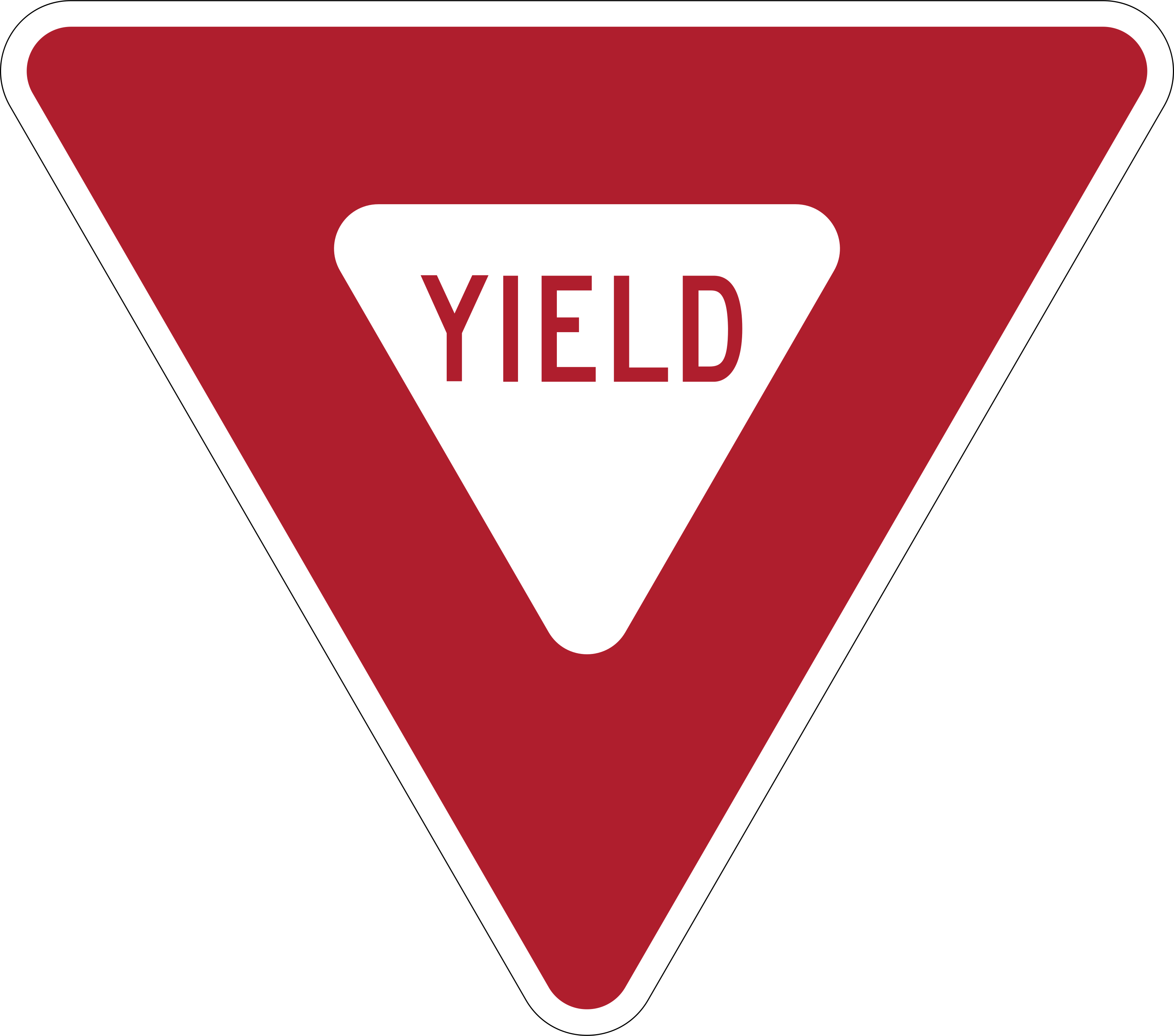
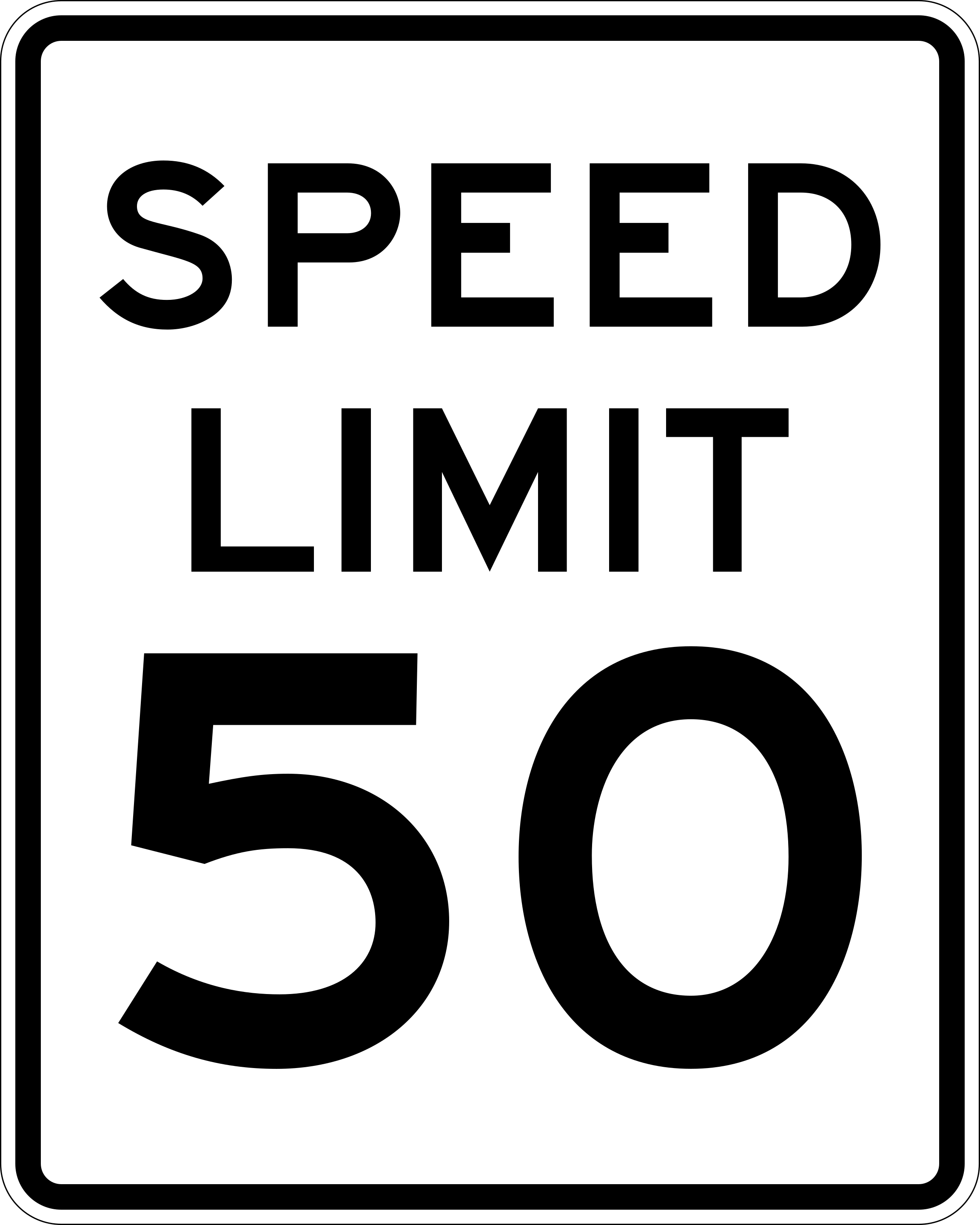
Learn to read signs by shape and color and you bank easy points. Here are a few you should know cold:



What to study for the North Carolina written test
- Road sign identification, since the sign test allows no more than two misses
- Right-of-way at intersections, merges, and crosswalks
- Speed limits and the lower limits in school and work zones
- Seat belt, child restraint, and distracted driving laws
- Driving safely on mountain curves, in fog, and on rural roads
North Carolina test day checklist
- Proof of identity, age, residency, and Social Security number
- Any required driver education certificate if you are a teen applicant
- Glasses or contacts if you need them for the vision and sign tests
- Payment for the permit fee at the license office
How North Carolina compares
| Requirement | North Carolina | Typical US state |
|---|---|---|
| Questions on the test | 25 | 20–50 |
| Correct answers to pass | 20 | Varies |
| Passing score | 80% | 70–85% |
| Earliest permit age | 15 | 15–16 |
What happens if you do not pass the North Carolina test?
You can miss up to 5 of the 25 questions and still pass (20 correct, 80%). Score below that and the NCDMV will let you retake the exam; waiting periods and retest fees are set by the North Carolina Division of Motor Vehicles, so check their current policy. Before you retake it, review the category breakdown on your results page and read our guide on what to do after failing the written test.
Official North Carolina DMV resources
Always confirm the current rules with the North Carolina Division of Motor Vehicles (NCDMV). The question counts, passing scores, and permit ages on this page are taken from the official NCDMV handbook and licensing pages linked below.
Last verified against the official North Carolina NCDMV handbook on June 20, 2026. If you notice anything that no longer matches the current handbook, please email achyuthkumark2001@gmail.com and we will update the page.
What to bring to the NCDMV in North Carolina
Passing the written test is only half the visit. Most applicants also need:
- Proof of identity (passport or birth certificate)
- Proof of North Carolina residency
- Social Security number or accepted alternative
- Parent or guardian documents if you are a minor
- Appointment confirmation if applicable
Find a NCDMV office in North Carolina
When you are ready to take the real test, find your nearest NCDMV location.
Map results come from Google and may include third-party services. Always confirm the office location, hours, and whether an appointment is required on the official NCDMV website before visiting.
Keep preparing
Verified & Accurate
Our editorial team manually reviews all mock test questions against the latest official North Carolina Division of Motor Vehicles handbook to ensure complete accuracy.
Last reviewed: June 5, 2026
North Carolina permit test FAQ
How much does the North Carolina permit cost?
$25.50. Learner permit fee, including the Level 1 Limited Learner's Permit for teens 15 to 17 and the learner permit for new drivers 18 and older. Raised from $21.50 to $25.50 in the 2024 quadrennial fee adjustment effective July 1, 2024. Verified on the official NCDOT quadrennial fee adjustment schedule (GS 20-11): Level 1 Limited Learner's Permit and the GS 20-7 learner permit are both $25.50, Level 2 Limited Provisional is $25.50, and Level 3 Full Provisional is $6.50 per year. Paying online through PayIt adds a $3 transaction fee plus a card processing fee. See the full North Carolina fee breakdown and official source on our permit cost page.
How many supervised driving hours does North Carolina require?
At least 60 hours of driving logged at Level 1, including a minimum of 10 hours at night. Confirm the current requirement and any logging rules with the North Carolina Division of Motor Vehicles.
How many questions are on the North Carolina permit test?
The written portion has 25 questions, and there is also a separate road-sign identification test.
What score do I need to pass in North Carolina?
You need 20 of the 25 written questions correct, which is 80 percent, and you may miss no more than 2 on the road-sign test.
Is there really a separate sign test in North Carolina?
Yes. In addition to the multiple-choice questions, you must identify road signs and can miss no more than two of them.
How old do I have to be to get a permit in North Carolina?
You can apply for a limited learner permit at 15 in North Carolina.
What if I fail the North Carolina written test?
You can retake it. Focus on whichever part you missed, and put extra effort into signs if that was your weak spot.
Is this the official NCDMV test?
No. This is a practice tool. The official tests are given by the NC Division of Motor Vehicles.
How should I study for the North Carolina sign test?
Practice recognizing signs by their shape and color alone, since the sign test relies on identifying them without the help of reading the words.
Sources
We summarize public information from the North Carolina Division of Motor Vehicles in our own words. Confirm details with the official source: