Free Florida DMV Practice Test 2026
Last updated:
Welcome to Florida, where year-round sunshine means year-round driving and the roads stay busy from Miami to the Panhandle. Before you can get behind the wheel on your own, you will need to pass the knowledge test administered by the Florida Department of Highway Safety and Motor Vehicles, usually shortened to FLHSMV. This page is here to help you study smart.
Florida has a few requirements that catch newcomers by surprise, especially for teens, so it pays to know the process before you start. Our practice questions are written to match the look and feel of the real exam so that the format is the last thing on your mind on test day.
Passing score
80% to pass
40
of 50 correct
You can miss up to 10 questions and still pass.
FLHSMV
Agency
50
Questions
40 (80%)
To pass
15
Permit age
Key takeaways
- The Florida written test has 50 questions and you need 40 correct (80%) to pass.
- Questions are drawn from the official Florida Department of Highway Safety and Motor Vehicles handbook and cover road signs, traffic laws, and safe driving.
- You can apply for a permit at 15.
- Practice in two modes: learn with instant explanations, then simulate the real exam under a timer.
Sample Florida permit test questions
Here are a few real questions from our Florida bank, with the correct answer and a plain-language explanation. The full test has many more.
- Road SignsEasy
1. An eight-sided (octagon) red sign always means:
- Come to a complete stop
- Yield to oncoming traffic
- Slow down and proceed
- Road work ahead
Why: The octagon shape is reserved only for the STOP sign. Stop completely behind the stop line or crosswalk, then proceed when it is safe.
- Traffic SignalsEasy
2. A steady (solid) red traffic light means:
- Slow down and proceed with caution
- Stop and remain stopped until the light turns green
- Stop, then continue without waiting
- Yield only to pedestrians, then go
Why: A steady red light requires a full stop behind the stop line or crosswalk. You must wait until the light turns green; a right turn on red is allowed after stopping only when the way is clear and no sign prohibits it.
- Traffic LawsEasy
3. When approaching a stop sign, you must stop:
- Anywhere within 50 feet
- Only if other cars are present
- After entering the intersection
- Before the stop line, crosswalk, or edge of the intersection
Why: You must stop behind the stop line; if there is none, stop before the crosswalk; if there is no crosswalk, stop before entering the intersection where you can see cross traffic.
- Right-of-WayMedium
4. At a four-way stop where two vehicles arrive at the same time, the right-of-way goes to:
- The vehicle on the right
- The faster vehicle
- The vehicle on the left
- The larger vehicle
Why: When two vehicles reach an all-way stop at the same time, the driver on the left yields to the driver on the right. If unsure, proceed cautiously and communicate.
More ways to practice Florida
Want a fresh set of questions or a focused drill? Try one of these Florida tests:
What’s on the Florida test
Our Florida question bank is balanced across the categories the FLHSMV tests. These are the topics to study:
How the written test works in Florida
Florida's Class E knowledge exam has 50 questions, and you need to get 40 of them right to pass, which is an 80 percent score. The questions are split between traffic laws and road signs, and they come from the material in the Florida Driver License Handbook.
Teens in Florida have an extra step before they ever see the knowledge test. The state requires the Traffic Law and Substance Abuse Education course, known as the TLSAE or sometimes the drug and alcohol course, to be completed first. Once that is done and you pass the knowledge exam, you can be issued a learner permit at 15.
What to study
Florida's exam rewards drivers who understand both the rules and the reasons behind them. These areas show up again and again, so make sure you are comfortable with each one.
- Right-of-way rules, including at intersections and for pedestrians
- Florida speed limits and the rules for school zones and work zones
- Road signs by shape and color, plus their specific meanings
- Alcohol and drug laws, which the TLSAE course reinforces heavily
- Safe driving in rain and reduced visibility, common in the Florida climate
Practice Mode vs Exam Mode
Practice Mode lets you learn at your own pace, giving you the correct answer and an explanation after each question so the rules sink in. Exam Mode is built to feel like the real 50-question test: no hints along the way, just a final score that tells you whether you are ready to head to a FLHSMV office or an approved testing site.
Weather and the realities of Florida roads
Florida driving has a few signature challenges. Sudden afternoon thunderstorms can flood roads and cut visibility within minutes, so knowing how to slow down and use your lights matters. The state also has a high number of retirees, tourists, and pedestrians, which means crosswalk and right-of-way rules are not just trivia, they are everyday survival skills. Add in long, straight highways where speeds creep up, and it becomes clear why Florida puts weight on hazard awareness in its test.
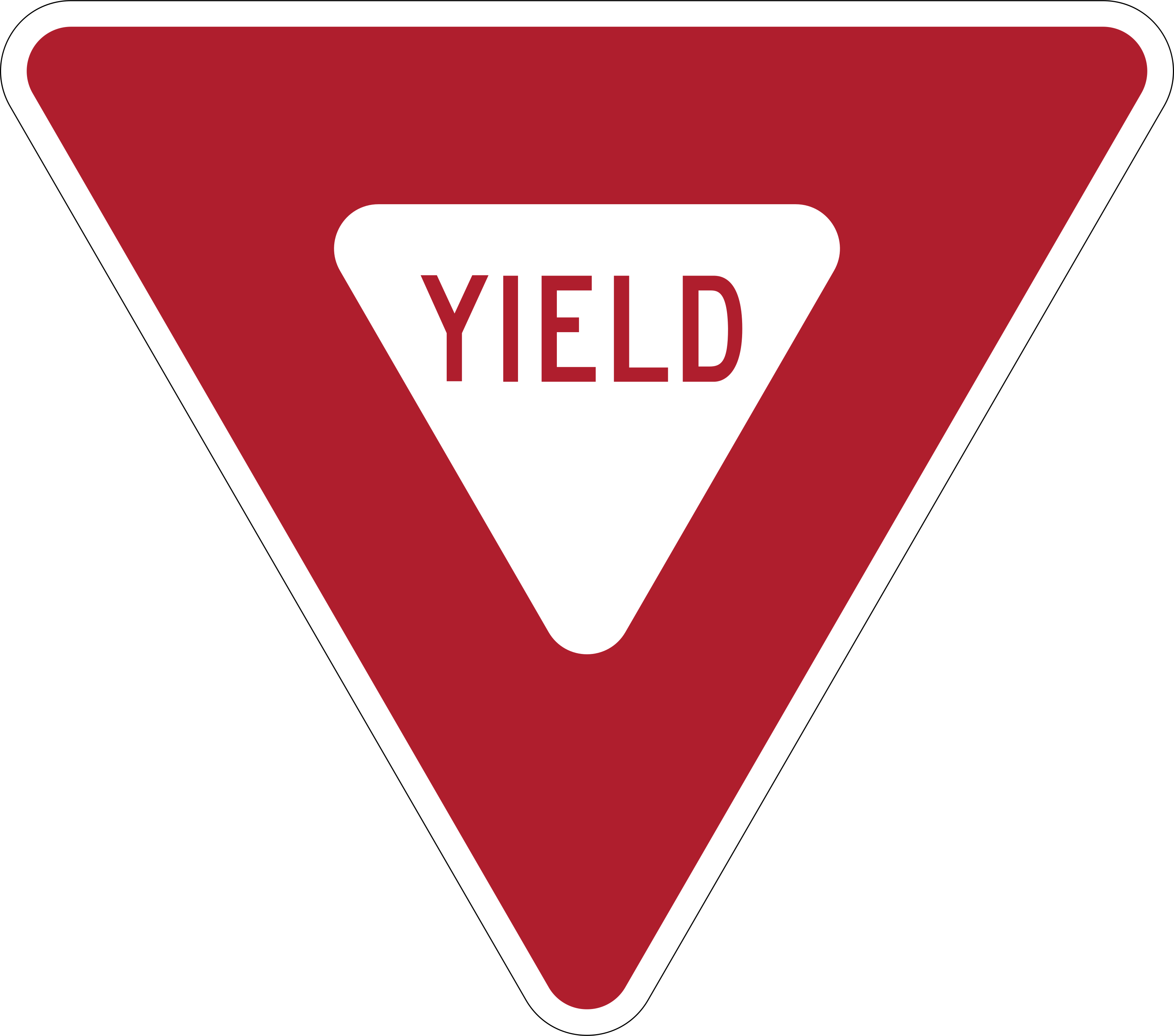
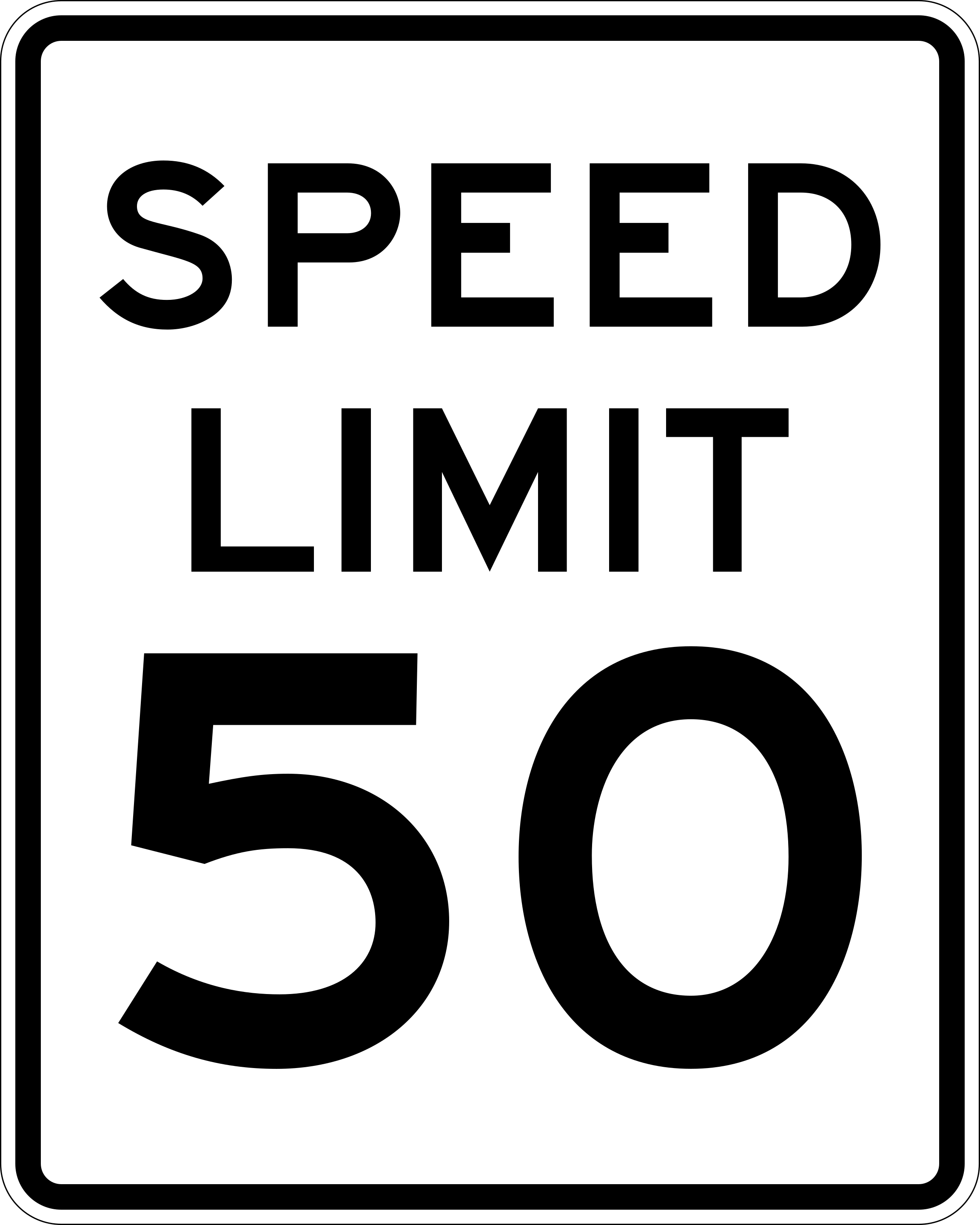
Road signs show up on every test
Learn to read signs by shape and color and you bank easy points. Here are a few you should know cold:




What to study for the Florida written test
- Right-of-way at intersections and the duty to yield to pedestrians
- Posted speed limits and reduced limits in school and construction zones
- Sign identification by shape and color across all categories
- Drug and alcohol laws, including the implied consent rule
- How to drive safely through heavy rain and standing water
Florida test day checklist
- Proof of identity, Social Security number, and Florida residency
- Your TLSAE course completion if you are a teen applicant
- Glasses or contacts if you need them to read the screen and signs
- Payment for the license or permit fee, handled at the office
How Florida compares
| Requirement | Florida | Typical US state |
|---|---|---|
| Questions on the test | 50 | 20–50 |
| Correct answers to pass | 40 | Varies |
| Passing score | 80% | 70–85% |
| Earliest permit age | 15 | 15–16 |
What happens if you do not pass the Florida test?
You can miss up to 10 of the 50 questions and still pass (40 correct, 80%). Score below that and the FLHSMV will let you retake the exam; waiting periods and retest fees are set by the Florida Department of Highway Safety and Motor Vehicles, so check their current policy. Before you retake it, review the category breakdown on your results page and read our guide on what to do after failing the written test.
Official Florida DMV resources
Always confirm the current rules with the Florida Department of Highway Safety and Motor Vehicles (FLHSMV). The question counts, passing scores, and permit ages on this page are taken from the official FLHSMV handbook and licensing pages linked below.
Last verified against the official Florida FLHSMV handbook on June 20, 2026. If you notice anything that no longer matches the current handbook, please email achyuthkumark2001@gmail.com and we will update the page.
What to bring to the FLHSMV in Florida
Passing the written test is only half the visit. Most applicants also need:
- Proof of identity (passport or birth certificate)
- Proof of Florida residency
- Social Security number or accepted alternative
- Parent or guardian documents if you are a minor
- Appointment confirmation if applicable
Find a FLHSMV office in Florida
When you are ready to take the real test, find your nearest FLHSMV location.
Map results come from Google and may include third-party services. Always confirm the office location, hours, and whether an appointment is required on the official FLHSMV website before visiting.
Keep preparing
Verified & Accurate
Our editorial team manually reviews all mock test questions against the latest official Florida Department of Highway Safety and Motor Vehicles handbook to ensure complete accuracy.
Last reviewed: June 5, 2026
Florida permit test FAQ
How much does the Florida permit cost?
$48. Original Class E driver license fee, which includes the learner's license. An additional $6.25 service fee may apply to any credential issued in a tax collector office (waived for veterans with proof of status), so the at-the-counter total is often $54.25. Most Florida issuance offices are tax collector offices. See the full Florida fee breakdown and official source on our permit cost page.
How many supervised driving hours does Florida require?
50 hours of driving experience, of which 10 must be at night, certified by a parent, legal guardian, or responsible adult over 21. Confirm the current requirement and any logging rules with the Florida Department of Highway Safety and Motor Vehicles.
How many questions are on the Florida permit test?
The Florida Class E knowledge exam has 50 questions split between road rules and road signs.
What score do I need to pass in Florida?
You need 40 correct answers out of 50, which is 80 percent.
How old do I have to be to get a permit in Florida?
You can get a learner permit at 15, after completing the required course and passing the knowledge exam.
What is the TLSAE course and do I have to take it?
The Traffic Law and Substance Abuse Education course is required before you take the knowledge test in Florida. Teens must complete it first.
Can I take the Florida knowledge test online?
Florida allows some applicants to take the knowledge test through approved providers, but requirements vary, so check your eligibility before assuming you can test from home.
What if I fail the Florida written test?
You can retake it. Review the questions you missed, especially in the section that gave you trouble, before scheduling another attempt.
Is this the official FLHSMV exam?
No. This is a practice tool to help you prepare. The official test is given by FLHSMV or an approved provider.
Does the Florida test cover road signs?
Yes. Half the focus is on road signs, so make sure you can identify them by shape, color, and meaning.
Sources
We summarize public information from the Florida Department of Highway Safety and Motor Vehicles in our own words. Confirm details with the official source: