Four-Way Stop Rules: Who Goes First

Few intersections cause more hesitation than a four-way stop. Four cars roll up, everyone pauses, and for a moment nobody is sure who is supposed to move. The good news is that four-way stops follow a small set of clear right-of-way rules, and once you know them in order, the confusion disappears. These rules are not suggestions or local customs: they are standard across the United States and they show up directly on the DMV written permit test.
This guide walks through the rules in the exact order you should apply them, from the simple case (whoever arrives first goes first) to the trickier ties (the driver on the right has the right of way, and straight-through traffic beats turning traffic). It also covers the practical side of real intersections, where eye contact and a friendly wave often settle things faster than the rulebook, plus the mistakes new drivers make most often and how examiners like to test this topic.
What this guide covers
- Rule One: First to Arrive, First to Go
- Rule Two: When Two Arrive Together, Yield to the Right
- Rule Three: Straight Traffic Beats Turning Traffic
- Rule Four: Left Turns Yield to Oncoming Traffic
- The Practical Reality: Eye Contact and Waving It Out
- Pedestrians Always Come First, Plus What to Do When It Is Unclear
- Common Mistakes and How This Appears on the Permit Test
Rule One: First to Arrive, First to Go
The foundation of every four-way stop is the order of arrival. The first vehicle to come to a complete stop at the intersection has the right of way and may proceed first. The second car to arrive goes second, the third goes third, and so on. It is a simple first-come, first-served line, and most four-way stops resolve themselves entirely on this rule alone.
Two things matter here. First, you must come to a full and complete stop, not a rolling slowdown, before your place in line counts. Second, you only take your turn once the intersection is clear and it is safe to move. Even if it is technically your turn, you should never proceed into the path of a driver who fails to yield. Being right does not protect you from a collision.
- Come to a complete stop behind the line or crosswalk.
- Note who was already stopped when you arrived.
- Proceed in arrival order, but only when the path is clear.
- Yield to anyone already moving through the intersection.
Rule Two: When Two Arrive Together, Yield to the Right
When two vehicles reach the four-way stop at the same time, arrival order cannot break the tie, so a second rule takes over: the driver on the right goes first. If another car is stopped to your right and you both arrived at the same moment, you yield and let that driver proceed. If you are the one on the right, you have the right of way.
A helpful way to remember it is that right of way goes to the right. This rule keeps things predictable because both drivers can look to their own right and quickly figure out who should move. If you are on the left, expect to wait; if you are on the right, go when it is safe, but stay alert in case the other driver moves anyway.
- Same time, side by side: the car on the right goes first.
- On the left? Yield and wait your turn.
- On the right? Proceed carefully once it is safe.
Rule Three: Straight Traffic Beats Turning Traffic
Sometimes two cars arrive at the same time and they are not to the right of each other. A common case is two vehicles facing each other across the intersection. When that happens, the direction of travel breaks the tie. A driver going straight through has the right of way over a driver who is turning, and a right turn is generally given priority over a left turn because the right-turning driver crosses less traffic.
Put simply, the less you cut across other paths, the more priority you have. Straight-through traffic moves first, right turns next, and left turns last. This ordering exists because left turns cross the most lanes of opposing travel, so giving them the lowest priority keeps the intersection flowing safely. When in doubt about a tie, ask yourself whose path crosses the fewest other vehicles.
- Going straight beats turning.
- Right turns generally come before left turns.
- The path that crosses the least traffic has priority.
Rule Four: Left Turns Yield to Oncoming Traffic
If you are turning left at a four-way stop and a vehicle across from you is going straight or turning right, you must yield to that oncoming driver. This is the same principle that governs left turns everywhere: the turning driver crosses the path of oncoming traffic, so the turning driver waits. At a four-way stop, this means a left-turning car often goes after the car facing it, even when they stopped at the same time.
Plan the turn before you reach the line so you are not caught deciding in the middle of the intersection. Signal early, watch the oncoming lane, and complete the turn only when you have a clear gap. If the oncoming driver is also turning left, the two of you can usually clear the intersection at the same time because your paths do not cross, but confirm with eye contact before you commit.
The Practical Reality: Eye Contact and Waving It Out
On paper the rules are tidy, but real intersections involve hesitant drivers, distracted drivers, and moments when nobody is sure who arrived first. This is where human signals matter. Making eye contact with another driver tells you they have seen you and confirms who is about to move. A small wave or hand gesture is the universal way drivers sort out a standoff when the timing was too close to call.
Treat these gestures as helpful, not as a license to skip the rules. If another driver waves you through out of turn, you can take it, but glance both ways first because other drivers may not have seen the wave. The goal at a four-way stop is to move through smoothly and safely, and a brief, courteous signal often prevents the awkward stop-and-go dance that frustrates everyone.
- Make eye contact to confirm the other driver sees you.
- A short wave can resolve a true tie quickly.
- Still check all directions before you move.
- Do not rely on gestures to override safety.
Pedestrians Always Come First, Plus What to Do When It Is Unclear
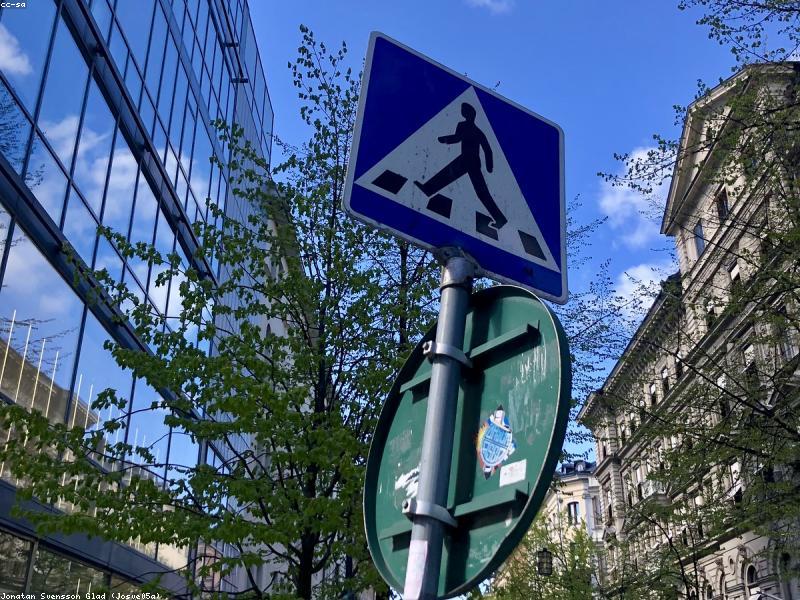
Before any vehicle moves, pedestrians have the right of way. Anyone in the crosswalk, or stepping off the curb to cross, must be allowed to finish crossing before you proceed, regardless of whose turn it is among the cars. Always scan the corners and crosswalks at a four-way stop, because a pedestrian can change who moves next no matter where you are in the line.
When the order is genuinely unclear and no rule settles it, default to caution. The safest move is to yield: let the other driver go, wait a beat, and then proceed when the intersection is clearly yours. Giving up a turn you might have had costs you a few seconds, while guessing wrong can cause a crash. When two drivers both wait politely, a quick wave or simply easing forward slowly will break the stalemate.
- Pedestrians in or entering the crosswalk go first, always.
- Scan corners and crosswalks before moving.
- If the order is unclear, yield rather than guess.
- When both drivers wait, a wave or slow creep resolves it.
Common Mistakes and How This Appears on the Permit Test
New drivers tend to make the same handful of errors at four-way stops. The most common is the rolling stop, where the car slows but never fully stops, which forfeits your place in line and is also a ticketable offense. Other frequent mistakes include forgetting the yield-to-the-right rule on ties, turning left in front of oncoming traffic, waving multiple cars through at once and creating confusion, and inching forward so aggressively that other drivers cannot tell whether you are stopping or going.
On the DMV written permit test, expect at least one or two questions on this topic, often framed as a scenario: two cars arrive at the same time, who goes first? The correct answer is the car on the right. Other questions test whether straight traffic beats turning traffic, whether you must yield to pedestrians, and whether a complete stop is required. Memorize the order (first to arrive, then yield to the right, then straight over turning, then yield to oncoming on left turns, with pedestrians always first) and these questions become easy points.
- Rolling through instead of stopping completely.
- Forgetting to yield to the right on a tie.
- Turning left across oncoming traffic that has the right of way.
- Waving several cars through and causing confusion.
- Failing to yield to pedestrians in the crosswalk.
FAQ
At a four-way stop, who goes first if two cars arrive at the same time?
When two vehicles reach a four-way stop at the same moment, the driver on the right has the right of way and goes first. If you are the driver on the left, you yield and wait. If no one is to the right and the cars face each other, straight-through traffic goes before turning traffic.
Do I really have to come to a complete stop at a four-way stop?
Yes. A full, complete stop is required by law, and a rolling stop can earn you a ticket. It also matters for right of way, because your place in line only counts once you have actually stopped. Stop fully behind the line or crosswalk, then proceed in turn.
Who has the right of way, a car going straight or a car turning left?
The car going straight has the right of way. A driver turning left must yield to oncoming traffic going straight or turning right, because the left turn crosses the path of those vehicles. The left-turning car waits for a clear gap before completing the turn.
What do I do if no one at the four-way stop will go?
When everyone hesitates, the safest move is to make eye contact and, if it is your turn, proceed slowly and deliberately so other drivers can read your intent. A short, friendly wave can give another driver the cue to go. When in doubt, yield, then ease forward only when the intersection is clearly safe.
About the author
Achyuth Kumar
Founder & Lead Researcher
Achyuth Kumar Maintainer of dmvmocktest.com in 2025 after watching friends and family struggle to study from dense state driver handbooks. He personally researches each state’s official handbook from the licensing agency, drafts the practice questions in his own words, writes the plain-language explanation that accompanies every answer, and re-checks each bank against the published handbook before it goes live. He has reviewed all 50 US state driver handbooks, the federal CDL manual, and the MUTCD road sign standard, and he updates the content whenever a state revises its rules. He is not a state employee and dmvmocktest.com is independent of every DMV.
Ready to practice?
Take a free DMV mock test for your state with instant answers and explanations, the same exam format the real DMV uses.