Emergency Vehicles and the Move Over Law Explained
When a siren rises behind you or red and blue lights fill your mirror, the law expects an immediate, predictable response, and the written test checks that you know it. Emergency vehicles racing to a call rely on every other driver yielding the same way, so a single driver who freezes, brakes in the lane, or turns the wrong way can block the help someone is waiting for. The rules are simple, but they have to be automatic, because the moment they matter arrives without warning.
This guide covers how to react when an emergency vehicle approaches, the correct way to pull over and when not to, the Move Over law that protects crews already stopped on the roadside, and the penalties for getting it wrong. These rules protect police officers, firefighters, paramedics, tow operators, and road workers, the people whose job puts them in traffic, and knowing them makes you the predictable driver they are counting on.
What this guide covers
- Reacting to Sirens and Flashing Lights
- How to Pull Over the Right Way
- The Move Over Law
- Penalties and Why It Matters
- Common Mistakes to Avoid
Reacting to Sirens and Flashing Lights
When you see or hear an emergency vehicle approaching with its siren on or its emergency lights flashing, you must yield the right of way. The standard response is to pull over to the right edge of the road and stop until the vehicle has passed. Do this for vehicles coming up behind you and, on an undivided road, for those approaching from the opposite direction as well, since you cannot always tell where they are headed.
React calmly and early rather than slamming on the brakes the instant you hear a siren. Check your mirrors, signal, and move smoothly to the right when it is safe, giving the emergency vehicle a clear path. If you cannot tell where the siren is coming from, slow down and stay alert until you locate it. Sound can bounce off buildings, so a siren that seems to be behind you may actually be approaching from a cross street ahead.
- Pull to the right edge of the road and stop until the vehicle passes
- Yield even to emergency vehicles approaching from the opposite direction on an undivided road
- Signal and move over smoothly rather than braking suddenly in the lane
- If you cannot locate the siren, slow down and stay alert
How to Pull Over the Right Way
Pulling over correctly means choosing a safe spot and clearing the path completely. Signal, check your mirrors and blind spot, and steer to the right shoulder or curb, then stop. Stay there until the emergency vehicle has fully passed and you can see that no others are following, since calls often bring more than one vehicle. Only then signal and merge back into traffic when it is safe.
There are a few places you should not stop. Never stop in an intersection; if you are in one when an emergency vehicle approaches, continue through and pull over once you are clear. Avoid stopping on a railroad crossing, on a narrow bridge, or anywhere that would trap the emergency vehicle or block traffic. The goal is always to give a clear, unobstructed path, which sometimes means moving forward a short distance to a safe spot rather than stopping immediately.
- Signal, check mirrors and blind spots, then move to the right and stop
- Wait until all emergency vehicles have passed before merging back
- Never stop in an intersection; clear it first, then pull over
- Do not stop on tracks, bridges, or anywhere you would block the path
The Move Over Law
Every state now has a Move Over law, written to protect people working at the side of the road. When you approach a stopped emergency vehicle, tow truck, or other roadside vehicle showing flashing lights, the law requires you to move over a full lane away from it if you safely can. On a multi-lane road, that means changing into a lane farther from the stopped vehicle, leaving an empty lane as a buffer between your car and the people working there.
When traffic or road design makes changing lanes impossible, the law instead requires you to slow down well below the posted limit and pass with extra caution. Most states have expanded these laws beyond police and fire vehicles to include ambulances, tow trucks, utility crews, and even ordinary disabled vehicles with their hazard lights on. The principle is the same in every case: give people on the roadside room, and slow down when you cannot.
- Approaching a stopped vehicle with flashing lights, move over one lane if you can
- If you cannot change lanes, slow down well below the limit and pass carefully
- The law covers police, fire, ambulances, tow trucks, and disabled vehicles
- The buffer lane protects people working at the edge of the road
Penalties and Why It Matters
Ignoring an emergency vehicle or a Move Over requirement carries real penalties: fines, points on your license, and steeper consequences if your failure to yield causes a crash. Many states have raised these penalties sharply in recent years because so many roadside workers and officers have been struck and killed by passing traffic. A violation can also count heavily against a new or provisional driver, delaying full licensing.
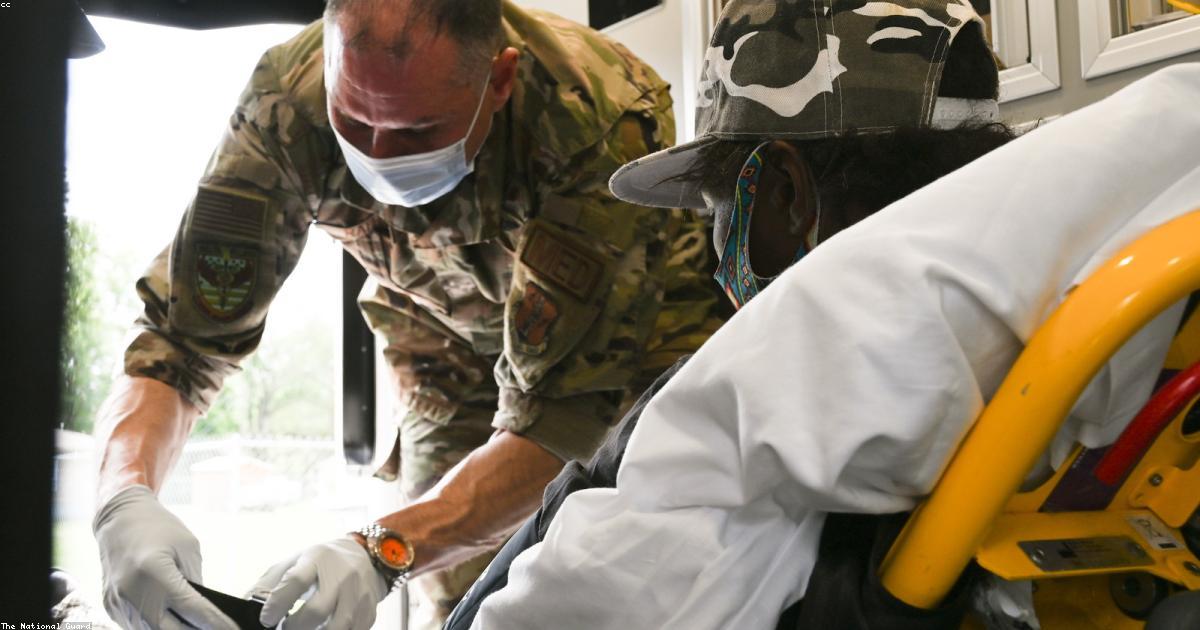
Beyond the legal cost is the human one. The people these laws protect, paramedics treating a patient, an officer at a traffic stop, a tow operator changing a tire, are standing just feet from cars moving at highway speed. Moving over a lane or slowing down costs you a few seconds and removes you entirely from the situations where those workers get hurt. The test asks about these rules because following them genuinely saves lives.
Common Mistakes to Avoid
The most dangerous mistake is panicking and stopping in the middle of the lane the instant a siren sounds, which traps the emergency vehicle behind you instead of clearing its path. Almost as bad is stopping in an intersection, where you block cross traffic and the emergency vehicle alike. Following an emergency vehicle closely to slip through traffic behind it is both illegal and reckless, since the road ahead may not be as clear as it looks.
Other errors come from inattention: not noticing a stopped vehicle's flashing lights until the last second and swerving, or failing to move over because you assumed the Move Over law applied only to police cars. Avoid all of these by staying aware, reacting early and smoothly, and treating every set of flashing lights, moving or stopped, as a cue to yield space. Predictable, unhurried reactions are exactly what keep everyone safe.
FAQ
What should I do when an emergency vehicle approaches?
Pull over to the right edge of the road and stop until it has passed. Signal and move over smoothly rather than braking hard in the lane, and on an undivided road yield to emergency vehicles coming from the opposite direction as well.
What does the Move Over law require?
When you approach a stopped vehicle with flashing lights, the Move Over law requires you to change into a lane farther away if you safely can. If you cannot move over, you must slow down well below the speed limit and pass with caution.
What if I am in an intersection when an emergency vehicle comes?
Do not stop in the intersection. Continue through it and pull over to the right once you are clear of the intersection, then stop until the emergency vehicle has passed.
Does the Move Over law apply only to police cars?
No. Most states have expanded it to cover ambulances, fire trucks, tow trucks, utility crews, and even ordinary disabled vehicles displaying hazard lights. Any stopped vehicle with flashing lights is a cue to move over or slow down.
Can I follow an emergency vehicle to get through traffic?
No. Following an emergency vehicle closely is illegal and dangerous. Most states require you to stay several hundred feet back, since the road ahead may not be clear and you could block other vehicles responding to the same call.
About the author
Achyuth Kumar
Founder & Lead Researcher
Achyuth Kumar Maintainer of dmvmocktest.com in 2025 after watching friends and family struggle to study from dense state driver handbooks. He personally researches each state’s official handbook from the licensing agency, drafts the practice questions in his own words, writes the plain-language explanation that accompanies every answer, and re-checks each bank against the published handbook before it goes live. He has reviewed all 50 US state driver handbooks, the federal CDL manual, and the MUTCD road sign standard, and he updates the content whenever a state revises its rules. He is not a state employee and dmvmocktest.com is independent of every DMV.
Ready to practice?
Take a free DMV mock test for your state with instant answers and explanations, the same exam format the real DMV uses.