Free Vermont DMV Practice Test 2026
Last updated:
Vermont may be one of the smallest states, but its permit process runs through the same essential gate as everywhere else: a written knowledge exam from the Vermont Department of Motor Vehicles (DMV). Pass it and you have shown you can read the road, from sign shapes and signal colors to the quieter judgment of who yields and when.
Vermont's exam is short, just 20 multiple-choice questions, and 16 correct answers clears the 80 percent bar. The brevity cuts both ways: fewer questions means each mistake costs more. The free practice tests here use the same length and style, explain every answer, and can be repeated endlessly until the material feels like second nature.
Passing score
80% to pass
16
of 20 correct
You can miss up to 4 questions and still pass.
DMV
Agency
20
Questions
16 (80%)
To pass
15
Permit age
Key takeaways
- The Vermont written test has 20 questions and you need 16 correct (80%) to pass.
- Questions are drawn from the official Vermont Department of Motor Vehicles handbook and cover road signs, traffic laws, and safe driving.
- You can apply for a permit at 15.
- Practice in two modes: learn with instant explanations, then simulate the real exam under a timer.
Sample Vermont permit test questions
Here are a few real questions from our Vermont bank, with the correct answer and a plain-language explanation. The full test has many more.
- Traffic LawsEasy
1. In most states, you must turn on your headlights:
- Only on highways
- From sunset to sunrise and when visibility is reduced
- Only during heavy rain
- Only when other cars do
Why: Headlights are required from dusk to dawn and whenever conditions limit visibility, such as rain or fog.
- Parking RulesHard
2. When parking uphill next to a curb, you should turn your front wheels:
- Toward the curb
- Straight ahead
- Away from the curb so the car rolls into it if it moves
- It does not matter
Why: Uphill with a curb, turn wheels away from the curb so the tire catches the curb if the car rolls back.
- Speed LimitsMedium
3. When no speed-limit sign is posted, a driver should:
- Drive as fast as traffic allows
- Assume 65 mph everywhere
- Drive at exactly 25 mph
- Drive at a speed that is safe and reasonable for conditions
Why: Even without a sign, you must drive at a safe and reasonable speed for the conditions and area.
- Pavement MarkingsMedium
4. At an intersection with a painted crosswalk and a stop line, a driver who must stop should halt:
- Behind the stop line, before the crosswalk
- On top of the crosswalk
- Past the crosswalk
- In the middle of the intersection
Why: Stop behind the white stop line and clear of the crosswalk so pedestrians have room to cross safely.
More ways to practice Vermont
Want a fresh set of questions or a focused drill? Try one of these Vermont tests:
What’s on the Vermont test
Our Vermont question bank is balanced across the categories the DMV tests. These are the topics to study:
How Vermont's written exam is set up
Drawn from the Vermont driver manual, the exam presents 20 questions and asks for at least 16 correct, an 80 percent score. With only 20 items, four wrong answers is the limit, so a small slip carries real weight.
Question topics center on signs, signals, right-of-way, and sensible responses to hazards like snow or an animal in the road. The phrasing is plain but exact, and similar-sounding choices are common, so give every option a full read. If the first attempt does not go your way, your local office will tell you when you may return for another try.
What deserves your study attention
With a short exam, depth beats breadth. Learn these five areas thoroughly and you will have covered nearly everything Vermont is likely to ask.
- Safe-driving judgment: following distance, headlights in poor weather, and pulling aside for emergency vehicles.
- Yielding and priority at stop signs, crosswalks, village intersections, and roundabouts.
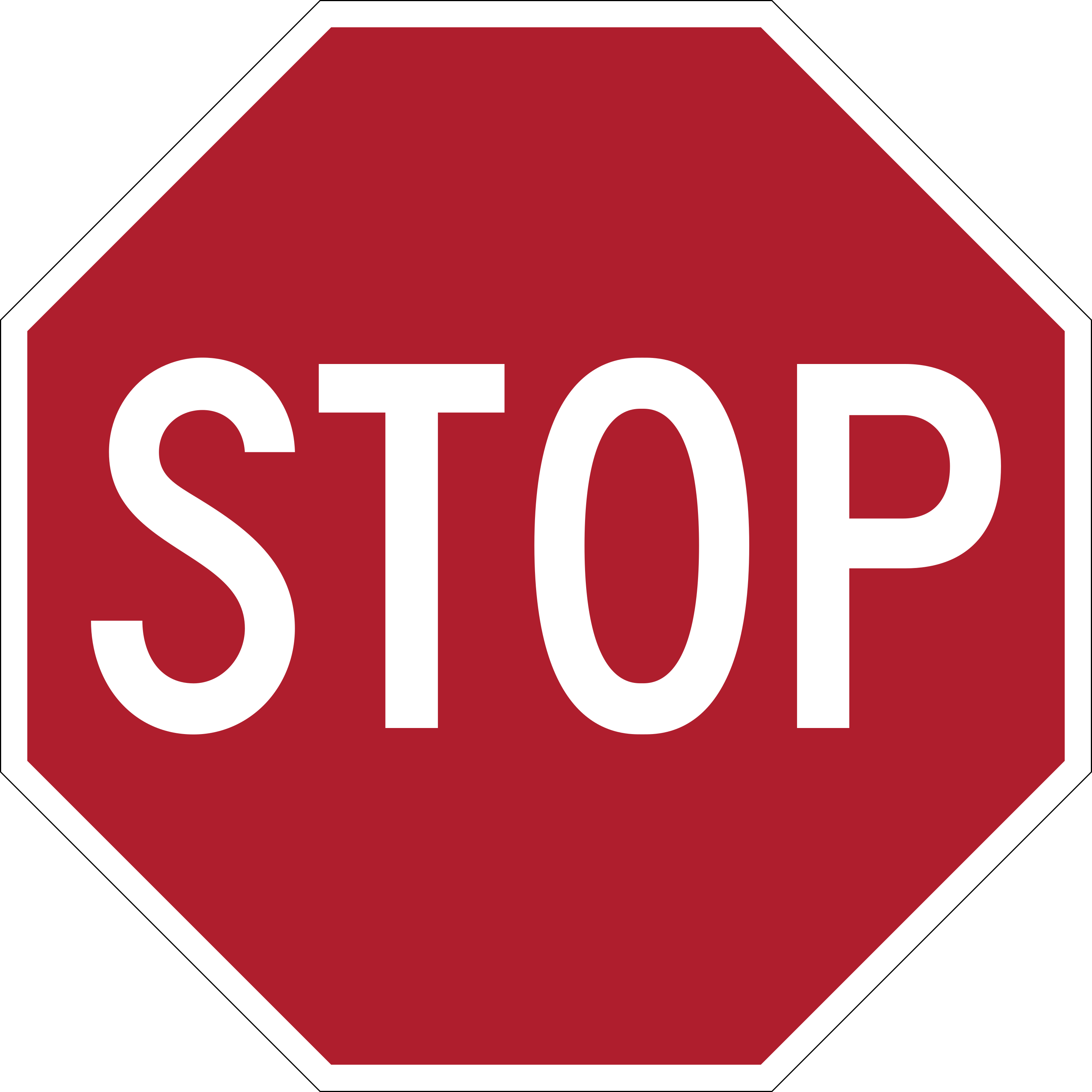
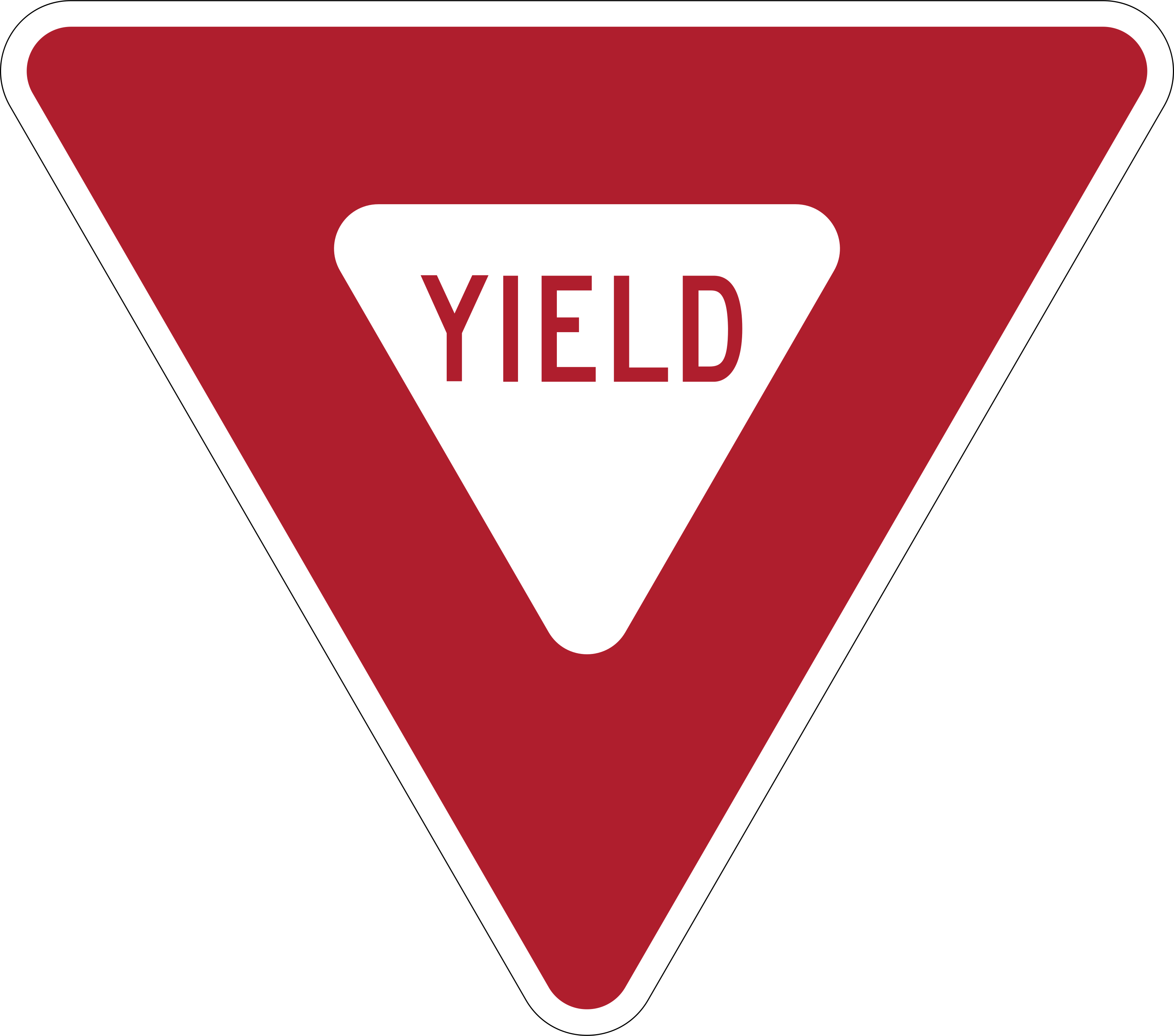
- Sign families sorted by shape and color, from stop and yield to school and railroad warnings.
- Signal behavior, including the stop demanded by flashing red and the caution implied by flashing yellow.
- Center lines, lane lines, and the markings that tell you when passing is legal.
Learning with Practice Mode, testing with Exam Mode
Think of Practice Mode as studying with a patient tutor: every answer comes back instantly with a short explanation, so misunderstandings get corrected before they harden. Exam Mode plays the role of the real thing, holding all feedback until your final score appears. Spend your early sessions in the first mode, and when your scores hold steady, confirm your readiness with a few clean passes in the second.
The realities of Vermont roads
New Vermont drivers learn quickly that the state's character shapes its driving. Narrow two-lane roads wind between hills and tree lines, plenty of routes are gravel, and winter lasts long enough to make snow and ice skills essential rather than optional. Review how reduced traction changes stopping distance, why the legal speed can fall below the posted number in bad weather, and how to react to deer and moose, which are most active at dawn and dusk. The Vermont DMV even brings services to communities through mobile units, a reminder of how local and small-scale driving life here can be.
Road signs show up on every test
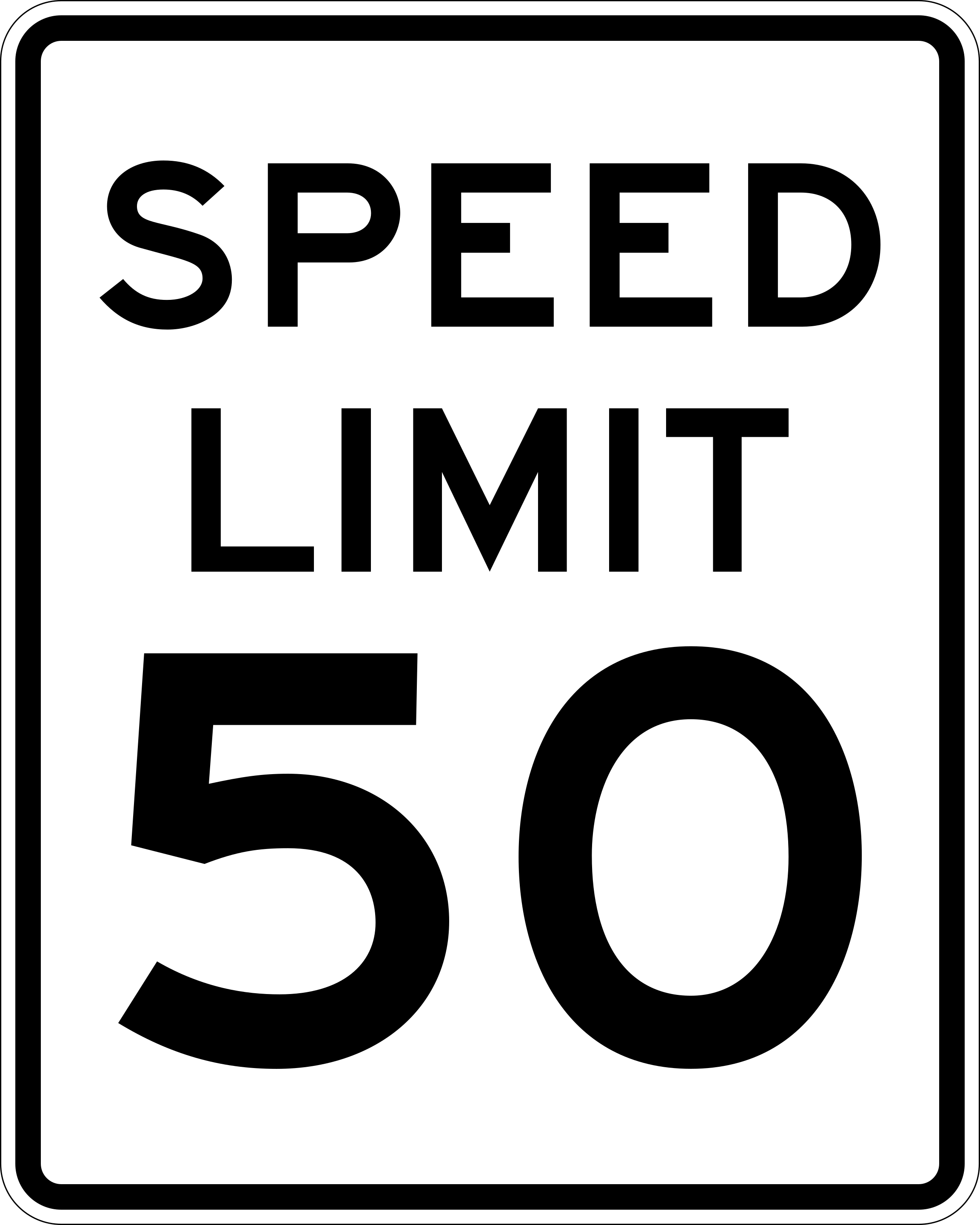
Learn to read signs by shape and color and you bank easy points. Here are a few you should know cold:



What to study for the Vermont written test
- Judgment topics: space cushions, bad-weather speed, and emergency-vehicle law.
- Who proceeds first at every kind of intersection and crossing.
- Naming signs from shape and color alone, without reading them.
- Each signal phase and the exact response it requires.
- Yellow and white line patterns and the passing rules they signal.
Vermont test day checklist
- Gather the identity and residency papers listed by the Vermont DMV before your appointment day.
- Arrive with time in hand: a calm start beats a sprint through the door.
- Finish preparing with one timed Exam Mode session the night before.
- Read deliberately at the exam. Twenty questions leave little room for careless clicks.
How Vermont compares
| Requirement | Vermont | Typical US state |
|---|---|---|
| Questions on the test | 20 | 20–50 |
| Correct answers to pass | 16 | Varies |
| Passing score | 80% | 70–85% |
| Earliest permit age | 15 | 15–16 |
What happens if you do not pass the Vermont test?
You can miss up to 4 of the 20 questions and still pass (16 correct, 80%). Score below that and the DMV will let you retake the exam; waiting periods and retest fees are set by the Vermont Department of Motor Vehicles, so check their current policy. Before you retake it, review the category breakdown on your results page and read our guide on what to do after failing the written test.
Official Vermont DMV resources
Always confirm the current rules with the Vermont Department of Motor Vehicles (DMV). The question counts, passing scores, and permit ages on this page are taken from the official DMV handbook and licensing pages linked below.
Last verified against the official Vermont DMV handbook on June 20, 2026. If you notice anything that no longer matches the current handbook, please email achyuthkumark2001@gmail.com and we will update the page.
What to bring to the DMV in Vermont
Passing the written test is only half the visit. Most applicants also need:
- Proof of identity (passport or birth certificate)
- Proof of Vermont residency
- Social Security number or accepted alternative
- Parent or guardian documents if you are a minor
- Appointment confirmation if applicable
Find a DMV office in Vermont
When you are ready to take the real test, find your nearest DMV location.
Map results come from Google and may include third-party services. Always confirm the office location, hours, and whether an appointment is required on the official DMV website before visiting.
Keep preparing
Verified & Accurate
Our editorial team manually reviews all mock test questions against the latest official Vermont Department of Motor Vehicles handbook to ensure complete accuracy.
Last reviewed: June 6, 2026
Vermont permit test FAQ
How much does the Vermont permit cost?
$24.00 (plus $39.00 knowledge test). Learner's permit valid 2 years; the learner permit knowledge test is a separate $39.00 exam fee Typical first-time total is $63.00 ($39.00 test plus $24.00 permit). A replacement permit is $24.00. The motorcycle learner's permit is $24.00 with an $11.00 motorcycle knowledge test. See the full Vermont fee breakdown and official source on our permit cost page.
How many supervised driving hours does Vermont require?
40 hours of behind-the-wheel practice, including at least 10 hours of nighttime driving, accompanied by an eligible licensed adult. Confirm the current requirement and any logging rules with the Vermont Department of Motor Vehicles.
How short is the Vermont permit exam really?
It is one of the shorter state exams at 20 multiple-choice questions. Sixteen correct answers, or 80 percent, is the passing line.
How many wrong answers can I afford in Vermont?
Four at most. A fifth incorrect answer drops you below the required 80 percent.
What is the earliest age for a Vermont learner permit?
Fifteen, generally. Double-check the current age and document rules with the Vermont DMV before you go in.
Which papers does the Vermont DMV ask for?
Evidence of identity and Vermont residency forms the core. Review the DMV's official document list close to your test date in case anything has changed.
What happens after a failed attempt in Vermont?
You wait out the period your local office sets, study the areas that gave you trouble, and take the exam again.
Is this the official Vermont DMV test?
No. These are original practice questions covering the same ground as the state exam, meant to prepare you for its topics and format rather than duplicate it.
Sources
We summarize public information from the Vermont Department of Motor Vehicles in our own words. Confirm details with the official source: