Free Utah DMV Practice Test 2026
Last updated:
Earning a Utah license starts with proving what you know. The Driver License Division (DLD), part of the Utah Department of Public Safety, screens every new applicant with a written exam covering signs, signals, right-of-way, and the habits that keep drivers safe from the Wasatch Front to the canyons.
The format is compact: 25 multiple-choice questions with a passing threshold of 20 correct, which equals 80 percent. This page offers unlimited free practice in that exact style. Answer, read the explanation, repeat, and track your scores until the passing mark stops feeling like a stretch.
Passing score
80% to pass
20
of 25 correct
You can miss up to 5 questions and still pass.
DLD
Agency
25
Questions
20 (80%)
To pass
15
Permit age
Key takeaways
- The Utah written test has 25 questions and you need 20 correct (80%) to pass.
- Questions are drawn from the official Utah Driver License Division handbook and cover road signs, traffic laws, and safe driving.
- You can apply for a permit at 15.
- Practice in two modes: learn with instant explanations, then simulate the real exam under a timer.
Sample Utah permit test questions
Here are a few real questions from our Utah bank, with the correct answer and a plain-language explanation. The full test has many more.
- Traffic SignalsMedium
1. A flashing red traffic signal should be treated the same as:
- A yield sign
- A stop sign
- A green light
- A no-entry sign
Why: A flashing red light means stop, then proceed when it is safe, exactly like a stop sign.
- EmergenciesHard
2. If your vehicle's brakes suddenly fail, you should:
- Turn off the engine immediately
- Steer into oncoming traffic
- Pump the brakes, downshift, and use the parking brake gradually
- Close your eyes and brace
Why: Pump the brakes, shift to a lower gear, and apply the parking brake gradually while steering to safety.
- Pavement MarkingsEasy
3. A single broken (dashed) white line between lanes going the same direction means:
- You may never change lanes
- Traffic flows in opposite directions
- The lane is for buses only
- You may change lanes when it is safe
Why: Broken white lines separate same-direction lanes and allow lane changes when safe.
- Safe DrivingEasy
4. The recommended minimum following distance under good conditions is often measured by:
- A three-second gap behind the vehicle ahead
- One car length total
- Half a second
- Ten car lengths at all speeds
Why: The three-second rule gives enough time to react and brake under normal conditions; increase it in poor weather.
More ways to practice Utah
Want a fresh set of questions or a focused drill? Try one of these Utah tests:
What’s on the Utah test
Our Utah question bank is balanced across the categories the DLD tests. These are the topics to study:
Structure of the Utah written exam
Utah's knowledge exam runs 25 questions sourced from the state driver handbook, and the Driver License Division requires at least 20 correct responses, an 80 percent standard. One answer per question is fully correct; the rest are close but flawed.
The content leans on three pillars: identifying signs, interpreting signals, and resolving right-of-way. Around those sit questions on speed management, hazards, and safe-driving judgment. Wording matters, so train yourself to spot qualifiers like always, only, and except. An unsuccessful attempt means waiting the interval your local office specifies, then testing again with better preparation.
A focused study plan
Treat preparation like a checklist rather than a cram session. Work through the five areas below in order, and do not move past one until you can answer its questions without hesitation.
- Pavement markings and what they permit: passing zones, lane changes, turn lanes, and stop lines.
- Right-of-way logic at stops, yields, roundabouts, crosswalks, and uncontrolled intersections.
- The full vocabulary of signs, organized by shape and color so recognition becomes automatic.
- Signal interpretation, including flashing modes and the arrows that protect or restrict turns.
- Speed and space management: posted limits, the basic speed law, and following distance.
Sequencing Practice Mode and Exam Mode
The two modes form a natural sequence. Begin in Practice Mode, where every answer triggers immediate feedback and a brief explanation, ideal for building accurate knowledge and exposing gaps. Graduate to Exam Mode once Practice Mode feels easy: it withholds results until the end, simulating the pacing and pressure of the Driver License Division's real exam. Consistent passing scores in Exam Mode are your green light to book the appointment.
Preparing for Utah's terrain
Utah driving covers more vertical range than most states. Canyon routes climb fast, freeze early, and stay icy in shaded corners long after the valleys clear, so the handbook material on winter traction, downhill speed control, and the basic speed law deserves extra attention. Watch for posted traction or chain requirements during storms, expect glare off snow and desert alike, and stay alert for wildlife on mountain roads. Down along the Wasatch Front, the challenge shifts to dense commuter traffic and freeway merging.
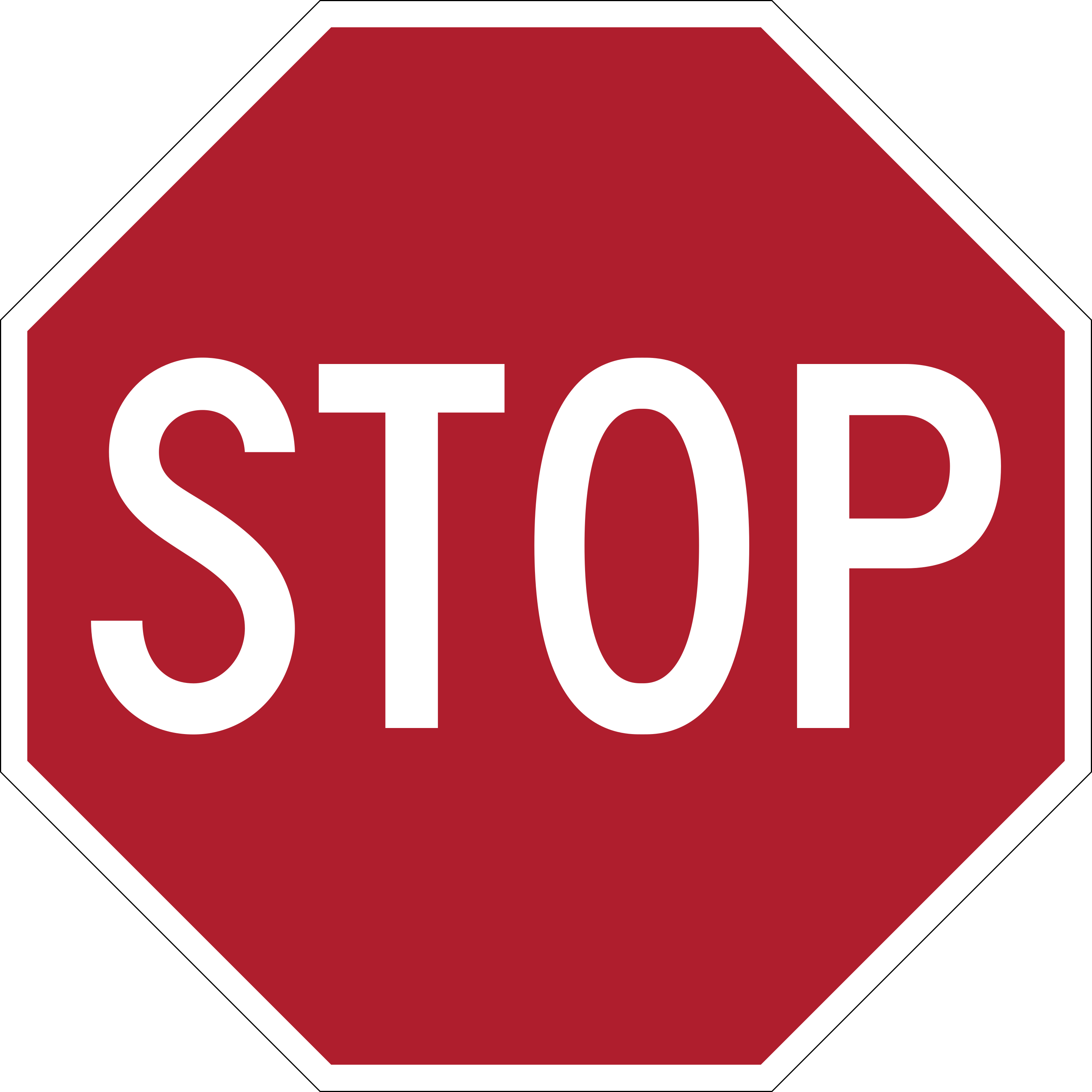
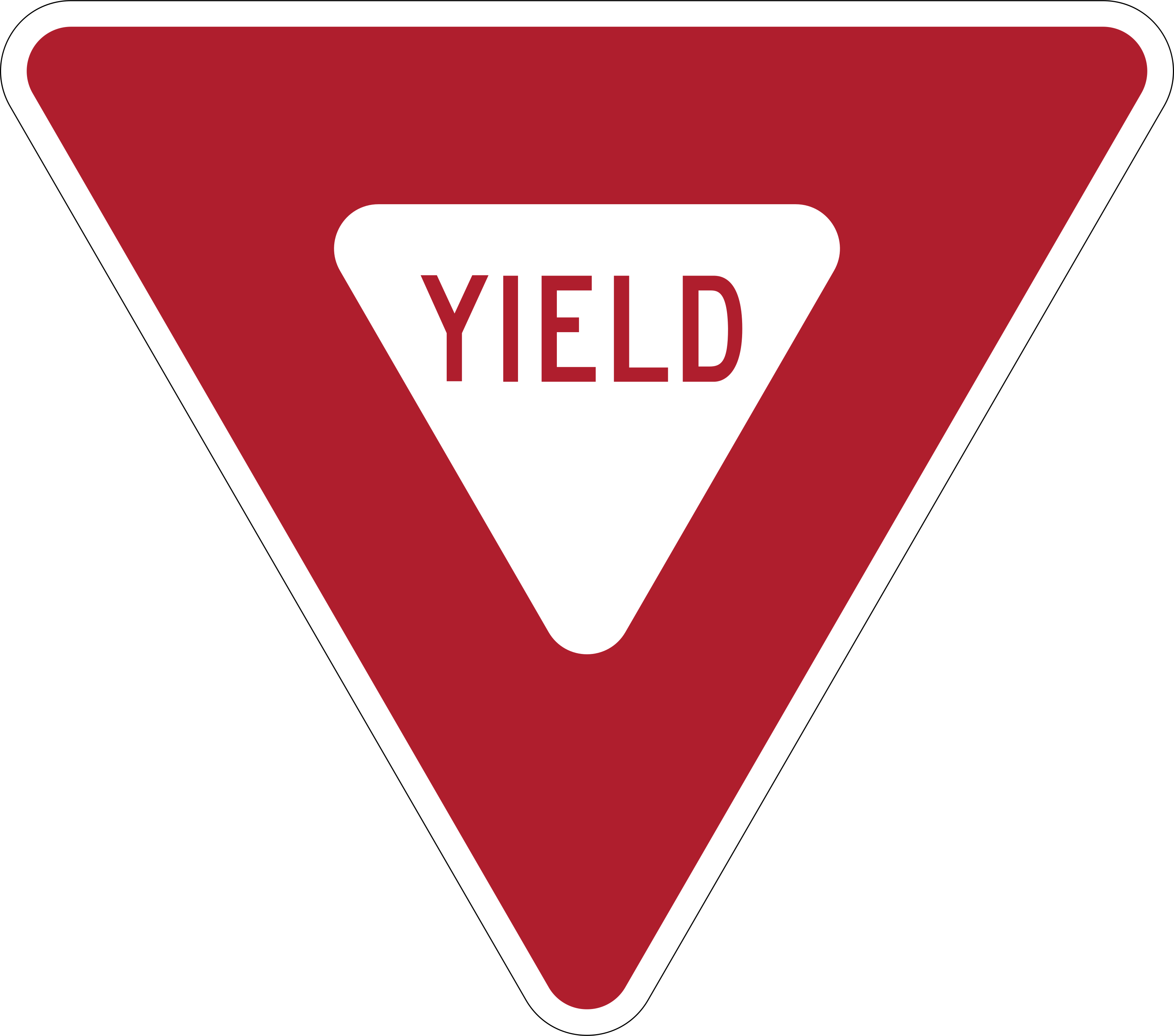
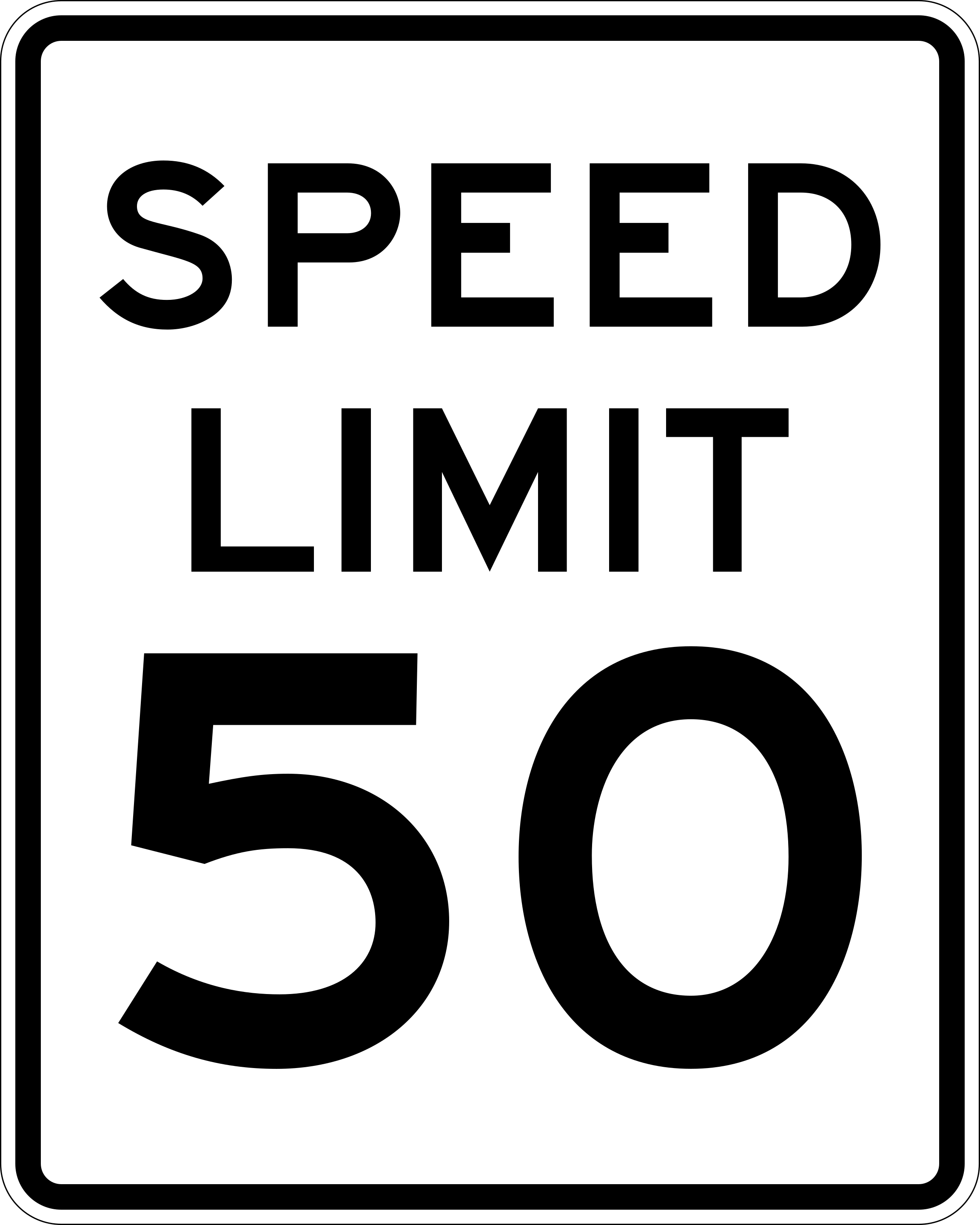
Road signs show up on every test
Learn to read signs by shape and color and you bank easy points. Here are a few you should know cold:



What to study for the Utah written test
- Markings on the pavement and the maneuvers they allow or forbid.
- Priority rules wherever vehicles, cyclists, and pedestrians converge.
- Sign recognition drilled to the point of instant recall.
- All signal phases, from protected arrows to flashing reds and yellows.
- Speed law, following distance, and adjusting both for conditions.
Utah test day checklist
- Verify the Driver License Division's current document list and assemble your identity and residency materials in advance.
- Schedule your visit with plenty of margin and arrive sharp, not sleepy.
- Close out your prep with a full-length Exam Mode session the day prior.
- Approach each exam question methodically: read the stem, then evaluate every option.
How Utah compares
| Requirement | Utah | Typical US state |
|---|---|---|
| Questions on the test | 25 | 20–50 |
| Correct answers to pass | 20 | Varies |
| Passing score | 80% | 70–85% |
| Earliest permit age | 15 | 15–16 |
What happens if you do not pass the Utah test?
You can miss up to 5 of the 25 questions and still pass (20 correct, 80%). Score below that and the DLD will let you retake the exam; waiting periods and retest fees are set by the Utah Driver License Division, so check their current policy. Before you retake it, review the category breakdown on your results page and read our guide on what to do after failing the written test.
Official Utah DMV resources
Always confirm the current rules with the Utah Driver License Division (DLD). The question counts, passing scores, and permit ages on this page are taken from the official DLD handbook and licensing pages linked below.
Last verified against the official Utah DLD handbook on June 20, 2026. If you notice anything that no longer matches the current handbook, please email achyuthkumark2001@gmail.com and we will update the page.
What to bring to the DLD in Utah
Passing the written test is only half the visit. Most applicants also need:
- Proof of identity (passport or birth certificate)
- Proof of Utah residency
- Social Security number or accepted alternative
- Parent or guardian documents if you are a minor
- Appointment confirmation if applicable
Find a DLD office in Utah
When you are ready to take the real test, find your nearest DLD location.
Map results come from Google and may include third-party services. Always confirm the office location, hours, and whether an appointment is required on the official DLD website before visiting.
Keep preparing
Verified & Accurate
Our editorial team manually reviews all mock test questions against the latest official Utah Driver License Division handbook to ensure complete accuracy.
Last reviewed: June 6, 2026
Utah permit test FAQ
How much does the Utah permit cost?
$19.00. Learner permit issuance; the same $19.00 fee applies to original, renewal, and replacement permits, for both adult (21 and over) and provisional (20 and under) applicants Fees are subject to change and are non-refundable. The division accepts cash, checks, money orders, and credit cards. See the full Utah fee breakdown and official source on our permit cost page.
How many supervised driving hours does Utah require?
40 hours of practice driving, including 10 hours after sunset. Confirm the current requirement and any logging rules with the Utah Driver License Division.
How many items are on Utah's knowledge exam?
The exam contains 25 multiple-choice questions, and 20 correct answers meet the 80 percent passing standard.
What score does the Driver License Division require?
Eighty percent. On the 25-question exam that means 20 correct, leaving room for at most 5 misses.
How old must I be to test for a Utah permit?
Generally 15. Because age and documentation rules can shift, verify the current requirements with the Driver License Division first.
What documents does a Utah DLD office want to see?
Expect to show evidence of identity and Utah residency. Consult the division's official checklist close to your appointment, since it is updated periodically.
Can the exam be retaken after a failing score?
Yes. Your local office sets the waiting interval, and a focused review of your missed topics usually makes the second attempt much smoother.
Do these practice questions match the official Utah exam word for word?
They do not. Each is an original item built around the handbook's topics, written to teach the rules rather than reproduce the state's question bank.
Sources
We summarize public information from the Utah Driver License Division in our own words. Confirm details with the official source: