Free Tennessee DMV Practice Test 2026
Last updated:
Whether you will be learning to drive in Nashville traffic or on a quiet road in rural Tennessee, the path starts the same way: a written exam administered by the Tennessee Department of Safety and Homeland Security (DOSHS). The test exists to confirm one thing, that you understand signs, signals, right-of-way, and the judgment calls safe driving requires.
On test day you will face 30 multiple-choice questions, and 24 correct answers, an 80 percent score, gets you through. The free practice exams here match that count and style. Take them on repeat, study the explanation attached to every answer, and the real screen at the testing center will feel like familiar territory.
Passing score
80% to pass
24
of 30 correct
You can miss up to 6 questions and still pass.
DOSHS
Agency
30
Questions
24 (80%)
To pass
15
Permit age
Key takeaways
- The Tennessee written test has 30 questions and you need 24 correct (80%) to pass.
- Questions are drawn from the official Tennessee Department of Safety and Homeland Security handbook and cover road signs, traffic laws, and safe driving.
- You can apply for a permit at 15.
- Practice in two modes: learn with instant explanations, then simulate the real exam under a timer.
Sample Tennessee permit test questions
Here are a few real questions from our Tennessee bank, with the correct answer and a plain-language explanation. The full test has many more.
- Right-of-WayEasy
1. A vehicle entering a road from a driveway or alley must:
- Have the right-of-way
- Yield to traffic already on the road and to pedestrians
- Stop traffic to enter
- Enter at full speed
Why: When entering a roadway from a private drive or alley, you must yield to road traffic and pedestrians.
- Traffic LawsEasy
2. In most states, you must turn on your headlights:
- Only on highways
- Only during heavy rain
- From sunset to sunrise and when visibility is reduced
- Only when other cars do
Why: Headlights are required from dusk to dawn and whenever conditions limit visibility, such as rain or fog.
- Alcohol and DrugsMedium
3. For drivers age 21 and over, the common per se blood alcohol concentration (BAC) limit is:
- 0.15%
- 0.02%
- 0.05%
- 0.08%
Why: 0.08% BAC is the standard per se limit for drivers 21 and older in most states.
- Road SignsEasy
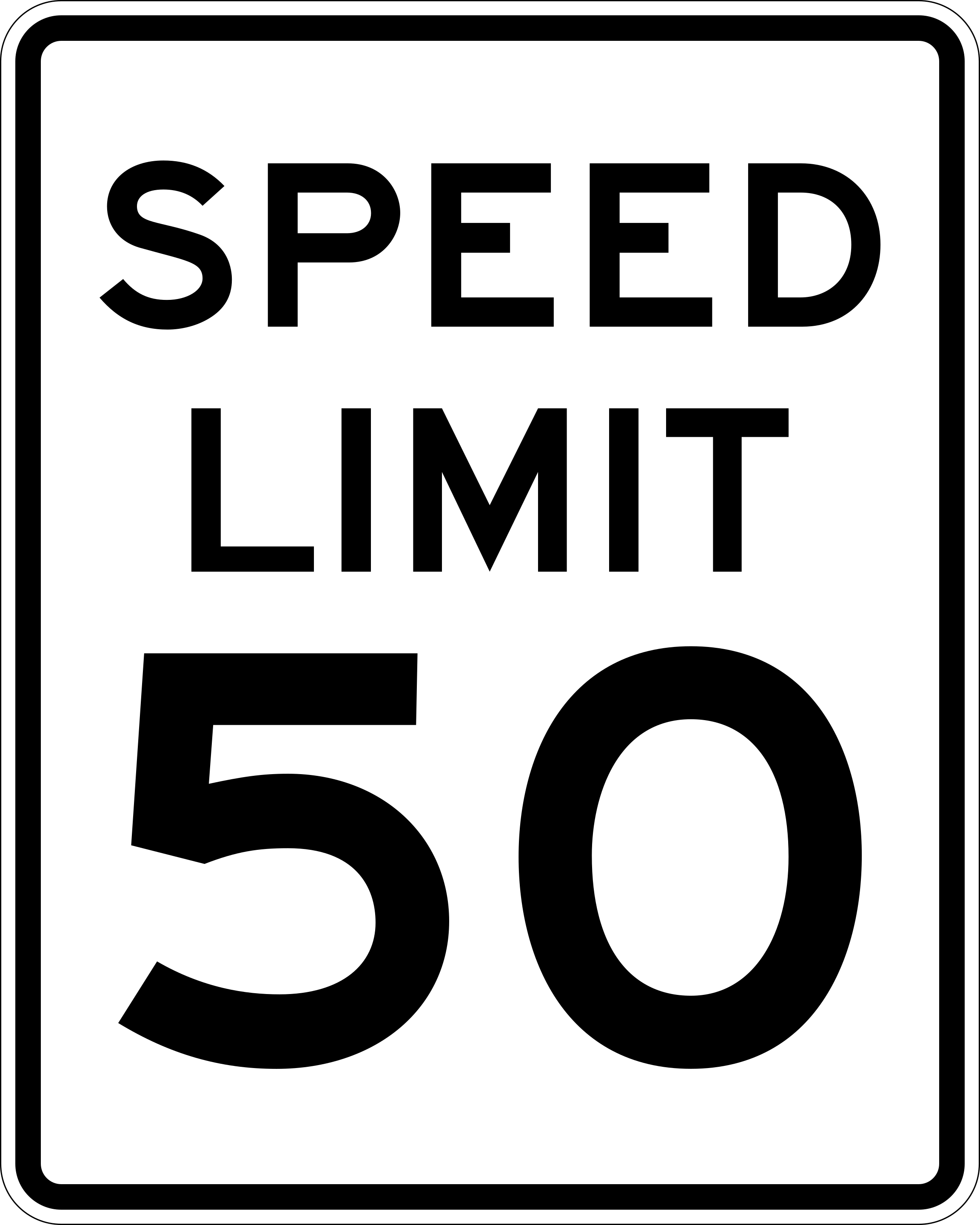
4. A rectangular sign reading a number such as 55 inside a white box indicates:
- A suggested minimum only
- The maximum legal speed under ideal conditions
- A street address
- The distance to the next town
Why: A white rectangular speed-limit sign shows the maximum legal speed when conditions are good.
More ways to practice Tennessee
Want a fresh set of questions or a focused drill? Try one of these Tennessee tests:
What’s on the Tennessee test
Our Tennessee question bank is balanced across the categories the DOSHS tests. These are the topics to study:
Inside the Tennessee knowledge exam
Tennessee pulls its 30 exam questions from the official driver manual, and the pass line sits at 24 correct, exactly 80 percent. Each question offers several answers, but only one fully fits.
You will see plenty of sign and signal questions, a healthy dose of right-of-way scenarios, and situational items about reacting to hazards like rain or stopped emergency vehicles. None of it is designed to trick you, though precise wording rewards a careful read of every option. Fail, and the door stays open: once your testing center's waiting period passes, you can sit for the exam again.
The topics worth your study hours
Skip the urge to read the manual cover to cover the night before. Concentrate instead on the areas below, which supply most of the questions Tennessee asks.
- Hazard response and defensive basics: following distance, wet roads, fog, and making way for emergency vehicles.
- What each signal phase means, especially the flashing variants and protected turn arrows.
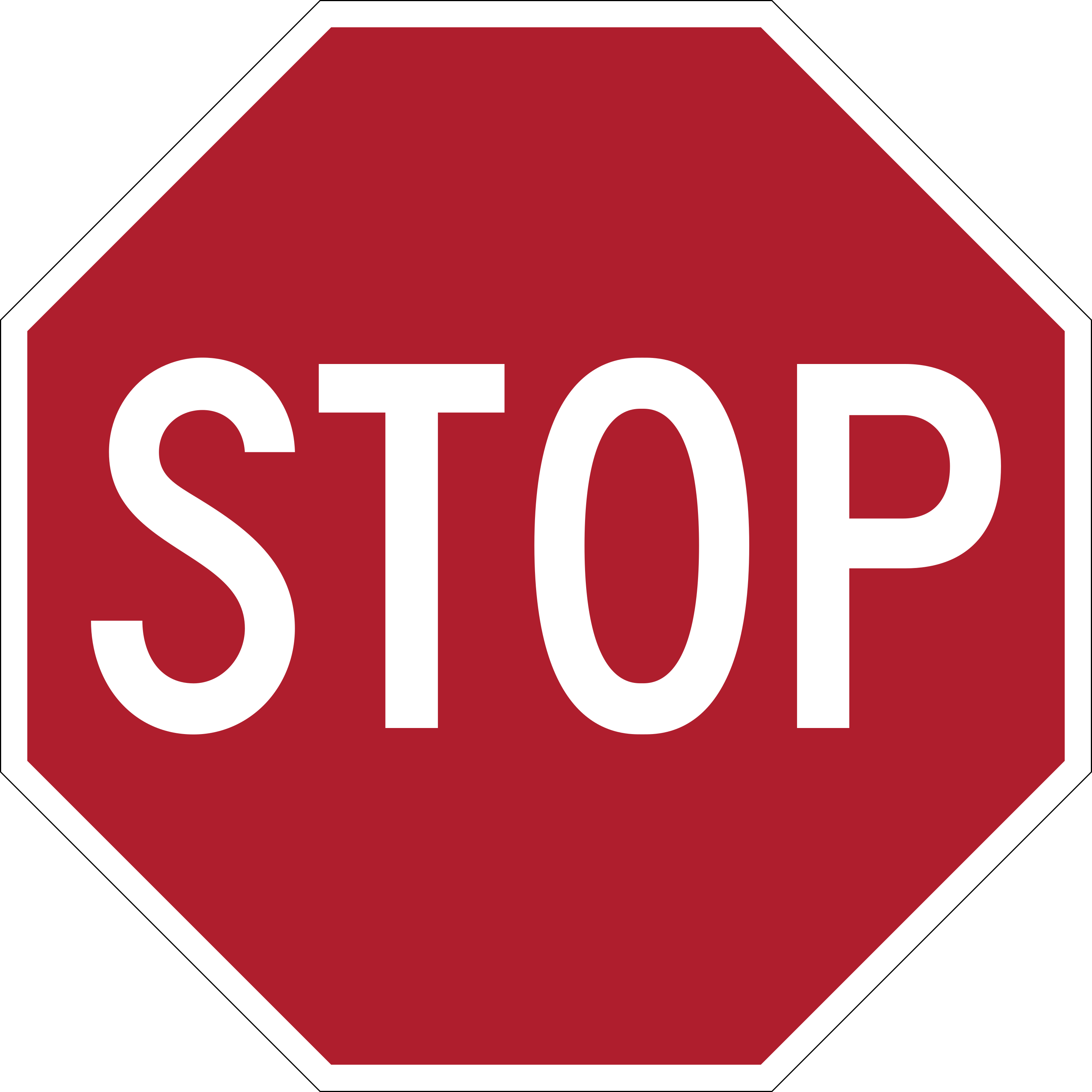
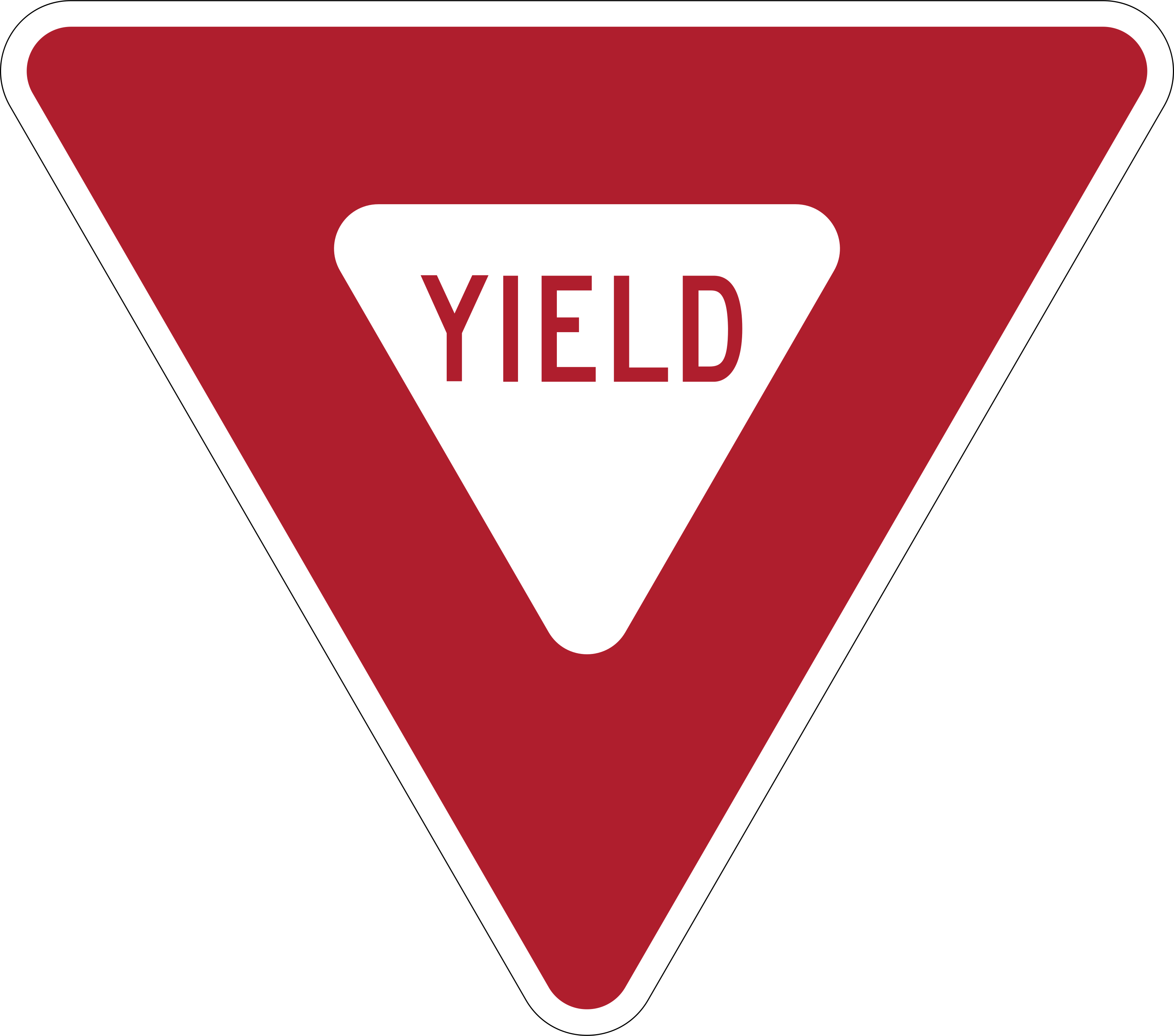
- Sign meanings keyed to shape and color, so a glance tells you regulatory from warning from guide.
- Yielding rules at four-way stops, roundabouts, crosswalks, and intersections with no controls at all.
- Painted road markings, including the difference a solid or broken yellow line makes for passing.
Two study modes, two purposes
Practice Mode and Exam Mode split the work between them. The first is your classroom: answer, get an instant result, read the explanation, and move on a little smarter. The second is your dress rehearsal: a complete question set with the grading held back until the end, mirroring the experience at a DOSHS testing center. Learn in one, prove it in the other.
Tennessee driving, from interstates to mountain grades
Few states swing between extremes like Tennessee. Memphis and Nashville serve up dense interstate merges and rush-hour pressure, while the east of the state climbs toward the Smokies with fog, tight curves, and long downgrades that punish overheated brakes. Rural middle Tennessee adds two-lane passing decisions and farm traffic to the mix. Study curve and grade warning signs, proper merging, and downhill speed control, because the exam touches all of it and the roads will too.
Road signs show up on every test
Learn to read signs by shape and color and you bank easy points. Here are a few you should know cold:



What to study for the Tennessee written test
- Defensive fundamentals such as the three-second gap and adjusting for weather.
- Traffic light phases, flashing signals, and turn-arrow rules.
- Reading signs from silhouette and color without relying on the text.
- Right-of-way order anywhere two road users meet.
- Lane lines, center lines, and the passing rules they encode.
Tennessee test day checklist
- Look up the document checklist for your testing center and bring proof of who you are and where you live.
- Build in buffer time. Showing up rushed is the easiest way to make careless errors.
- Treat yourself to a final Exam Mode rehearsal the day before.
- During the exam, weigh all the answer options. The second-best choice is the trap.
How Tennessee compares
| Requirement | Tennessee | Typical US state |
|---|---|---|
| Questions on the test | 30 | 20–50 |
| Correct answers to pass | 24 | Varies |
| Passing score | 80% | 70–85% |
| Earliest permit age | 15 | 15–16 |
What happens if you do not pass the Tennessee test?
You can miss up to 6 of the 30 questions and still pass (24 correct, 80%). Score below that and the DOSHS will let you retake the exam; waiting periods and retest fees are set by the Tennessee Department of Safety and Homeland Security, so check their current policy. Before you retake it, review the category breakdown on your results page and read our guide on what to do after failing the written test.
Official Tennessee DMV resources
Always confirm the current rules with the Tennessee Department of Safety and Homeland Security (DOSHS). The question counts, passing scores, and permit ages on this page are taken from the official DOSHS handbook and licensing pages linked below.
Last verified against the official Tennessee DOSHS handbook on June 20, 2026. If you notice anything that no longer matches the current handbook, please email achyuthkumark2001@gmail.com and we will update the page.
What to bring to the DOSHS in Tennessee
Passing the written test is only half the visit. Most applicants also need:
- Proof of identity (passport or birth certificate)
- Proof of Tennessee residency
- Social Security number or accepted alternative
- Parent or guardian documents if you are a minor
- Appointment confirmation if applicable
Find a DOSHS office in Tennessee
When you are ready to take the real test, find your nearest DOSHS location.
Map results come from Google and may include third-party services. Always confirm the office location, hours, and whether an appointment is required on the official DOSHS website before visiting.
Keep preparing
Verified & Accurate
Our editorial team manually reviews all mock test questions against the latest official Tennessee Department of Safety and Homeland Security handbook to ensure complete accuracy.
Last reviewed: June 6, 2026
Tennessee permit test FAQ
How much does the Tennessee permit cost?
$10.50 (under 18); $5.50 (18 and older). Class PD learner permit valid 1 year; listed fees include the applicable application fee (Table 2.4) Temporary (limited-duration) XPD Class D permits cost $33.00 under age 18 and $28.00 over age 18. County clerk partner locations may charge an additional administrative fee on top of required state fees. See the full Tennessee fee breakdown and official source on our permit cost page.
How many supervised driving hours does Tennessee require?
50 hours of driving experience, including 10 hours at night, certified by a parent, legal guardian, or driving instructor. Confirm the current requirement and any logging rules with the Tennessee Department of Safety and Homeland Security.
How many questions does Tennessee put on the permit exam?
Thirty. You need 24 of them right, which works out to the state's 80 percent passing requirement.
What does it take to pass the Tennessee written test?
A score of 80 percent or better, meaning at least 24 correct answers out of the 30 questions.
When can I first apply for a Tennessee learner permit?
Most applicants become eligible at 15. Confirm the current age rules and required documents with the Department of Safety and Homeland Security before your visit.
What do I need to bring to the testing center?
Identity and residency documentation at minimum. The full list can change, so check the department's website shortly before you go.
If I fail, how soon can I try again?
Retakes are allowed once your testing center's waiting period has passed. Ask the staff for the exact timing and spend the gap reviewing weak spots.
Are these the real Tennessee exam questions?
No, and no practice site has those. These are original questions modeled on the same topics and difficulty so the format holds no surprises.
Sources
We summarize public information from the Tennessee Department of Safety and Homeland Security in our own words. Confirm details with the official source: