Free South Carolina DMV Practice Test 2026
Last updated:
Before South Carolina puts you behind the wheel for a road test, the state wants proof that you know the rules on paper. That proof is the knowledge exam, a written test on signs, signals, right-of-way, and safe-driving judgment that every new driver takes through the South Carolina Department of Motor Vehicles (SCDMV).
The official exam asks 30 multiple-choice questions and requires 24 correct answers, an 80 percent score, before you can move forward. Our free practice questions follow that same format. Work through them as often as you want, check the explanation under each answer, and you will know your weak topics long before you sit down at an SCDMV branch.
Passing score
80% to pass
24
of 30 correct
You can miss up to 6 questions and still pass.
SCDMV
Agency
30
Questions
24 (80%)
To pass
15
Permit age
Key takeaways
- The South Carolina written test has 30 questions and you need 24 correct (80%) to pass.
- Questions are drawn from the official South Carolina Department of Motor Vehicles handbook and cover road signs, traffic laws, and safe driving.
- You can apply for a permit at 15.
- Practice in two modes: learn with instant explanations, then simulate the real exam under a timer.
Sample South Carolina permit test questions
Here are a few real questions from our South Carolina bank, with the correct answer and a plain-language explanation. The full test has many more.
- Road SignsMedium
1. A pentagon-shaped sign (five sides) most commonly marks:
- A hospital entrance
- A school zone or school crossing
- A no-parking area
- A one-way street
Why: The five-sided pentagon sign warns of a school zone or school crossing ahead.
- Traffic LawsEasy
2. In most states, you must turn on your headlights:
- Only on highways
- Only during heavy rain
- From sunset to sunrise and when visibility is reduced
- Only when other cars do
Why: Headlights are required from dusk to dawn and whenever conditions limit visibility, such as rain or fog.
- Right-of-WayMedium
3. At an intersection with no signs or signals, you should yield to:
- The larger vehicle
- Any vehicle on your left
- No one
- The vehicle that arrives first, then to the vehicle on your right
Why: At an uncontrolled intersection, yield to whoever arrived first; if you arrive together, yield to the right.
- Sharing the RoadEasy
4. When passing a bicyclist, a driver should:
- Pass closely to save time
- Leave a safe distance, often at least three feet, before passing
- Honk and pass immediately
- Force the cyclist off the road
Why: Give cyclists a safe buffer, commonly at least three feet, and pass only when it is clear.
More ways to practice South Carolina
Want a fresh set of questions or a focused drill? Try one of these South Carolina tests:
What’s on the South Carolina test
Our South Carolina question bank is balanced across the categories the SCDMV tests. These are the topics to study:
What to expect on the SCDMV knowledge exam
South Carolina builds its written test from the material in the state driver manual: 30 questions, each with one best answer among the choices. Getting 24 of them right earns the 80 percent you need.
Expect a heavy emphasis on sign recognition, signal meanings, and who yields to whom in everyday situations like four-way stops and left turns. The exam is fair, but the answer choices are often worded closely, so slow down and compare every option. A failed attempt is not the end of the road. Your branch will tell you how long to wait before you can come back and test again.
Where to focus your study time
You do not need to memorize the whole manual word for word. Most of the exam comes from a few core areas, and the list below covers the ground that matters most for South Carolina applicants.
- Right-of-way: who goes first at four-way stops, crosswalks, roundabouts, and intersections with no controls.
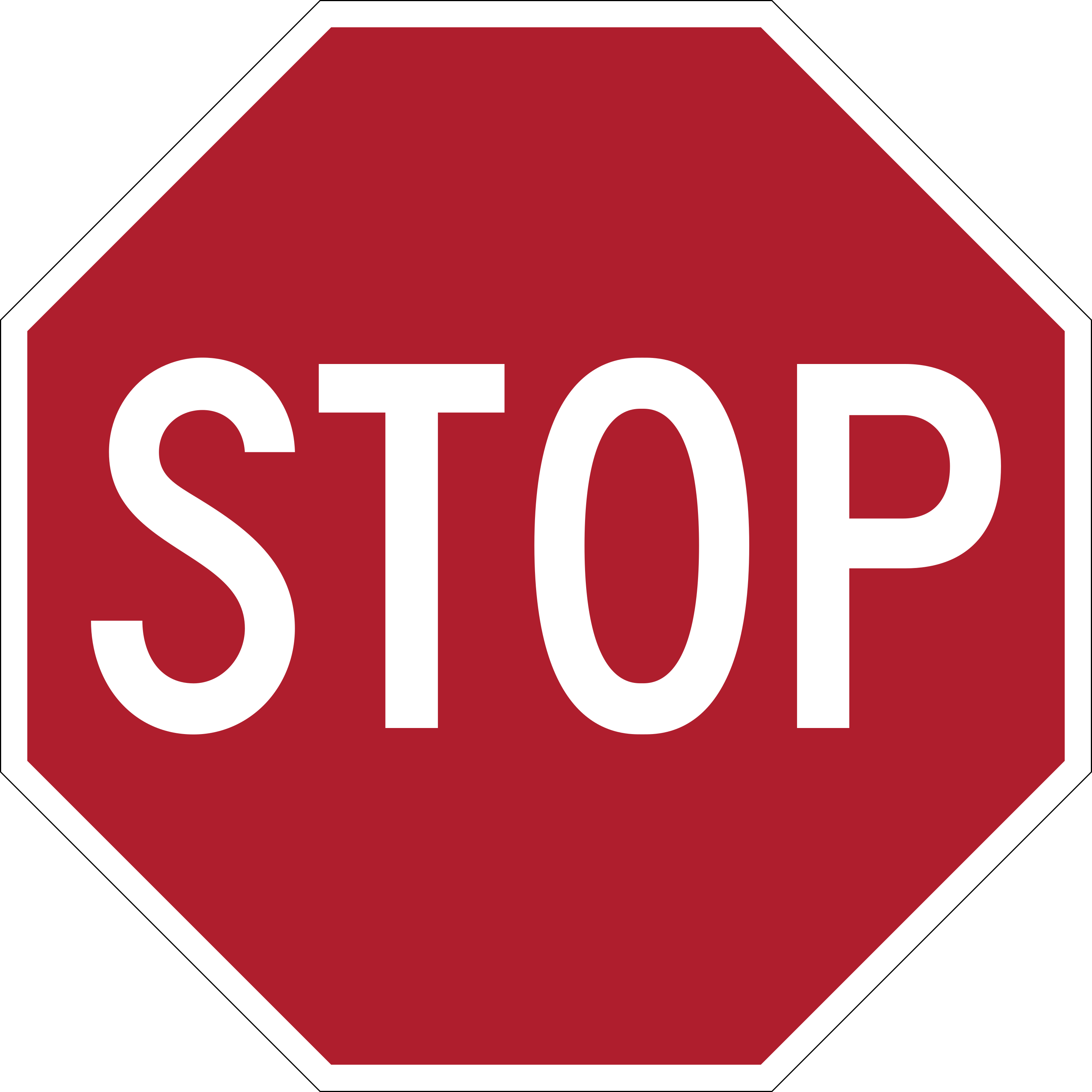
- Sign identification by shape and color, from the octagonal stop sign to pentagon school-zone and round railroad warnings.
- Signal lights of every kind, including what flashing red and flashing yellow each demand and how turn arrows work.
- Lane and pavement markings: when a yellow line lets you pass, what white lines separate, and where stop lines sit.
- Defensive habits such as keeping a safe gap, slowing for rain, and clearing a path for emergency vehicles.
Practice Mode or Exam Mode: which one first
Start with Practice Mode. It reveals the answer and a quick explanation the moment you respond, which is the fastest way to turn wrong guesses into learned rules. Once your scores settle into a comfortable range, move over to Exam Mode, where feedback waits until the end and the experience matches what you will face at the SCDMV. Passing a few full runs there is a strong signal that you are ready for the real appointment.
Driving conditions across South Carolina
From interstate traffic around the larger cities to two-lane roads threading through farmland in the Midlands and Upstate, South Carolina asks new drivers to handle a wide range of settings, and distances between towns can be long. Summer brings fast-building afternoon thunderstorms along the coast and inland alike, so know the rules for headlights in rain and for adding following distance when the pavement is wet. On country roads, give tractors and other slow vehicles marked with the orange triangle plenty of room, and pass only where lines and signs say you may.
Road signs show up on every test
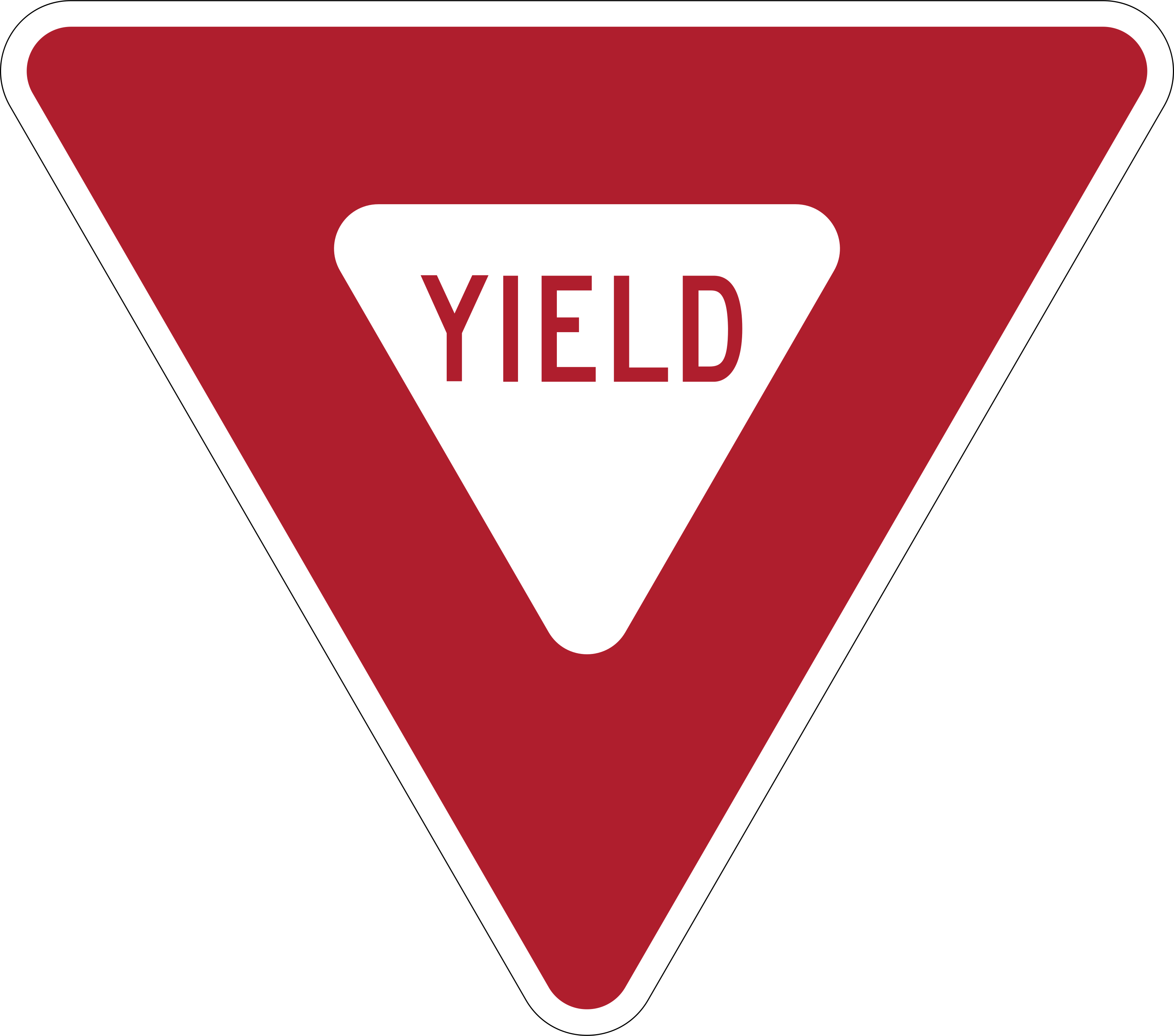
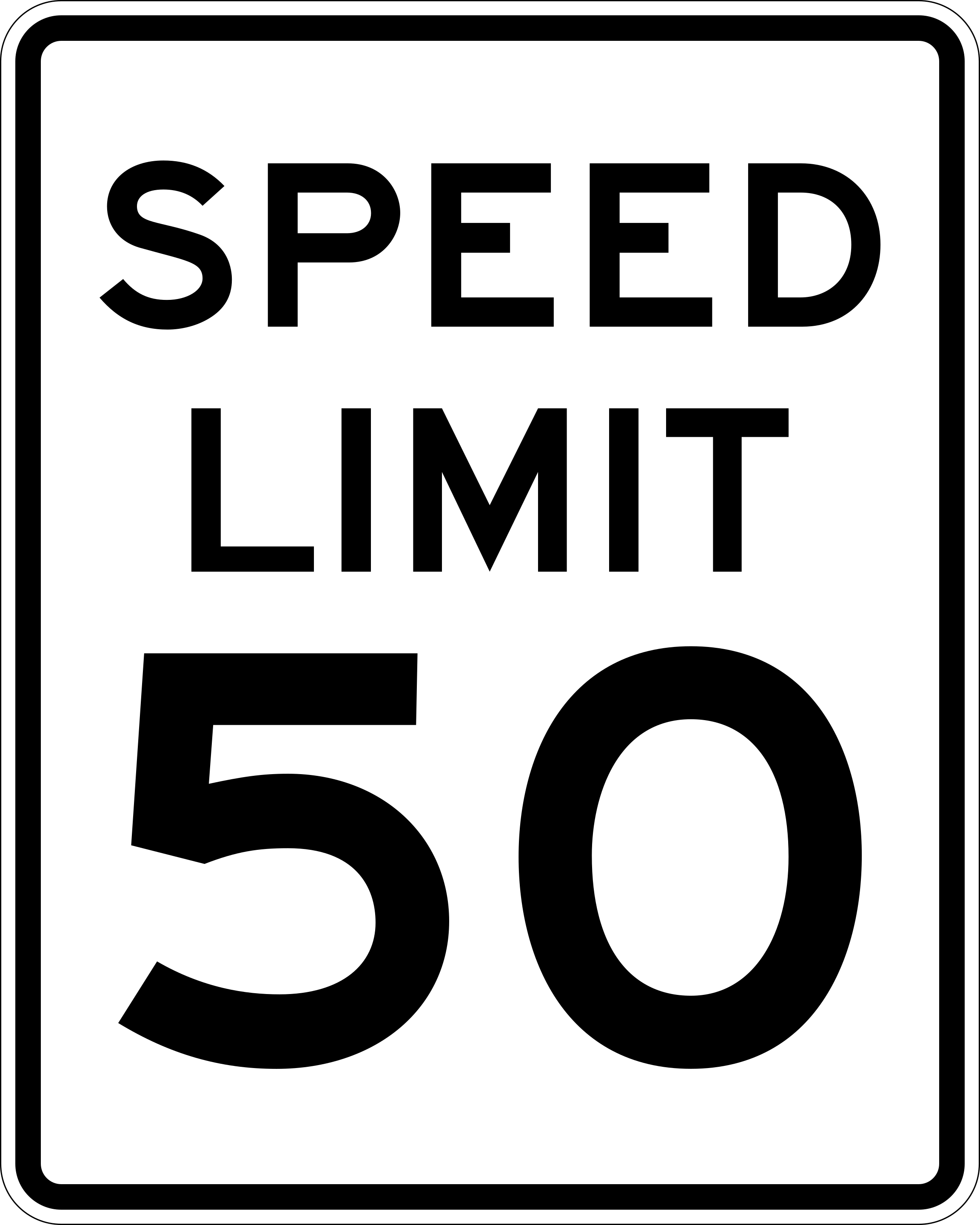
Learn to read signs by shape and color and you bank easy points. Here are a few you should know cold:



What to study for the South Carolina written test
- Who yields first at stops, crosswalks, roundabouts, and unmarked intersections.
- Recognizing signs by outline and color before you can even read the words.
- Every signal state, from green arrows to flashing reds and yellows.
- Yellow versus white pavement lines and what broken versus solid means.
- Core safety habits: gap management, wet-weather speed, and emergency-vehicle law.
South Carolina test day checklist
- Check the SCDMV document list and gather your identity and residency paperwork ahead of time.
- Plan to reach the branch early in the day rather than racing the closing time.
- Run one last full Exam Mode session the evening before your visit.
- On the exam itself, finish reading the entire question and every choice before you commit.
How South Carolina compares
| Requirement | South Carolina | Typical US state |
|---|---|---|
| Questions on the test | 30 | 20–50 |
| Correct answers to pass | 24 | Varies |
| Passing score | 80% | 70–85% |
| Earliest permit age | 15 | 15–16 |
What happens if you do not pass the South Carolina test?
You can miss up to 6 of the 30 questions and still pass (24 correct, 80%). Score below that and the SCDMV will let you retake the exam; waiting periods and retest fees are set by the South Carolina Department of Motor Vehicles, so check their current policy. Before you retake it, review the category breakdown on your results page and read our guide on what to do after failing the written test.
Official South Carolina DMV resources
Always confirm the current rules with the South Carolina Department of Motor Vehicles (SCDMV). The question counts, passing scores, and permit ages on this page are taken from the official SCDMV handbook and licensing pages linked below.
Last verified against the official South Carolina SCDMV handbook on June 20, 2026. If you notice anything that no longer matches the current handbook, please email achyuthkumark2001@gmail.com and we will update the page.
What to bring to the SCDMV in South Carolina
Passing the written test is only half the visit. Most applicants also need:
- Proof of identity (passport or birth certificate)
- Proof of South Carolina residency
- Social Security number or accepted alternative
- Parent or guardian documents if you are a minor
- Appointment confirmation if applicable
Find a SCDMV office in South Carolina
When you are ready to take the real test, find your nearest SCDMV location.
Map results come from Google and may include third-party services. Always confirm the office location, hours, and whether an appointment is required on the official SCDMV website before visiting.
Keep preparing
Verified & Accurate
Our editorial team manually reviews all mock test questions against the latest official South Carolina Department of Motor Vehicles handbook to ensure complete accuracy.
Last reviewed: June 6, 2026
South Carolina permit test FAQ
How much does the South Carolina permit cost?
$2.50 (plus $2.00 knowledge test). $2.00 for the knowledge test and $2.50 for the beginner's permit after you pass Renewing a Class D beginner's permit costs $2.50. You must hold the permit 180 days if under 18, or 30 days if 18 and older, before taking the road test. See the full South Carolina fee breakdown and official source on our permit cost page.
How many supervised driving hours does South Carolina require?
At least 40 hours of supervised driving practice, including 10 hours of night driving, certified on SCDMV Form PDLA. Confirm the current requirement and any logging rules with the South Carolina Department of Motor Vehicles.
How long is the South Carolina permit exam?
It runs 30 multiple-choice questions. Reaching the passing mark takes 24 correct answers, which equals 80 percent.
What percentage do I need to pass in South Carolina?
The SCDMV requires 80 percent, so you can miss no more than 6 of the 30 questions.
At what age can I start the permit process in South Carolina?
Beginners in South Carolina can generally seek a learner permit starting at age 15. Verify the latest age and paperwork rules with the SCDMV before heading to a branch.
Which documents does an SCDMV branch expect?
Plan on identity and residency paperwork at minimum, and review the official SCDMV list shortly before your visit since requirements get updated.
Is a retake allowed after a failed attempt?
It is. Your branch will explain how long you must wait, and you can use that time to shore up the topics that tripped you up.
Do these questions come from the actual South Carolina exam?
They do not. Every question here is an original study item built around standard US road rules and the state handbook, designed to teach the topics rather than copy the test.
Sources
We summarize public information from the South Carolina Department of Motor Vehicles in our own words. Confirm details with the official source: