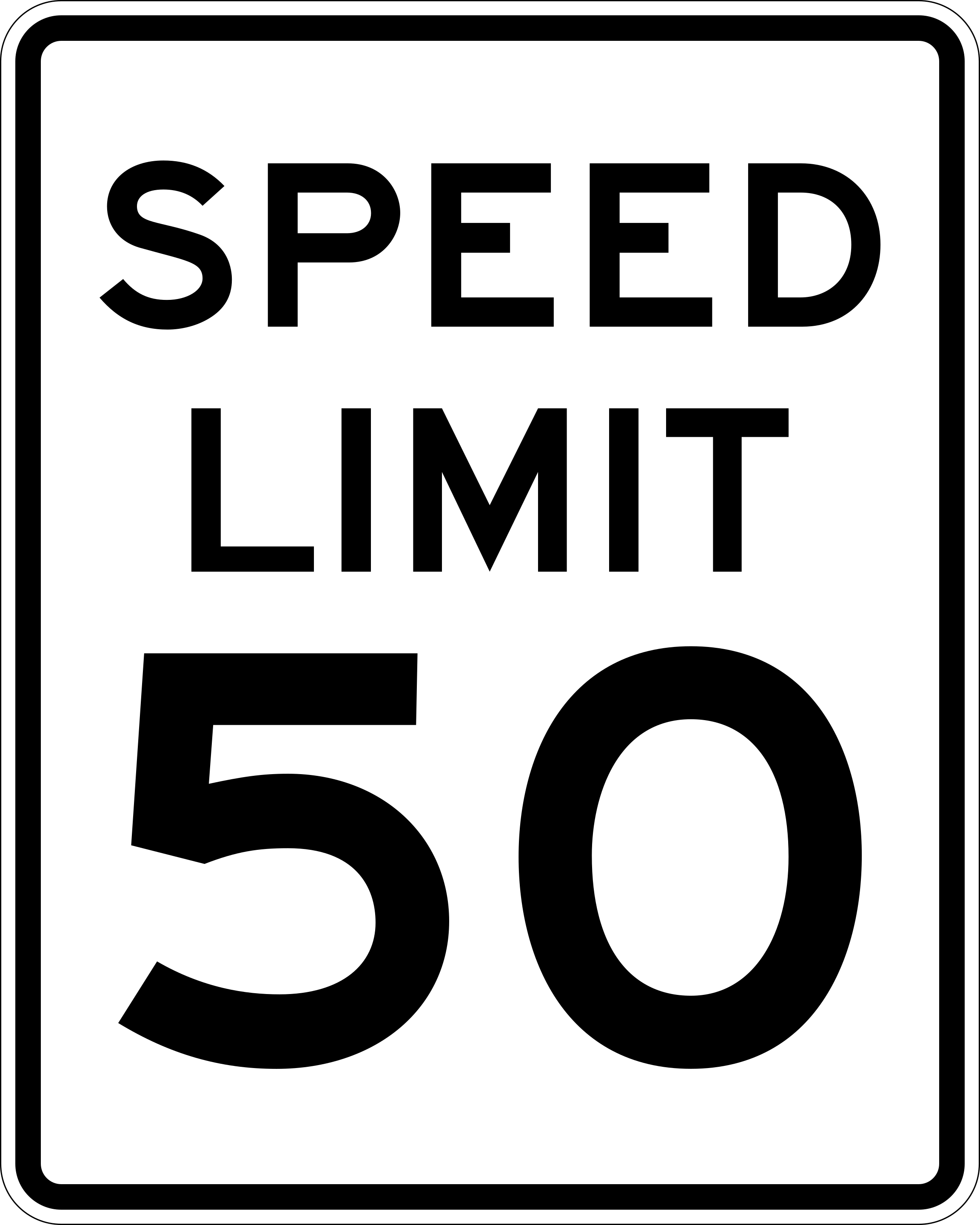
Speed Limit Sign
Last updated:
The plain white rectangle with a number looks like the simplest sign on the road, yet it hides one of the most misunderstood rules in driving. That number is a ceiling for ideal conditions, not a target you are entitled to hit in rain, fog, or heavy traffic. The basic speed law quietly overrides it whenever conditions turn dangerous.
What it means
A speed limit sign posts the maximum legal speed for that stretch of road under ideal driving conditions. Driving faster than the posted number is illegal, but so is driving at the posted speed when conditions such as weather, traffic, or visibility make it unsafe. The sign sets the upper bound, while the basic speed law requires you to drive at a speed that is reasonable for the actual conditions.
Why this sign exists
Speed limits exist because crash severity and stopping distance rise sharply with speed, and consistent posted limits give drivers a clear, enforceable expectation for each road type. Engineers set limits based on road design, sight distance, the surrounding land use, and often the speed at which most drivers naturally travel a given road safely. The white rectangle with black text was standardized as the regulatory format, distinct from yellow warning signs, so a driver instantly knows the number is a legal command rather than advice. Posting limits also smooths traffic flow by reducing the speed differences between vehicles, which is itself a major crash factor. The design is deliberately plain and high-contrast for fast reading at speed.
Where you see it
Speed limit signs appear at the start of each speed zone and are repeated after major intersections, on-ramps, and changes in road character. You will see lower numbers in residential and business districts and higher ones on rural highways and freeways. School zones, work zones, and curves often post their own special or advisory speeds nearby.
Real driving scenarios
- The posted limit is 55 but heavy rain has cut visibility, so you slow well below 55 because the basic speed law requires a speed safe for the conditions.
- You pass a sign lowering the limit as you enter a town, so you ease off the gas to reach the new lower number by the time you are in the reduced zone.
- Traffic ahead is moving at 40 in a 65 zone due to congestion, so you match the flow rather than weaving to maintain the higher posted speed.
What happens if you ignore it
Exceeding the limit shortens the time and distance you have to react and dramatically increases the energy in any crash, which translates directly into more severe injuries. Speeding is a moving violation that brings fines and points, with penalties that climb in school zones, work zones, and for excessive speeds. Driving too fast for conditions can be cited even when you are under the posted number, and it often shifts crash liability onto you. Accumulated speeding violations can raise insurance costs and threaten your license.
DMV exam trick questions
The phrasings that catch people out on the written test:
Can you be ticketed for driving at the posted speed limit?
Yes. The posted number applies to ideal conditions. In rain, fog, or heavy traffic, the basic speed law can require you to drive slower, and driving too fast for conditions is citable.
Is the speed limit a target you are entitled to drive?
No. It is a maximum under ideal conditions, not a guaranteed safe speed. You must adjust downward whenever conditions demand it.
Does a white speed sign mean the same as a yellow advisory speed sign on a curve?
No. The white rectangle is a legal limit. A yellow advisory speed plate suggests a safe speed for a curve or ramp and is a warning, not the enforced limit for the road.
How it compares to similar signs
- vs Advisory speed plate: The white regulatory speed limit sign sets the enforceable maximum for the road. The yellow advisory plate on a curve or ramp recommends a safe speed for that feature and is a warning rather than the legal limit.
- vs Minimum speed sign: Some highways post a white minimum speed sign setting the slowest legal speed. It looks similar but states a floor, while the standard speed limit sign states the ceiling.
Memory aid
The number is a lid, not a goal: lift your foot when the weather drops the ceiling.
State-by-state notes
Maximum speed limits and how they are set vary widely by state, and many states impose doubled fines or special penalties in school and work zones. Some states use absolute limits while others apply a presumed-limit standard, but the basic speed law applies broadly.
Common mistakes
- Treating the posted number as a minimum or a target rather than a conditional maximum.
- Maintaining the posted speed in rain, fog, or heavy traffic when conditions demand slowing.
- Confusing a yellow advisory curve speed with the enforceable road limit.
Keep studying this topic
Related signs


Speed Limit Sign FAQ
Is the speed limit a maximum or a recommendation?
It is a legal maximum for ideal conditions. You may not exceed it, and you must drive slower when weather, traffic, or visibility make the posted speed unsafe.
Can I get a ticket for going the speed limit?
Yes, under the basic speed law, if your speed is unsafe for current conditions. Driving too fast for conditions is a violation even below the posted number.
What is the basic speed law?
It is the rule that you must always drive at a speed that is reasonable and safe for the actual conditions, regardless of the posted limit.
Why are speed limit signs white instead of yellow?
White rectangles are the standard format for regulatory signs that state a legal command, distinguishing them from yellow warning signs that only caution you.
Does the speed limit change at night or in bad weather?
The posted number usually stays the same, but the safe and legal speed effectively drops because the basic speed law requires you to slow for reduced traction and visibility.