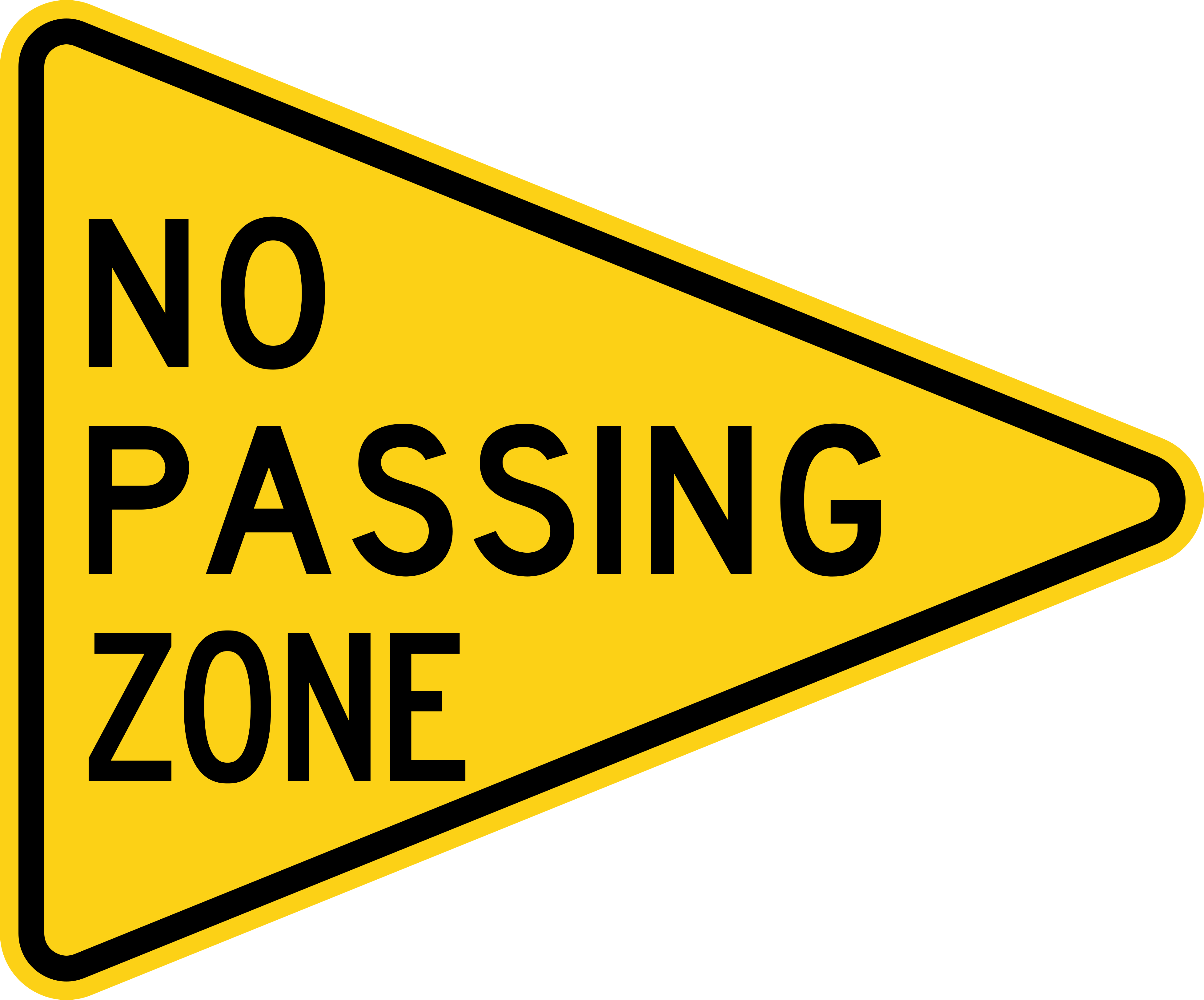
No Passing Zone Sign (Pennant)
Last updated:
Most warning signs are diamonds, so the no passing zone sign stands out by breaking the mold: it is a sideways triangle, a pennant, mounted on the left side of the road where it floats in your peripheral vision. It marks the exact spot where the road can no longer guarantee a safe gap to pass. Drivers who only watch the centerline often miss its silent warning.
What it means
The no passing zone pennant warns that you are entering a stretch of road where passing other vehicles is prohibited, typically because of limited sight distance over a hill or around a curve. It reinforces the solid yellow centerline that defines the zone on the pavement. From this sign until the zone ends, you must stay behind any vehicle ahead in your lane rather than crossing into the oncoming lane to pass.
Why this sign exists
This sign exists because passing on a two-lane road requires crossing into oncoming traffic, and where the road crests a hill or bends out of view, a driver cannot see far enough to complete the maneuver safely. Engineers place it at the start of the restricted segment to warn the driver doing the passing, complementing the solid yellow pavement line that a driver might not notice in time. The pennant shape was deliberately chosen to be different from the standard diamond so it is unmistakable and not confused with other warnings. Its left-side mounting is intentional, placing it directly in the line of sight of a driver who is thinking about pulling out to pass into the left lane. Yellow marks it as a warning sign, alerting drivers to a potential hazard rather than a flat prohibition like a regulatory sign.
Where you see it
You will see the no passing zone pennant on two-lane rural highways just before hills, curves, and intersections where forward visibility drops. It always appears on the left side of the road, opposite the usual sign placement, at the beginning of the solid-yellow-line zone. It is common in hilly, winding, or wooded terrain where sight lines are repeatedly broken.
Real driving scenarios
- You are following a slow truck on a two-lane road and a no passing zone pennant appears on your left as the road climbs, so you stay behind the truck until the zone ends.
- You see the pennant before a blind curve, so even though the oncoming lane looks empty you do not attempt to pass because traffic could appear mid-maneuver.
- You finish passing a car just as the road approaches a crest where the pennant warns of a no passing zone, so you complete your return to the right lane before it begins.
What happens if you ignore it
Passing in a no passing zone sets up head-on collisions, because the very reason for the zone is that you cannot see oncoming traffic until it is too late to abort. Misjudging a pass over a hill or around a curve leaves no room to recover when a car appears. Legally, passing in a no passing zone is a moving violation that can bring fines and points, with harsher treatment if it causes a crash. Because these crashes are often head-on and high-speed, the injury and liability consequences can be severe.
DMV exam trick questions
The phrasings that catch people out on the written test:
Is the no passing zone sign a diamond like other warning signs?
No. It is a pennant, a horizontal triangle pointing right, and it is mounted on the left side of the road. That unusual shape is how you recognize it.
Who is the no passing zone sign aimed at, the driver passing or the one being passed?
The driver who might pass. It is placed on the left, in the sightline of a driver about to pull into the oncoming lane to overtake.
If the solid yellow line is on the other side, can you pass?
Not where the pennant marks your no passing zone. A solid yellow line on your side of the center means you may not cross to pass, regardless of the other direction's markings.
How it compares to similar signs
- vs Standard diamond warning sign: Ordinary warnings are yellow diamonds mounted on the right. The no passing zone sign is a yellow pennant mounted on the left, a shape and placement combination unique to it.
- vs Do Not Pass regulatory sign: Some zones also use a rectangular black-on-white DO NOT PASS regulatory sign that states the prohibition in words. The yellow pennant is the warning that complements it and shares the left-side placement.
Memory aid
A flag pointing right on your left side: it waves you off from the passing lane.
State-by-state notes
The pennant and its meaning are standard nationwide. States vary in how aggressively they post supplementary DO NOT PASS regulatory signs and in the penalty schedule for illegal passing, but the rule against passing over the solid yellow line is universal.
Common mistakes
- Looking only at the centerline and never noticing the left-side pennant.
- Starting a pass too late and still being in the oncoming lane when the zone begins.
- Assuming an empty oncoming lane means it is safe to pass over a hill or curve.
Keep studying this topic
Related signs

No Passing Zone Sign (Pennant) FAQ
Why is the no passing zone sign on the left side of the road?
Because it warns the driver who is about to pass by pulling into the left, oncoming lane, so placing it on the left puts it directly in that driver's line of sight.
What shape is the no passing zone sign?
It is a pennant, a horizontal triangle pointing to the right, which is intentionally different from the standard diamond warning sign so it stands out.
Does the sign mean I can never pass on this road?
No. It marks the beginning of a specific zone where passing is unsafe, usually due to limited sight distance. Passing resumes where the zone and the solid yellow line end.
How does this sign relate to the yellow line?
It reinforces the solid yellow centerline that defines the no passing zone, alerting you to the restriction before you might rely on noticing the pavement marking alone.
What happens if I pass in a no passing zone?
You risk a head-on collision because you cannot see far enough ahead, and you can be cited for a moving violation that carries fines and points.