Free Virginia DMV Practice Test 2026
Last updated:
The Virginia knowledge exam is the first formal step toward a learner's permit, and it is administered by the Virginia Department of Motor Vehicles (DMV). The test confirms that you understand road signs, traffic signals, right-of-way rules, pavement markings, and the safe-driving habits expected of every driver on Virginia roads before you ever take the wheel.
This free Virginia practice test is built to mirror the real exam. The official test has 35 questions, and you must answer at least 30 correctly, a passing score of 85 percent. You can practice as many times as you like, read an explanation after every question, and arrive at the DMV calm and prepared.
Passing score
85% to pass
30
of 35 correct
You can miss up to 5 questions and still pass.
DMV
Agency
35
Questions
30 (85%)
To pass
15 years 6 months
Permit age
Key takeaways
- The Virginia written test has 35 questions and you need 30 correct (85%) to pass.
- Questions are drawn from the official Virginia Department of Motor Vehicles handbook and cover road signs, traffic laws, and safe driving.
- You can apply for a permit at 15 years 6 months.
- Practice in two modes: learn with instant explanations, then simulate the real exam under a timer.
Sample Virginia permit test questions
Here are a few real questions from our Virginia bank, with the correct answer and a plain-language explanation. The full test has many more.
- Safe DrivingMedium
1. In dense fog, the safest action is to:
- Slow down and use low-beam headlights
- Turn off all lights
- Use high beams
- Speed up to exit the fog
Why: Low beams cut glare in fog; slowing down improves your ability to react.
- Traffic LawsMedium
2. It is illegal to pass another vehicle when:
- The road is straight
- You are in a hurry
- A solid line is on your side or visibility is limited
- Traffic is light
Why: Passing is prohibited where solid lines, hills, curves, or limited sight distance make it unsafe.
- Road SignsHard
3. A 'Merge' warning sign indicates that:
- Passing is prohibited
- You must exit immediately
- Traffic from another lane will join your lane
- The road is one way
Why: A merge sign warns that another lane of traffic will join yours and drivers should adjust speed.
- Pavement MarkingsMedium
4. A broken yellow center line means:
- You may pass when it is safe
- Passing is never allowed
- You must stop ahead
- The road is one way
Why: A broken yellow line allows passing when the way ahead is clear and safe.
More ways to practice Virginia
Want a fresh set of questions or a focused drill? Try one of these Virginia tests:
What’s on the Virginia test
Our Virginia question bank is balanced across the categories the DMV tests. These are the topics to study:
How the Virginia written test works
The Virginia DMV knowledge exam draws from the official driver's manual and is divided into two parts. One part covers traffic signs, where you identify the meaning of common signs by their shape, color, and symbol. The other part covers the rules of the road, including right-of-way, signals, speed, and safe driving. You must pass both parts, scoring 85 percent overall, which works out to 30 of 35 questions correct.
If you do not pass on your first attempt, the DMV lets you study and try again. Many applicants who fail simply rushed the sign section, so slow down and read each question and every option carefully.
What to study
Concentrate on the topics that appear most often and are the easiest to confuse. Sign shapes and signal colors are heavily tested in Virginia, so make sure you can tell them apart instantly.
- Sign shapes and colors, including stop, yield, school zone, and no-passing-zone signs
- Traffic signals, including steady and flashing red, steady and flashing yellow, and green and red arrows
- Right-of-way at four-way stops, roundabouts, and crosswalks
- Pavement markings such as solid and broken yellow and white lines
- Speed limits, school zones, and safe following distance
Practice Mode vs Exam Mode
Practice Mode is built for learning. After every question you see whether you were right and read a short explanation, so you build understanding question by question. Exam Mode hides the answers and presents a realistic, timed run that mirrors the pressure of the real Virginia test. A good routine is to learn in Practice Mode until your accuracy climbs, then prove it in Exam Mode.
Virginia road conditions to keep in mind
Virginia drivers face a wide mix of conditions, from dense interstate traffic near the northern suburbs and Hampton Roads to winding rural two-lane roads in the Blue Ridge and Appalachian regions. Mountain roads bring sharp curves, reduced sight distance, and seasonal fog, while coastal areas can see heavy rain that lengthens stopping distances. Expect the exam to test your judgment about adjusting speed for conditions, reading no-passing zones on curves and hills, and yielding correctly where roads merge.
Road signs show up on every test
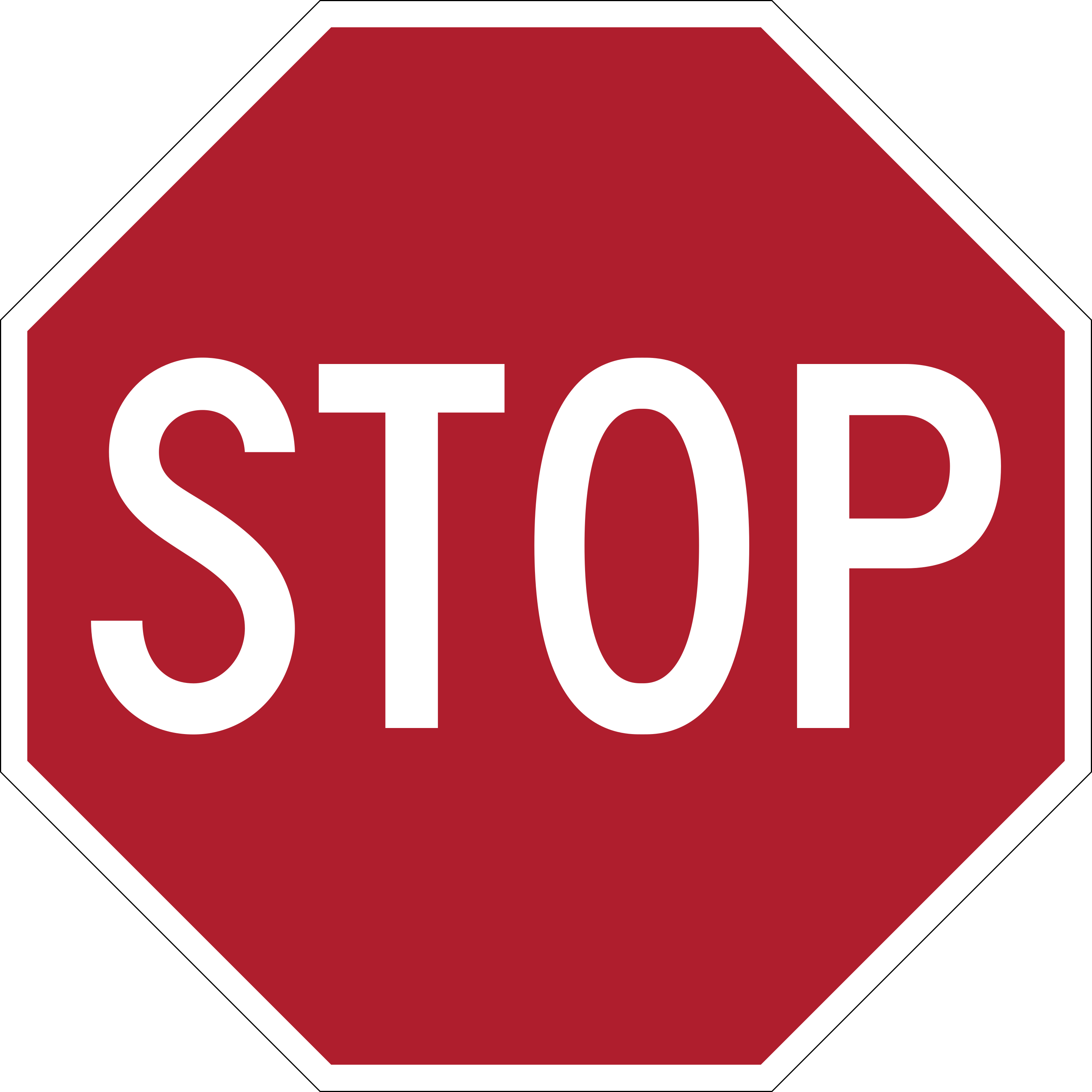
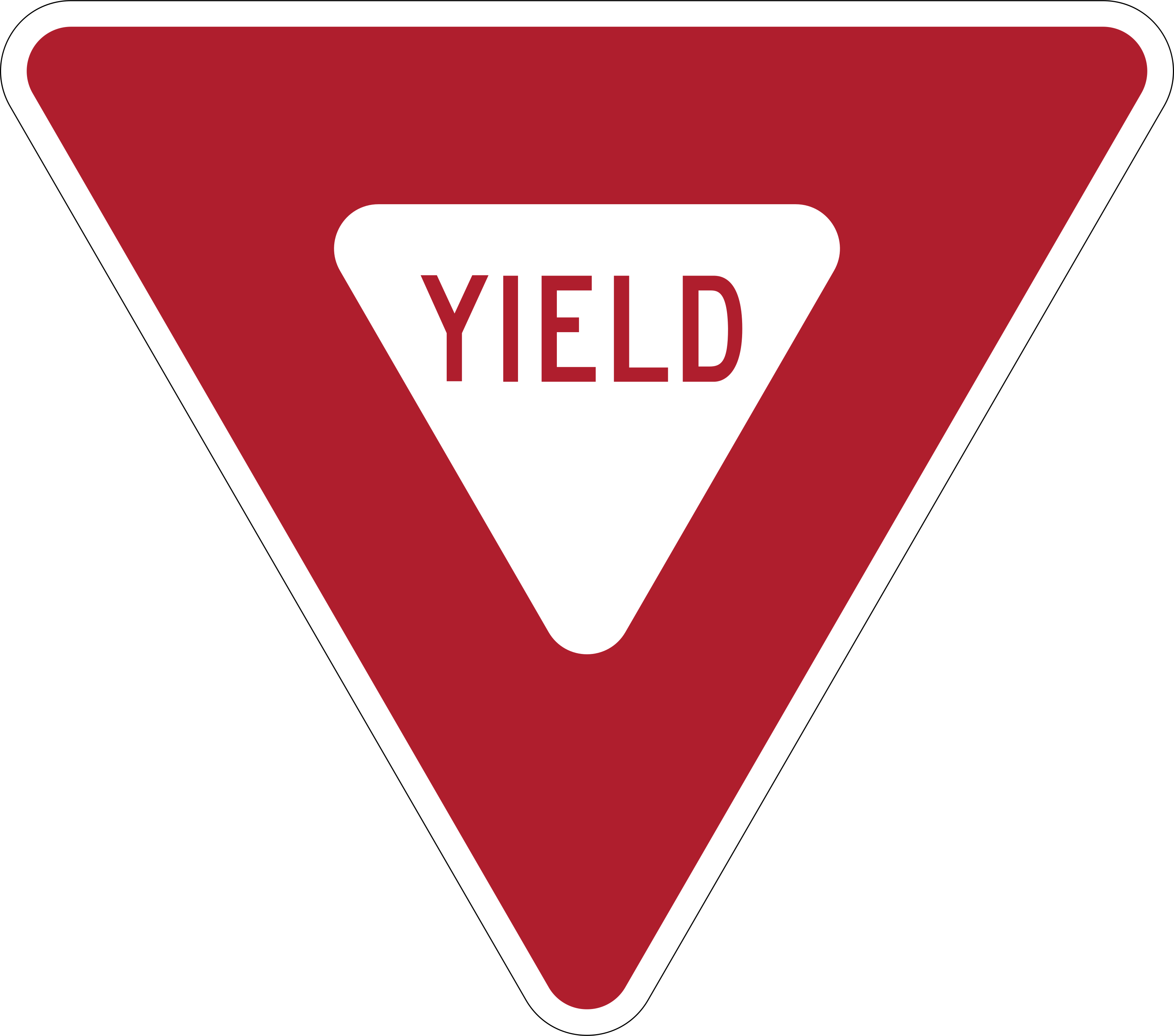
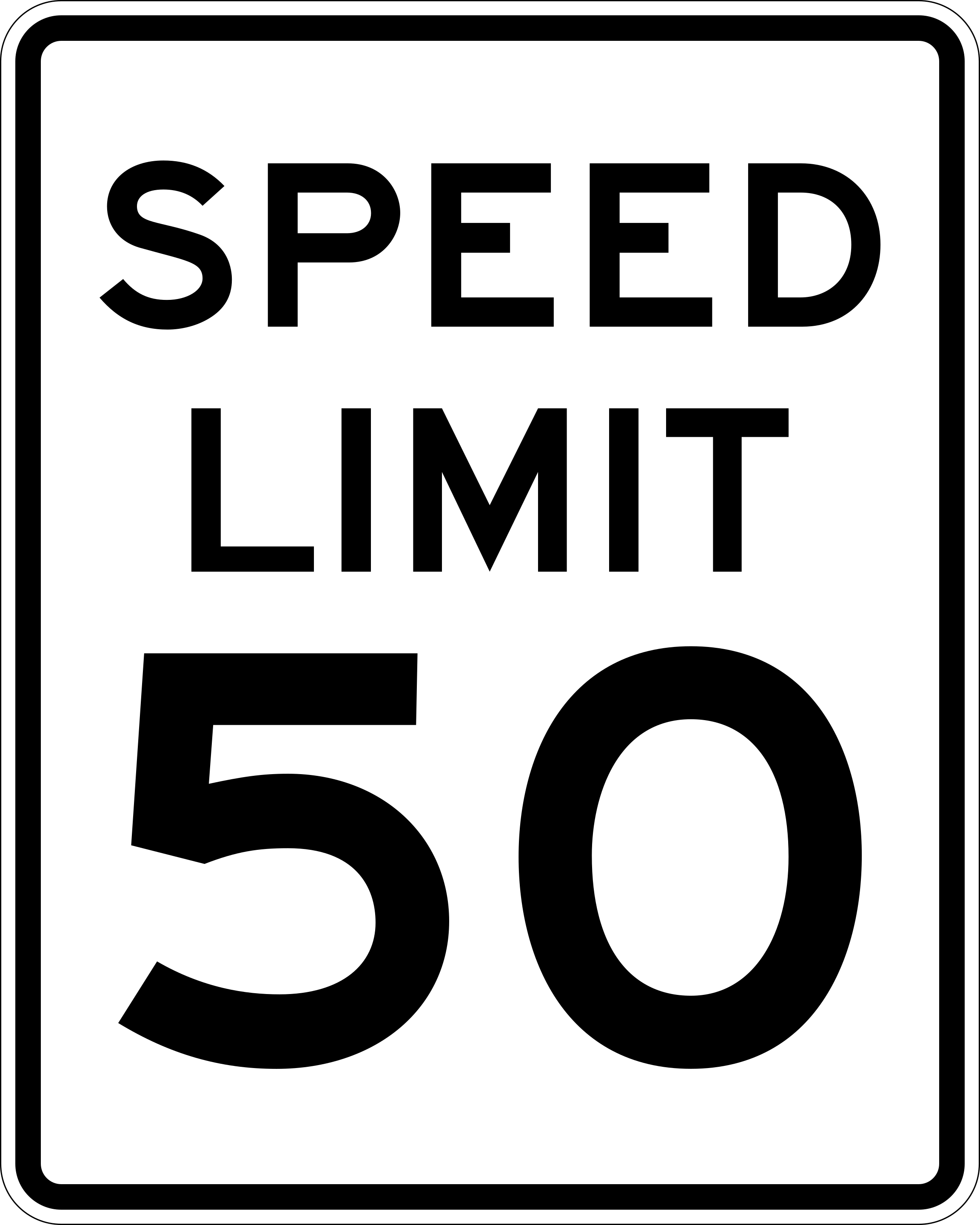
Learn to read signs by shape and color and you bank easy points. Here are a few you should know cold:



What to study for the Virginia written test
- Road signs and their shapes and colors
- Traffic signals and turn arrows
- Right-of-way and intersection rules
- Pavement markings and lane use
- Speed limits, school zones, and safe driving
Virginia test day checklist
- Proof of identity, legal presence, and Virginia residency
- Any required driver-education certificate if you are under 18
- Parent or guardian consent if you are a minor
- Eyeglasses or contacts if you need them for the vision screening
How Virginia compares
| Requirement | Virginia | Typical US state |
|---|---|---|
| Questions on the test | 35 | 20–50 |
| Correct answers to pass | 30 | Varies |
| Passing score | 85% | 70–85% |
| Earliest permit age | 15 years 6 months | 15–16 |
What happens if you do not pass the Virginia test?
You can miss up to 5 of the 35 questions and still pass (30 correct, 85%). Score below that and the DMV will let you retake the exam; waiting periods and retest fees are set by the Virginia Department of Motor Vehicles, so check their current policy. Before you retake it, review the category breakdown on your results page and read our guide on what to do after failing the written test.
Official Virginia DMV resources
Always confirm the current rules with the Virginia Department of Motor Vehicles (DMV). The question counts, passing scores, and permit ages on this page are taken from the official DMV handbook and licensing pages linked below.
Last verified against the official Virginia DMV handbook on June 20, 2026. If you notice anything that no longer matches the current handbook, please email achyuthkumark2001@gmail.com and we will update the page.
What to bring to the DMV in Virginia
Passing the written test is only half the visit. Most applicants also need:
- Proof of identity (passport or birth certificate)
- Proof of Virginia residency
- Social Security number or accepted alternative
- Parent or guardian documents if you are a minor
- Appointment confirmation if applicable
Find a DMV office in Virginia
When you are ready to take the real test, find your nearest DMV location.
Map results come from Google and may include third-party services. Always confirm the office location, hours, and whether an appointment is required on the official DMV website before visiting.
Keep preparing
Verified & Accurate
Our editorial team manually reviews all mock test questions against the latest official Virginia Department of Motor Vehicles handbook to ensure complete accuracy.
Last reviewed: June 6, 2026
Virginia permit test FAQ
How much does the Virginia permit cost?
$3 (plus the yearly cost of the driver's license). Combined learner's permit and driver's license application; the license portion is $4 per year with a $20 minimum ($32 for a standard 8-year license) A replacement learner's permit is $2.00. REAL ID adds a one-time $10 fee. The motorcycle learner's permit is $3.00. DMV accepts Apple Pay, Google Pay, cash, check, or money order. See the full Virginia fee breakdown and official source on our permit cost page.
How many supervised driving hours does Virginia require?
45 hours of practice driving, at least 15 of which must be after sunset, certified by a parent or guardian. Confirm the current requirement and any logging rules with the Virginia Department of Motor Vehicles.
How many questions are on the Virginia permit test?
The Virginia DMV knowledge exam has 35 questions covering traffic signs and the rules of the road.
What score do I need to pass in Virginia?
You must score at least 85 percent, which is 30 of 35 questions correct, and you must pass both the signs and the rules sections.
How old do I have to be to get a permit in Virginia?
You can generally apply for a learner's permit at 15 years and 6 months. Confirm the current age and requirements with the Virginia Department of Motor Vehicles.
Are these the official Virginia test questions?
No. These are original practice questions written to match the style and topics of the real exam. Always study the official Virginia driver's manual as well.
Is this Virginia practice test free?
Yes. It is completely free to use, and no account is required to start practicing.
Can I retake the practice test?
Yes. Each attempt draws a fresh, randomized set of questions, so you can practice as often as you like until you feel ready.
Sources
We summarize public information from the Virginia Department of Motor Vehicles in our own words. Confirm details with the official source: