Countersteering Explained: How Motorcycles Actually Turn
Ask a new rider how a motorcycle turns and most will say you lean it, or that you steer the handlebars the way you want to go. Both answers feel obvious, and both are wrong once the bike is rolling. Above roughly ten to twelve miles per hour, a motorcycle turns by countersteering: you press the handgrip forward on the side you want to go. Press the left grip and the bike leans left and turns left. It sounds backward, yet every rider does it, whether they know it or not.
Countersteering shows up on motorcycle knowledge tests because it is the single most important control skill a rider has, and the one that saves lives in an emergency. This guide explains what countersteering is, why a strange-sounding input produces a smooth turn, how it differs from steering at walking speed, and how to use it to swerve around a hazard. The goal is to make it click in your head before you ever need it on the road.
What this guide covers
- The Simple Rule: Press Left, Lean Left, Go Left
- Why a Backward Input Makes the Bike Turn
- Low Speed Is a Different Skill
- Countersteering for Quick Swerves
- Look Where You Want to Go
- Fit It Into the SEE Strategy
- How to Practice It Safely
- Common Mistakes That Slow You Down
The Simple Rule: Press Left, Lean Left, Go Left
Here is the whole skill in one line. To turn at speed, push forward gently on the handgrip that points the way you want to travel. Press the left grip away from you and the bike leans and arcs to the left. Press the right grip and it leans and arcs to the right. Riders sum it up as press left, go left. Press right, go right.
The word countersteering trips people up because the handlebar briefly turns the opposite way from the turn. You are not yanking the bars; you are applying steady pressure on one grip. The bike does the rest, settling into a lean that carries you through the curve. Ease off the pressure and it straightens back up.
Why a Backward Input Makes the Bike Turn
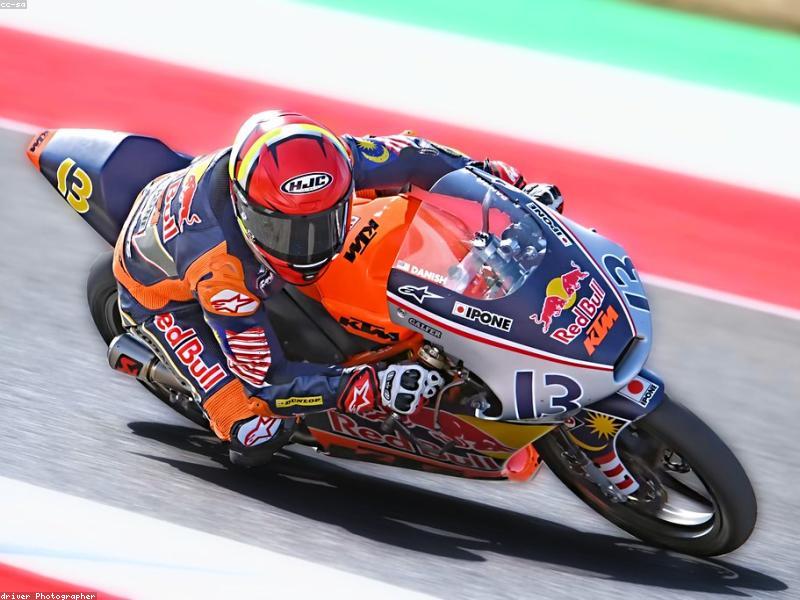
When you press the left grip forward, the front wheel momentarily steers slightly right. That tiny steering input pushes the bottom of the bike out from under you to the right, which tips the whole machine into a lean to the left. Once it is leaning, the geometry of the front end naturally steers the wheel back into the turn and the bike tracks a smooth left-hand arc. It happens in a fraction of a second, so all you feel is the bike rolling into the lean.
Two forces make this work. A spinning front wheel acts like a gyroscope, and a sideways nudge to a spinning wheel shows up as a lean rather than a wobble. At the same time, the contact patch where the tire meets the road acts as a pivot. You do not need to memorize the physics to ride well, but knowing the lean is something you create on purpose, not something that just happens, is what turns guesswork into control.
Low Speed Is a Different Skill
Countersteering rules the road, but it does not apply when you are barely moving. Below about ten miles per hour, in a parking lot, a tight U-turn, or while walking the bike through a lot, you steer the handlebars directly the way you want to go, just like a bicycle at a crawl. There is not enough wheel speed for the gyroscopic effect to take over.
This is why slow, tight turns feel so different from sweeping highway curves. At a crawl you point the bars, look through the turn, and use clutch and rear brake to stay smooth. As the bike speeds up, the handling crosses over into countersteering without any conscious switch on your part. Recognizing that two modes exist helps you stop fighting the bike at low speed and trust the lean at higher speed.
- Below about 10 to 12 mph: steer the bars directly toward the turn, like a slow bicycle
- Above that speed: press the grip on the side you want to go and let the bike lean
- Tight parking-lot turns: add clutch control and light rear brake for balance
- The change happens on its own as speed builds; you do not flip a switch
Countersteering for Quick Swerves
The reason countersteering belongs at the front of every rider's mind is hazard avoidance. A car pulls out, a deer steps onto the road, debris appears in your lane. You often do not have room to brake to a stop, but you can steer around it fast, and the only way to make a quick, sharp move is a firm countersteer.
To swerve, press firmly on the grip toward the open space, let the bike snap into a lean, then immediately press the opposite grip to bring it back upright and on course. Press left to go left around the hazard, then press right to recover. Keep your body relaxed and let the bike move beneath you. Practiced riders can dodge an obstacle in well under a second this way, far quicker than they could ever swerve by leaning their weight.
Look Where You Want to Go
Your eyes lead the bike. Riders are taught to look through the turn, fixing their gaze far down the road where they want to end up rather than at the curve directly in front of the wheel. The hands and the lean tend to follow the eyes, so a rider who looks far ahead steers smoothly while one who stares at the pavement just ahead tends to run wide.
The dangerous version of this is target fixation: in an emergency, riders sometimes lock their eyes on the very thing they are trying to avoid, the pothole or the stopped car, and the bike drifts straight toward it. Train yourself to do the opposite. Look at the gap, the escape route, the clear lane, and countersteer toward it. Where your eyes go, the motorcycle goes.
Fit It Into the SEE Strategy
Good riders do not react late, because they spot trouble early. The SEE strategy, taught in rider courses, gives you a routine: Search the road and its edges for hazards, Evaluate how each one could affect you, and Execute the right action with throttle, brakes, or steering. Countersteering is the steering half of that final step, the tool you reach for once you have decided to go around something.
Tied together, the system works like this. You search far enough ahead to see the car waiting to turn, you evaluate that it might pull out, and you have already chosen your escape path. If it moves, you do not freeze. You look at the opening and press the grip that takes you there. The earlier the search, the more time and space you have, and the gentler the countersteer needs to be.
- Search: scan well ahead and to the sides for cars, pedestrians, and road hazards
- Evaluate: decide which hazards matter and where your escape space is
- Execute: brake, adjust speed, or countersteer toward the open path
- Keep your eyes on the escape route, never on the hazard itself
How to Practice It Safely
The best way to feel countersteering is to try it deliberately at a steady speed in a safe, empty place. On a straight, open road or a large empty lot with no traffic, hold a relaxed grip, bring the bike to around twenty miles per hour, and lightly press forward on one grip, then the other. Feel how a press to the left rolls you left and a press to the right rolls you right. Do it gently at first until the connection between pressure and lean becomes obvious.
Once steady-speed presses feel natural, practice swerving between two markers you can set out yourself, pressing one way and then the other to weave through. Wear full gear, keep speeds modest, and stop before you get tired. The aim is not speed but muscle memory, so that on the day a hazard appears, your hands already know to press toward the gap without a moment of thought.
Common Mistakes That Slow You Down
The first mistake is overthinking the word. Riders who try to consciously calculate which way to push end up stiff and slow. The cure is to think in terms of the grip and the goal: I want to go left, so I press the left grip. Keep it that simple and your hands will sort out the geometry.
The second mistake is a death grip on the bars. A tense rider fights the bike's natural tendency to steer itself through a lean, which makes turns feel heavy and twitchy. Relax your arms, let the bike find its line, and use light, deliberate pressure. The motorcycle is built to turn this way; your job is to ask it clearly and then get out of its way.
FAQ
What is countersteering in simple terms?
It is how a motorcycle turns at speed. You press forward on the handgrip on the side you want to go: press the left grip to lean and turn left, press the right grip to lean and turn right. The bars briefly point the opposite way, which tips the bike into the lean.
At what speed does countersteering take over?
Roughly above ten to twelve miles per hour. Below that, at walking and parking-lot speeds, you steer the handlebars directly toward the turn. As the bike speeds up the handling shifts to countersteering on its own, without you flipping any switch.
How do I use countersteering to avoid a hazard?
Press firmly on the grip toward the open space so the bike snaps into a lean, then press the opposite grip to bring it back upright on your new line. Look at the escape route, not the hazard, and let the bike move quickly beneath you.
Do I really countersteer if I have never thought about it?
Yes. Every rider countersteers at speed whether they realize it or not, because it is the only way a bike will turn once it is moving. Learning the rule consciously just lets you steer more precisely and react faster in an emergency.
About the author
Achyuth Kumar
Founder & Lead Researcher
Achyuth Kumar Maintainer of dmvmocktest.com in 2025 after watching friends and family struggle to study from dense state driver handbooks. He personally researches each state’s official handbook from the licensing agency, drafts the practice questions in his own words, writes the plain-language explanation that accompanies every answer, and re-checks each bank against the published handbook before it goes live. He has reviewed all 50 US state driver handbooks, the federal CDL manual, and the MUTCD road sign standard, and he updates the content whenever a state revises its rules. He is not a state employee and dmvmocktest.com is independent of every DMV.
Ready to practice?
Take a free DMV mock test for your state with instant answers and explanations, the same exam format the real DMV uses.